Effects of Sr/Ca Composite Modification and Heat Treatment Process on the Microstructure, Mechanical Properties and Thermal Conductivity of Semi-solid Al–6Si–0.6Mg–0.1Sc Alloy
IF 4 3区 材料科学Q2 MATERIALS SCIENCE, MULTIDISCIPLINARY
Zihan Lang, Feng Wang, Xudong Du, Tijie Song, Zhi Wang, Le Zhou, Pingli Mao, Ziqi Wei, Jinwei Li
{"title":"Effects of Sr/Ca Composite Modification and Heat Treatment Process on the Microstructure, Mechanical Properties and Thermal Conductivity of Semi-solid Al–6Si–0.6Mg–0.1Sc Alloy","authors":"Zihan Lang, Feng Wang, Xudong Du, Tijie Song, Zhi Wang, Le Zhou, Pingli Mao, Ziqi Wei, Jinwei Li","doi":"10.1007/s12540-025-01992-x","DOIUrl":null,"url":null,"abstract":"<div><p>Aluminum alloys are the first choice for the preparation of integrated structure–function materials, but the conflicting relationship between mechanical properties and thermal conductivity limits the application of aluminum alloys. This study takes Al–6Si–0.6Mg–0.1Sc alloy as the subject of research. It adopts the semi-solid rheological die-casting process, combines composite modification and heat treatment methods to prepare aluminum alloy materials with high strength and high thermal conductivity. Meanwhile, X-ray, OM, SEM, TEM, XRD, tensile test and thermal conductivity test were used to study the changes in the microstructure and properties, and to reveal its strengthening and thermal conductivity mechanism. The results show that the composite addition of Sr/Ca can effectively improve the morphology of Al–Si eutectic phase and Mg<sub>2</sub>Si phase in Al–6Si–0.6Mg–0.1Sc alloy, which changes the Al–Si eutectic phase from its original lamellar shape into fine granular particles, increasing the electron channels and mean free paths. As a result, the mechanical properties and thermal conductivity of the alloy are enhanced. After the semi-solid die-cast Al–6Si–0.6Mg–0.1Sc alloy undergoes T6 heat treatment (470 °C × 4 h + 180 °C × 12 h), the improvement of the microstructure morphology and the distortion of the internal lattice lead to the simultaneous enhancement of both the mechanical properties and the thermal conductivity of the alloy. The tensile strength, yield strength and elongation of the alloy in the T6 state reach 327 MPa, 196 MPa and 6.5%, respectively, and the thermal conductivity reaches 156.1 W/m K. The tensile strength and thermal conductivity of the alloy are 16% and 13.2% higher than those of the semi-solid die casting, respectively.</p><h3>Graphic Abstract</h3>\n<div><figure><div><div><picture><source><img></source></picture></div></div></figure></div></div>","PeriodicalId":703,"journal":{"name":"Metals and Materials International","volume":"32 2","pages":"681 - 697"},"PeriodicalIF":4.0000,"publicationDate":"2025-06-17","publicationTypes":"Journal Article","fieldsOfStudy":null,"isOpenAccess":false,"openAccessPdf":"","citationCount":"0","resultStr":null,"platform":"Semanticscholar","paperid":null,"PeriodicalName":"Metals and Materials International","FirstCategoryId":"88","ListUrlMain":"https://link.springer.com/article/10.1007/s12540-025-01992-x","RegionNum":3,"RegionCategory":"材料科学","ArticlePicture":[],"TitleCN":null,"AbstractTextCN":null,"PMCID":null,"EPubDate":"","PubModel":"","JCR":"Q2","JCRName":"MATERIALS SCIENCE, MULTIDISCIPLINARY","Score":null,"Total":0}
引用次数: 0
Abstract
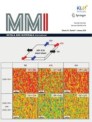
Aluminum alloys are the first choice for the preparation of integrated structure–function materials, but the conflicting relationship between mechanical properties and thermal conductivity limits the application of aluminum alloys. This study takes Al–6Si–0.6Mg–0.1Sc alloy as the subject of research. It adopts the semi-solid rheological die-casting process, combines composite modification and heat treatment methods to prepare aluminum alloy materials with high strength and high thermal conductivity. Meanwhile, X-ray, OM, SEM, TEM, XRD, tensile test and thermal conductivity test were used to study the changes in the microstructure and properties, and to reveal its strengthening and thermal conductivity mechanism. The results show that the composite addition of Sr/Ca can effectively improve the morphology of Al–Si eutectic phase and Mg2Si phase in Al–6Si–0.6Mg–0.1Sc alloy, which changes the Al–Si eutectic phase from its original lamellar shape into fine granular particles, increasing the electron channels and mean free paths. As a result, the mechanical properties and thermal conductivity of the alloy are enhanced. After the semi-solid die-cast Al–6Si–0.6Mg–0.1Sc alloy undergoes T6 heat treatment (470 °C × 4 h + 180 °C × 12 h), the improvement of the microstructure morphology and the distortion of the internal lattice lead to the simultaneous enhancement of both the mechanical properties and the thermal conductivity of the alloy. The tensile strength, yield strength and elongation of the alloy in the T6 state reach 327 MPa, 196 MPa and 6.5%, respectively, and the thermal conductivity reaches 156.1 W/m K. The tensile strength and thermal conductivity of the alloy are 16% and 13.2% higher than those of the semi-solid die casting, respectively.
期刊介绍:
Metals and Materials International publishes original papers and occasional critical reviews on all aspects of research and technology in materials engineering: physical metallurgy, materials science, and processing of metals and other materials. Emphasis is placed on those aspects of the science of materials that are concerned with the relationships among the processing, structure and properties (mechanical, chemical, electrical, electrochemical, magnetic and optical) of materials. Aspects of processing include the melting, casting, and fabrication with the thermodynamics, kinetics and modeling.

 求助内容:
求助内容: 应助结果提醒方式:

 京公网安备 11010802042870号


