Ika Fitri Ulfindrayani, Irmina Kris Murwani, Eko Sri Kunarti, Afifah Rosyidah, Harsasi Setyawati, Qurrota A’yuni, Abdul Wafi, Eka Cahya Muliawati
{"title":"Synthesis and characterization of pure ZnO and ZnO supported MgF2 for catalytic acylation of phenol","authors":"Ika Fitri Ulfindrayani, Irmina Kris Murwani, Eko Sri Kunarti, Afifah Rosyidah, Harsasi Setyawati, Qurrota A’yuni, Abdul Wafi, Eka Cahya Muliawati","doi":"10.1007/s11243-025-00710-1","DOIUrl":null,"url":null,"abstract":"<div><p>The catalysts MgF<sub>2</sub> supported ZnO (0; 2.5; 5; 7.5; 10 and 15% <i>w</i>/<i>w</i>) were synthesized by sol-gel method. The structure of the catalysts were characterized by XRD. The acidity of the catalyst determined by pyridine-FTIR method showed that 7.5% ZnO/MgF<sub>2</sub> had the highest acidity. The surface area of the ZnO/MgF<sub>2</sub> was measured by N<sub>2</sub> adsorption-desorption method. The surface area of the ZnO/MgF<sub>2</sub> catalysts decrease with the increase in Zn content. The measurement S<sub>BET</sub> of the catalysts was in range of 5.31 to 9.44 m<sup>2</sup>/g. The morphology of the catalyst was observed by Scanning Electron Microscope (SEM). The synthesized catalysts performance was tested in phenol acylation and were determined by High Performance Liquid Chromatography (HPLC), which the main products were <i>p</i>-HAP (hydroxyacetophenone) and PA (phenyl acetate). The formation of <i>p</i>-HAP was influenced by the Lewis acid site, while PA was influenced by the Brønsted acid site. The highest conversion was achieved 85.36% by 7.5% ZnO/MgF<sub>2</sub>, while the yields of the <i>p</i>-HAP and PA were 56.06 and 23.40% respectively.</p></div>","PeriodicalId":803,"journal":{"name":"Transition Metal Chemistry","volume":"51 2","pages":""},"PeriodicalIF":2.8000,"publicationDate":"2026-02-16","publicationTypes":"Journal Article","fieldsOfStudy":null,"isOpenAccess":false,"openAccessPdf":"","citationCount":"0","resultStr":null,"platform":"Semanticscholar","paperid":null,"PeriodicalName":"Transition Metal Chemistry","FirstCategoryId":"92","ListUrlMain":"https://link.springer.com/article/10.1007/s11243-025-00710-1","RegionNum":4,"RegionCategory":"化学","ArticlePicture":[],"TitleCN":null,"AbstractTextCN":null,"PMCID":null,"EPubDate":"","PubModel":"","JCR":"Q3","JCRName":"CHEMISTRY, INORGANIC & NUCLEAR","Score":null,"Total":0}
引用次数: 0
Abstract
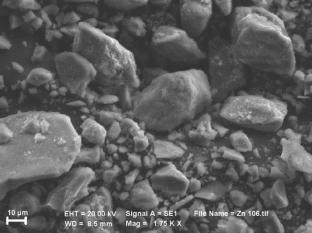
The catalysts MgF2 supported ZnO (0; 2.5; 5; 7.5; 10 and 15% w/w) were synthesized by sol-gel method. The structure of the catalysts were characterized by XRD. The acidity of the catalyst determined by pyridine-FTIR method showed that 7.5% ZnO/MgF2 had the highest acidity. The surface area of the ZnO/MgF2 was measured by N2 adsorption-desorption method. The surface area of the ZnO/MgF2 catalysts decrease with the increase in Zn content. The measurement SBET of the catalysts was in range of 5.31 to 9.44 m2/g. The morphology of the catalyst was observed by Scanning Electron Microscope (SEM). The synthesized catalysts performance was tested in phenol acylation and were determined by High Performance Liquid Chromatography (HPLC), which the main products were p-HAP (hydroxyacetophenone) and PA (phenyl acetate). The formation of p-HAP was influenced by the Lewis acid site, while PA was influenced by the Brønsted acid site. The highest conversion was achieved 85.36% by 7.5% ZnO/MgF2, while the yields of the p-HAP and PA were 56.06 and 23.40% respectively.
期刊介绍:
Transition Metal Chemistry is an international journal designed to deal with all aspects of the subject embodied in the title: the preparation of transition metal-based molecular compounds of all kinds (including complexes of the Group 12 elements), their structural, physical, kinetic, catalytic and biological properties, their use in chemical synthesis as well as their application in the widest context, their role in naturally occurring systems etc.
Manuscripts submitted to the journal should be of broad appeal to the readership and for this reason, papers which are confined to more specialised studies such as the measurement of solution phase equilibria or thermal decomposition studies, or papers which include extensive material on f-block elements, or papers dealing with non-molecular materials, will not normally be considered for publication. Work describing new ligands or coordination geometries must provide sufficient evidence for the confident assignment of structural formulae; this will usually take the form of one or more X-ray crystal structures.

 求助内容:
求助内容: 应助结果提醒方式:

 京公网安备 11010802042870号


