Xiao-Nan Chen, Ze-Juan Li, Yan Zhang, Andy T. Y. Lau, Yan-Ming Xu
{"title":"The anti-tumor mechanism and epigenetic effects of bioactive components in saffron","authors":"Xiao-Nan Chen, Ze-Juan Li, Yan Zhang, Andy T. Y. Lau, Yan-Ming Xu","doi":"10.1007/s11101-025-10183-w","DOIUrl":null,"url":null,"abstract":"<div><p>Cancer is one of the most important causes of mortality worldwide, and its incidence is increasing annually in both developed and developing countries. Up to now, chemotherapy has been a commonly used treatment for cancer. However, due to its significant side effects, other complementary or alternative treatments are needed as adjunctive therapies. The active chemical components extracted from herbal medicine are characterized by lower toxicity and fewer side effects compared to traditional anti-cancer drugs. Recently, the anti-tumor effects of saffron (<i>Crocus sativus</i> L.) and its bioactive components crocins, crocetin, safranal, and picrocrocin (isolated from the stigma of saffron) have been extensively explored. The biological activities of saffron include the inhibition of DNA, RNA, and protein synthesis, induction of cytotoxic effects, inhibition of inflammatory responses, epigenetic regulation, etc. Thus, this review aims to provide an overview of the anti-cancer properties and epigenetic effects of saffron, as well as theoretical foundations for its bioactive components as effective synergistic agents for cancer therapy.</p></div>","PeriodicalId":733,"journal":{"name":"Phytochemistry Reviews","volume":"25 2","pages":"1857 - 1880"},"PeriodicalIF":6.3000,"publicationDate":"2025-10-09","publicationTypes":"Journal Article","fieldsOfStudy":null,"isOpenAccess":false,"openAccessPdf":"","citationCount":"0","resultStr":null,"platform":"Semanticscholar","paperid":null,"PeriodicalName":"Phytochemistry Reviews","FirstCategoryId":"99","ListUrlMain":"https://link.springer.com/article/10.1007/s11101-025-10183-w","RegionNum":2,"RegionCategory":"生物学","ArticlePicture":[],"TitleCN":null,"AbstractTextCN":null,"PMCID":null,"EPubDate":"","PubModel":"","JCR":"Q1","JCRName":"PLANT SCIENCES","Score":null,"Total":0}
引用次数: 0
Abstract
Cancer is one of the most important causes of mortality worldwide, and its incidence is increasing annually in both developed and developing countries. Up to now, chemotherapy has been a commonly used treatment for cancer. However, due to its significant side effects, other complementary or alternative treatments are needed as adjunctive therapies. The active chemical components extracted from herbal medicine are characterized by lower toxicity and fewer side effects compared to traditional anti-cancer drugs. Recently, the anti-tumor effects of saffron (Crocus sativus L.) and its bioactive components crocins, crocetin, safranal, and picrocrocin (isolated from the stigma of saffron) have been extensively explored. The biological activities of saffron include the inhibition of DNA, RNA, and protein synthesis, induction of cytotoxic effects, inhibition of inflammatory responses, epigenetic regulation, etc. Thus, this review aims to provide an overview of the anti-cancer properties and epigenetic effects of saffron, as well as theoretical foundations for its bioactive components as effective synergistic agents for cancer therapy.
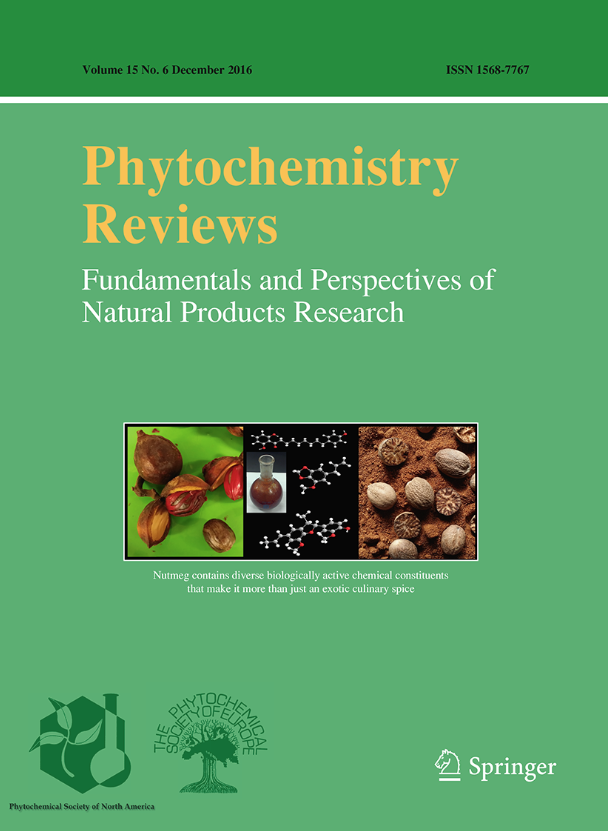
期刊介绍:
Phytochemistry Reviews is the sole review journal encompassing all facets of phytochemistry. It publishes peer-reviewed papers in six issues annually, including topical issues often stemming from meetings organized by the Phytochemical Society of Europe. Additionally, the journal welcomes original review papers that contribute to advancing knowledge in various aspects of plant chemistry, function, biosynthesis, effects on plant and animal physiology, pathology, and their application in agriculture and industry. Invited meeting papers are supplemented with additional review papers, providing a comprehensive overview of the current status across all areas of phytochemistry.

 求助内容:
求助内容: 应助结果提醒方式:

 京公网安备 11010802042870号


