{"title":"One-Step Modulation of Pores to Enhance the Corrosion Resistance of Plasma Electrolytic Oxide Coatings","authors":"Xiaoting Liu, Guofeng Ma, Zhanpeng Li, Yuan Sun","doi":"10.1007/s12540-025-02105-4","DOIUrl":null,"url":null,"abstract":"<div><p>Using plasma electrolytic oxidation, various additives were doped into a silicate-based electrolyte to regulate the pore size of the resulting coatings. We successfully prepared Al<sub>2</sub>O<sub>3</sub>-based ternary composite coatings on 17% SiCp/2009 aluminum matrix composites, and systematically investigated the effects of metal soluble salts and rare earth soluble salts (Y(NO<sub>3</sub>)<sub>3</sub>·6H<sub>2</sub>O, Eu(NO<sub>3</sub>)<sub>3</sub>·6H<sub>2</sub>O, Ce(NO<sub>3</sub>)<sub>3</sub>·6H<sub>2</sub>O, and K<sub>2</sub>ZrF<sub>6</sub>) on the phase structure and surface morphology of the PEO coatings. Their corrosion resistance was also evaluated via electrochemical workstation tests and ultrasonic cavitation corrosion tests. Among the ternary composite coatings obtained, those with K<sub>2</sub>ZrF<sub>6</sub> added showed a significant reduction in pore size—from 2.49 ± 0.06 to 1.50 ± 0.01 μm—and in porosity, from 7.10 ± 0.47 to 2.93 ± 0.36%—more notable than with the other three rare earth additives. Electrochemical tests revealed that coatings with K<sub>2</sub>ZrF<sub>6</sub> and Ce(NO<sub>3</sub>)<sub>3</sub>·6H<sub>2</sub>O had corrosion current densities an order of magnitude lower than other groups; the K<sub>2</sub>ZrF<sub>6</sub>-added coating had a density of 2.38 × 10<sup>−7</sup> and a 0.2 V positive shift in corrosion potential. ZrO<sub>2</sub>–SiO<sub>2</sub>–Al<sub>2</sub>O<sub>3</sub> coatings exhibited the best corrosion resistance, with CeO<sub>2</sub>–SiO<sub>2</sub>–Al<sub>2</sub>O<sub>3</sub> performed best among rare earth-based coatings. In summary, regulating pore size and porosity positively enhances PEO coating corrosion resistance.</p><h3>Graphical Abstract</h3><div><figure><div><div><picture><source><img></source></picture><span>The alternative text for this image may have been generated using AI.</span></div></div></figure></div></div>","PeriodicalId":703,"journal":{"name":"Metals and Materials International","volume":"32 7","pages":"2376 - 2389"},"PeriodicalIF":4.5000,"publicationDate":"2025-11-26","publicationTypes":"Journal Article","fieldsOfStudy":null,"isOpenAccess":false,"openAccessPdf":"","citationCount":"0","resultStr":null,"platform":"Semanticscholar","paperid":null,"PeriodicalName":"Metals and Materials International","FirstCategoryId":"88","ListUrlMain":"https://link.springer.com/article/10.1007/s12540-025-02105-4","RegionNum":3,"RegionCategory":"材料科学","ArticlePicture":[],"TitleCN":null,"AbstractTextCN":null,"PMCID":null,"EPubDate":"","PubModel":"","JCR":"Q2","JCRName":"MATERIALS SCIENCE, MULTIDISCIPLINARY","Score":null,"Total":0}
引用次数: 0
Abstract
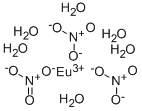
Using plasma electrolytic oxidation, various additives were doped into a silicate-based electrolyte to regulate the pore size of the resulting coatings. We successfully prepared Al2O3-based ternary composite coatings on 17% SiCp/2009 aluminum matrix composites, and systematically investigated the effects of metal soluble salts and rare earth soluble salts (Y(NO3)3·6H2O, Eu(NO3)3·6H2O, Ce(NO3)3·6H2O, and K2ZrF6) on the phase structure and surface morphology of the PEO coatings. Their corrosion resistance was also evaluated via electrochemical workstation tests and ultrasonic cavitation corrosion tests. Among the ternary composite coatings obtained, those with K2ZrF6 added showed a significant reduction in pore size—from 2.49 ± 0.06 to 1.50 ± 0.01 μm—and in porosity, from 7.10 ± 0.47 to 2.93 ± 0.36%—more notable than with the other three rare earth additives. Electrochemical tests revealed that coatings with K2ZrF6 and Ce(NO3)3·6H2O had corrosion current densities an order of magnitude lower than other groups; the K2ZrF6-added coating had a density of 2.38 × 10⁻⁷ and a 0.2 V positive shift in corrosion potential. ZrO2–SiO2–Al2O3 coatings exhibited the best corrosion resistance, with CeO2–SiO2–Al2O3 performed best among rare earth-based coatings. In summary, regulating pore size and porosity positively enhances PEO coating corrosion resistance.
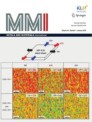
Graphical Abstract
The alternative text for this image may have been generated using AI.
期刊介绍:
Metals and Materials International publishes original papers and occasional critical reviews on all aspects of research and technology in materials engineering: physical metallurgy, materials science, and processing of metals and other materials. Emphasis is placed on those aspects of the science of materials that are concerned with the relationships among the processing, structure and properties (mechanical, chemical, electrical, electrochemical, magnetic and optical) of materials. Aspects of processing include the melting, casting, and fabrication with the thermodynamics, kinetics and modeling.



 求助内容:
 应助结果提醒方式:


 京公网安备 11010802042870号


