Asifa Amanat, Fadi Khalil, Taskeen Zafar, Hamad Khalid, Maria Mustafa, Manwar Hussain, Arsalan Ahmad Raja, Syed Muhammad Imran
{"title":"Electrospun Carbon Fiber Reinforced Thermoplastic Polyurethane Composites With Poly (3, 4‐Ethylenedioxythiophene) Polystyrene Sulfonate Coating for Strain Sensing Applications","authors":"Asifa Amanat, Fadi Khalil, Taskeen Zafar, Hamad Khalid, Maria Mustafa, Manwar Hussain, Arsalan Ahmad Raja, Syed Muhammad Imran","doi":"10.1002/pc.70274","DOIUrl":null,"url":null,"abstract":"ABSTRACT Strain sensors are crucial for applications in robotics, wearable technology, and healthcare. Despite significant advances, the development of low‐cost, scalable, and reliable sensing platforms remains a major challenge. This study reports a novel fabrication method combining electrospinning to develop conducting filler‐based composites for strain sensing using carbon fiber (CF) and thermoplastic polyurethane (TPU) with post‐process dip coating. CF was incorporated into the TPU matrix to enhance electrical conductivity and strain sensitivity, with further improvements achieved through dip coating with poly (3, 4‐ethylenedioxythiophene): poly styrene sulfonate (PEDOT: PSS). The combination of electrospinning and dip coating offers a unique fabrication route that improves both structural and electrical properties. Process parameters such as feed rate, voltage, and needle‐to‐collector distance were optimized to produce homogeneous, nonwoven sheets. Fourier Transform Infrared Spectroscopy confirmed successful CF incorporation into TPU, with shifts observed in C–H stretching and carbonyl peaks. X‐ray Diffraction analysis revealed that CF acted as a heteronucleating agent, promoting TPU crystallization. Scanning Electron Microscopy images demonstrated improved surface morphology and electrical pathways due to CF and PEDOT: PSS incorporation. The 5% CF composite exhibited a conductivity of over 0.00085 S/m, with the strain sensor showing excellent performance in terms of reliability, repeatability, and stability. The results underscore the novelty of this work in integrating processing techniques and functional fillers, positioning the composite as a strong candidate for next‐generation wearable motion sensors and real‐time biomechanical monitoring devices.","PeriodicalId":510403,"journal":{"name":"Polymer Composites","volume":"47 3","pages":"2193-2203"},"PeriodicalIF":0.0000,"publicationDate":"2025-08-08","publicationTypes":"Journal Article","fieldsOfStudy":null,"isOpenAccess":false,"openAccessPdf":"","citationCount":"1","resultStr":null,"platform":"Semanticscholar","paperid":null,"PeriodicalName":"Polymer Composites","FirstCategoryId":"0","ListUrlMain":"https://doi.org/10.1002/pc.70274","RegionNum":0,"RegionCategory":null,"ArticlePicture":[],"TitleCN":null,"AbstractTextCN":null,"PMCID":null,"EPubDate":"","PubModel":"","JCR":"","JCRName":"","Score":null,"Total":0}
引用次数: 1
Abstract
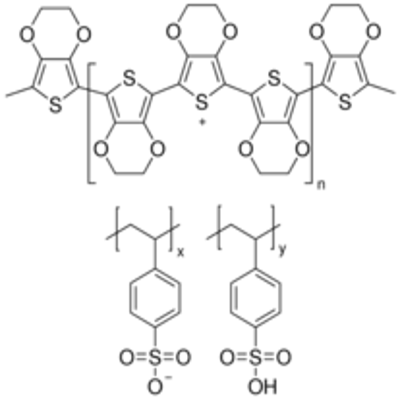
ABSTRACT Strain sensors are crucial for applications in robotics, wearable technology, and healthcare. Despite significant advances, the development of low‐cost, scalable, and reliable sensing platforms remains a major challenge. This study reports a novel fabrication method combining electrospinning to develop conducting filler‐based composites for strain sensing using carbon fiber (CF) and thermoplastic polyurethane (TPU) with post‐process dip coating. CF was incorporated into the TPU matrix to enhance electrical conductivity and strain sensitivity, with further improvements achieved through dip coating with poly (3, 4‐ethylenedioxythiophene): poly styrene sulfonate (PEDOT: PSS). The combination of electrospinning and dip coating offers a unique fabrication route that improves both structural and electrical properties. Process parameters such as feed rate, voltage, and needle‐to‐collector distance were optimized to produce homogeneous, nonwoven sheets. Fourier Transform Infrared Spectroscopy confirmed successful CF incorporation into TPU, with shifts observed in C–H stretching and carbonyl peaks. X‐ray Diffraction analysis revealed that CF acted as a heteronucleating agent, promoting TPU crystallization. Scanning Electron Microscopy images demonstrated improved surface morphology and electrical pathways due to CF and PEDOT: PSS incorporation. The 5% CF composite exhibited a conductivity of over 0.00085 S/m, with the strain sensor showing excellent performance in terms of reliability, repeatability, and stability. The results underscore the novelty of this work in integrating processing techniques and functional fillers, positioning the composite as a strong candidate for next‐generation wearable motion sensors and real‐time biomechanical monitoring devices.


 求助内容:
 应助结果提醒方式:


 京公网安备 11010802042870号


