An ITO thermochromic hydrogel-based smart window for balancing indoor daylight comfort and energy regulation

意象 Pub Date : 2025-01-01 DOI:10.70401/tx.2025.0003
Zhucheng Jiang, Yanzhao Yang, Yu Li, Cong Peng, Wei Feng
{"title":"An ITO thermochromic hydrogel-based smart window for balancing indoor daylight comfort and energy regulation","authors":"Zhucheng Jiang, Yanzhao Yang, Yu Li, Cong Peng, Wei Feng","doi":"10.70401/tx.2025.0003","DOIUrl":null,"url":null,"abstract":"Enhancing indoor visual comfort is crucial for the practical deployment of thermochromic smart windows. However, their application is often hindered by the low visible light transmittance (Tlum) in the activated state. In this study, we propose a thermally and optically dual-responsive smart window that improves both building energy efficiency and Tlum in the activated state. The design is based on a polyacrylamide (PAm)/poly(N-isopropylacrylamide) (PNIPAm)/indium tin oxide (ITO) composite film (PPI). Within this structure, PAm provides a hydrophilic matrix, PNIPAm microgels enable thermoresponsive optical modulation through reversible transmittance changes across the response temperature, and ITO particles act as light-to-heat transducers due to their photothermal and infrared reflective properties. Compared with the PNIPAm hydrogel film, the PPI composite film increases Tlum in the activated state from 9.7% to 50.0% and enhances infrared modulation capability from 39.2% to 50.4%. Under an illumination intensity of 95 mW·cm-2, the PPI composite film lowers the indoor temperature of simulated buildings by up to 7 °C. This dual-responsive thermochromic window provides improved indoor visual comfort along with effective temperature regulation, offering a promising strategy for advancing the practical use of smart windows.","PeriodicalId":57226,"journal":{"name":"意象","volume":"1 1","pages":""},"PeriodicalIF":0.0000,"publicationDate":"2025-01-01","publicationTypes":"Journal Article","fieldsOfStudy":null,"isOpenAccess":false,"openAccessPdf":"https://oss.sciexplor.com/manuscript/477/publish/TX_202504.pdf","citationCount":"1","resultStr":null,"platform":"Semanticscholar","paperid":null,"PeriodicalName":"意象","FirstCategoryId":"0","ListUrlMain":"https://doi.org/10.70401/tx.2025.0003","RegionNum":0,"RegionCategory":null,"ArticlePicture":[],"TitleCN":null,"AbstractTextCN":null,"PMCID":null,"EPubDate":"","PubModel":"","JCR":"","JCRName":"","Score":null,"Total":0}
引用次数: 1

Abstract

Enhancing indoor visual comfort is crucial for the practical deployment of thermochromic smart windows. However, their application is often hindered by the low visible light transmittance (Tlum) in the activated state. In this study, we propose a thermally and optically dual-responsive smart window that improves both building energy efficiency and Tlum in the activated state. The design is based on a polyacrylamide (PAm)/poly(N-isopropylacrylamide) (PNIPAm)/indium tin oxide (ITO) composite film (PPI). Within this structure, PAm provides a hydrophilic matrix, PNIPAm microgels enable thermoresponsive optical modulation through reversible transmittance changes across the response temperature, and ITO particles act as light-to-heat transducers due to their photothermal and infrared reflective properties. Compared with the PNIPAm hydrogel film, the PPI composite film increases Tlum in the activated state from 9.7% to 50.0% and enhances infrared modulation capability from 39.2% to 50.4%. Under an illumination intensity of 95 mW·cm-2, the PPI composite film lowers the indoor temperature of simulated buildings by up to 7 °C. This dual-responsive thermochromic window provides improved indoor visual comfort along with effective temperature regulation, offering a promising strategy for advancing the practical use of smart windows.
ITO热致变色水凝胶智能窗,平衡室内日光舒适性和能量调节
提高室内视觉舒适度是热致变色智能窗实际应用的关键。然而,它们在活化状态下的低可见光透过率(Tlum)往往阻碍了它们的应用。在这项研究中,我们提出了一种热和光双响应的智能窗户,既提高了建筑能效,又提高了激活状态下的tum。该设计基于聚丙烯酰胺(PAm)/聚n -异丙基丙烯酰胺(PNIPAm)/氧化铟锡(ITO)复合薄膜(PPI)。在这种结构中,PAm提供了亲水性基质,PNIPAm微凝胶通过在响应温度上可逆的透射率变化实现热响应性光学调制,ITO颗粒由于其光热和红外反射特性而充当光热换能器。与PNIPAm水凝胶膜相比,PPI复合膜将活化态Tlum从9.7%提高到50.0%,红外调制能力从39.2%提高到50.4%。在光照强度为95 mW·cm-2的情况下,PPI复合薄膜可使模拟建筑的室内温度降低7℃。这种双响应式热致变色窗提供了更好的室内视觉舒适性以及有效的温度调节,为推进智能窗的实际应用提供了一个有前途的策略。
本文章由计算机程序翻译,如有差异,请以英文原文为准。
求助全文
约1分钟内获得全文 求助全文
来源期刊
自引率
0.00%
发文量
11
文献相关原料
原料信息
原料厂家
1
22
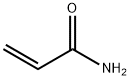
acrylamide
79-06-1
¥22.00-¥21922.85
×
引用
GB/T 7714-2015
复制
MLA
复制
APA
复制
导出至
BibTeX EndNote RefMan NoteFirst NoteExpress
×
提示
您的信息不完整,为了账户安全,请先补充。
现在去补充
×
提示
您因"违规操作"
具体请查看互助需知
我知道了
×
提示
确定
请完成安全验证×
copy
已复制链接
快去分享给好友吧!
我知道了
右上角分享
点击右上角分享
0
联系我们:info@booksci.cn Book学术提供免费学术资源搜索服务,方便国内外学者检索中英文文献。致力于提供最便捷和优质的服务体验。 Copyright © 2023 布克学术 All rights reserved.
京ICP备2023020795号-1
ghs 京公网安备 11010802042870号
Book学术文献互助
Book学术文献互助群
群 号:604180095
Book学术官方微信
小红书