Thermal Conductivity Modeling and Characterization for Woven Fabric Polymer Composites Modified With Nanofillers

Xuejuan Niu, Zheng Lin, Y. Jun Xu
{"title":"Thermal Conductivity Modeling and Characterization for Woven Fabric Polymer Composites Modified With Nanofillers","authors":"Xuejuan Niu, Zheng Lin, Y. Jun Xu","doi":"10.1002/pc.70674","DOIUrl":null,"url":null,"abstract":"ABSTRACT Woven fabric polymer (WFP) composites inherently possess low thermal conductivity, which limits their applications in thermal management. Three types of nanofillers, including particle‐type nano zinc oxide (nano‐ZnO), rod‐type carbon nanotubes (CNTs), and flake‐type graphene nanoplatelets (GNPs), are selected based on their geometrical morphologies. Their effects on the thermal conductive characteristics of WFP composites are systematically analyzed. Based on the effective medium theory (EMT), an analytical method is proposed to predict the effective thermal conductivity (ETC) of WFP material systems. This strategy quantifies the influence dimensions and mass fraction of nanofillers on the ETC of material systems. Single‐sided constant‐temperature (SSCT) heat transfer experiments show that the average steady‐state (ASS) temperature of the specimens increases with increasing nanofiller mass fraction, reaching enhancements of 18.71% for 3 wt.% GNPs, 10.45% for 3 wt.% CNTs, and 2.57% for 3 wt.% nano‐ZnO. The effectiveness of the analytical method is validated through finite element (FE) analysis and experiments. The interphase thermal conduction models are established based on the geometrical morphologies of the nanofillers and the interphase bonding states in WFP composites, which explain the heat transfer mechanism of WFP composites modified with different nanofillers.","PeriodicalId":510403,"journal":{"name":"Polymer Composites","volume":"1 1","pages":""},"PeriodicalIF":0.0000,"publicationDate":"2025-11-25","publicationTypes":"Journal Article","fieldsOfStudy":null,"isOpenAccess":false,"openAccessPdf":"","citationCount":"0","resultStr":null,"platform":"Semanticscholar","paperid":null,"PeriodicalName":"Polymer Composites","FirstCategoryId":"0","ListUrlMain":"https://doi.org/10.1002/pc.70674","RegionNum":0,"RegionCategory":null,"ArticlePicture":[],"TitleCN":null,"AbstractTextCN":null,"PMCID":null,"EPubDate":"","PubModel":"","JCR":"","JCRName":"","Score":null,"Total":0}
引用次数: 0

Abstract

ABSTRACT Woven fabric polymer (WFP) composites inherently possess low thermal conductivity, which limits their applications in thermal management. Three types of nanofillers, including particle‐type nano zinc oxide (nano‐ZnO), rod‐type carbon nanotubes (CNTs), and flake‐type graphene nanoplatelets (GNPs), are selected based on their geometrical morphologies. Their effects on the thermal conductive characteristics of WFP composites are systematically analyzed. Based on the effective medium theory (EMT), an analytical method is proposed to predict the effective thermal conductivity (ETC) of WFP material systems. This strategy quantifies the influence dimensions and mass fraction of nanofillers on the ETC of material systems. Single‐sided constant‐temperature (SSCT) heat transfer experiments show that the average steady‐state (ASS) temperature of the specimens increases with increasing nanofiller mass fraction, reaching enhancements of 18.71% for 3 wt.% GNPs, 10.45% for 3 wt.% CNTs, and 2.57% for 3 wt.% nano‐ZnO. The effectiveness of the analytical method is validated through finite element (FE) analysis and experiments. The interphase thermal conduction models are established based on the geometrical morphologies of the nanofillers and the interphase bonding states in WFP composites, which explain the heat transfer mechanism of WFP composites modified with different nanofillers.
纳米填料改性机织高聚物复合材料的导热建模与表征
机织织物聚合物(WFP)复合材料固有的低导热性限制了其在热管理方面的应用。三种类型的纳米填充物,包括颗粒型纳米氧化锌(nano - ZnO),棒状碳纳米管(CNTs)和片状石墨烯纳米片(GNPs),根据其几何形态进行选择。系统分析了它们对WFP复合材料导热性能的影响。基于有效介质理论,提出了一种预测WFP材料体系有效导热系数(ETC)的分析方法。该策略量化了纳米填料的尺寸和质量分数对材料体系ETC的影响。单面恒温(SSCT)传热实验表明,随着纳米填料质量分数的增加,样品的平均稳态(ASS)温度升高,3 wt.% GNPs的平均温度升高18.71%,3 wt.% CNTs的平均温度升高10.45%,3 wt.% ZnO的平均温度升高2.57%。通过有限元分析和实验验证了该分析方法的有效性。基于纳米填料的几何形貌和WFP复合材料的界面键合状态,建立了WFP复合材料的界面导热模型,解释了不同纳米填料改性WFP复合材料的传热机理。
本文章由计算机程序翻译,如有差异,请以英文原文为准。
求助全文
约1分钟内获得全文 求助全文
来源期刊
自引率
0.00%
发文量
0
文献相关原料
原料信息
原料厂家
1
D8 Advance
2
3K twill-woven carbon fiber fabric
3
Araldite 506 diglycidyl ether bisphenol-A epoxy resin
4
Nano-ZnO particles
7
HD head 880
8
autoclave
9
Phenom XL
10
Dicyandiamide
13
ultrasonic homogenizer
14
heated magnetic stirrer
15
22
2-ethyl-4-methylimidazole
931-36-2
¥20.00-¥10300.00
16
22
2-ethyl-4-methylimidazole (2E4MI)
931-36-2
¥20.00-¥10300.00
17
22
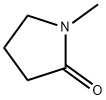
N-methyl-2-pyrrolidone
872-50-4
¥15.00-¥33599.90
×
引用
GB/T 7714-2015
复制
MLA
复制
APA
复制
导出至
BibTeX EndNote RefMan NoteFirst NoteExpress
×
提示
您的信息不完整,为了账户安全,请先补充。
现在去补充
×
提示
您因"违规操作"
具体请查看互助需知
我知道了
×
提示
确定
请完成安全验证×
copy
已复制链接
快去分享给好友吧!
我知道了
右上角分享
点击右上角分享
0
联系我们:info@booksci.cn Book学术提供免费学术资源搜索服务,方便国内外学者检索中英文文献。致力于提供最便捷和优质的服务体验。 Copyright © 2023 布克学术 All rights reserved.
京ICP备2023020795号-1
ghs 京公网安备 11010802042870号
Book学术文献互助
Book学术文献互助群
群 号:604180095
Book学术官方微信
小红书