Reactive Janus‐ SiO 2 Reinforced Acrylic‐Polyisobutylene Semi‐Interpenetrating Pressure‐Sensitive Adhesive: The Combined Effect of Crosslinking and Entanglement

Yuanyi Kang, Xingzhen Feng, Yue Zhao, Yu Long, Jiawei Fang, Tao Zhang, Guohua Fan, Xin Meng, Chuncheng Hao
{"title":"Reactive Janus‐ <scp> SiO <sub>2</sub> </scp> Reinforced Acrylic‐Polyisobutylene Semi‐Interpenetrating Pressure‐Sensitive Adhesive: The Combined Effect of Crosslinking and Entanglement","authors":"Yuanyi Kang, Xingzhen Feng, Yue Zhao, Yu Long, Jiawei Fang, Tao Zhang, Guohua Fan, Xin Meng, Chuncheng Hao","doi":"10.1002/pc.70589","DOIUrl":null,"url":null,"abstract":"ABSTRACT Uncrosslinked pressure‐sensitive adhesives (PSAs) typically suffer from low cohesive strength and high cold flow, which significantly limit their practical applications. This study proposed a strategy to improve the performance of uncrosslinked pressure‐sensitive adhesives by using a Janus‐nanoparticle‐toughened three‐dimensional network structure. Specifically, reactive Janus nanoparticles (JPs) were designed and reinforced polyisobutylene/acrylic polymer semi‐interpenetrating network (Semi‐IPN) PSAs via a combination of free radical‐initiated cross‐linking and chain entanglement. The morphological structure, mechanical performance, adhesion properties, and rheological behavior of the Semi‐IPN PSAs were systematically investigated. The results demonstrated that the shear strength and peel strength of PSAs that retained the unique properties of polyisobutylene (PIB) increased by 362% and 301%, respectively. In addition, although the initial tack dropped by two grades, the cold flow was significantly reduced. This multiple interaction between the reactive JPs and the PSAs matrix substantially improves the performance of uncrosslinked PSAs. This offers valuable insights for the rational design of high‐performance adhesive systems.","PeriodicalId":510403,"journal":{"name":"Polymer Composites","volume":"1 1","pages":""},"PeriodicalIF":0.0000,"publicationDate":"2025-10-29","publicationTypes":"Journal Article","fieldsOfStudy":null,"isOpenAccess":false,"openAccessPdf":"https://onlinelibrary.wiley.com/doi/pdfdirect/10.1002/pc.70589","citationCount":"0","resultStr":null,"platform":"Semanticscholar","paperid":null,"PeriodicalName":"Polymer Composites","FirstCategoryId":"0","ListUrlMain":"https://doi.org/10.1002/pc.70589","RegionNum":0,"RegionCategory":null,"ArticlePicture":[],"TitleCN":null,"AbstractTextCN":null,"PMCID":null,"EPubDate":"","PubModel":"","JCR":"","JCRName":"","Score":null,"Total":0}
引用次数: 0

Abstract

ABSTRACT Uncrosslinked pressure‐sensitive adhesives (PSAs) typically suffer from low cohesive strength and high cold flow, which significantly limit their practical applications. This study proposed a strategy to improve the performance of uncrosslinked pressure‐sensitive adhesives by using a Janus‐nanoparticle‐toughened three‐dimensional network structure. Specifically, reactive Janus nanoparticles (JPs) were designed and reinforced polyisobutylene/acrylic polymer semi‐interpenetrating network (Semi‐IPN) PSAs via a combination of free radical‐initiated cross‐linking and chain entanglement. The morphological structure, mechanical performance, adhesion properties, and rheological behavior of the Semi‐IPN PSAs were systematically investigated. The results demonstrated that the shear strength and peel strength of PSAs that retained the unique properties of polyisobutylene (PIB) increased by 362% and 301%, respectively. In addition, although the initial tack dropped by two grades, the cold flow was significantly reduced. This multiple interaction between the reactive JPs and the PSAs matrix substantially improves the performance of uncrosslinked PSAs. This offers valuable insights for the rational design of high‐performance adhesive systems.
活性Janus - sio2增强丙烯酸-聚异丁烯半互穿压敏胶:交联和缠结的综合效应
非交联压敏胶粘剂(psa)通常存在低内聚强度和高冷流量的问题,这极大地限制了它们的实际应用。本研究提出了一种利用Janus -纳米颗粒增韧的三维网络结构来提高非交联压敏胶粘剂性能的策略。具体来说,设计了反应性Janus纳米颗粒(JPs),并通过自由基引发的交联和链缠结的组合增强了聚异丁烯/丙烯酸聚合物半互穿网络(semi - IPN) psa。系统地研究了半IPN psa的形态结构、力学性能、粘附性能和流变行为。结果表明,保留聚异丁烯(PIB)独特性能的聚异丁烯多糖抗剪强度和剥离强度分别提高了362%和301%。此外,虽然初始粘性降低了两个等级,但冷流明显减少。反应性jp和psa矩阵之间的多重相互作用大大提高了非交联psa的性能。这为高性能胶粘剂系统的合理设计提供了有价值的见解。
本文章由计算机程序翻译,如有差异,请以英文原文为准。
求助全文
约1分钟内获得全文 求助全文
来源期刊
自引率
0.00%
发文量
0
文献相关原料
原料信息
原料厂家
1
22
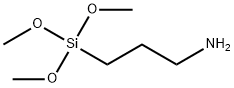
3-Aminopropyl)trimethoxy silane
13822-56-5
¥20.00-¥12257.00
×
引用
GB/T 7714-2015
复制
MLA
复制
APA
复制
导出至
BibTeX EndNote RefMan NoteFirst NoteExpress
×
提示
您的信息不完整,为了账户安全,请先补充。
现在去补充
×
提示
您因"违规操作"
具体请查看互助需知
我知道了
×
提示
确定
请完成安全验证×
copy
已复制链接
快去分享给好友吧!
我知道了
右上角分享
点击右上角分享
0
联系我们:info@booksci.cn Book学术提供免费学术资源搜索服务,方便国内外学者检索中英文文献。致力于提供最便捷和优质的服务体验。 Copyright © 2023 布克学术 All rights reserved.
京ICP备2023020795号-1
ghs 京公网安备 11010802042870号
Book学术文献互助
Book学术文献互助群
群 号:604180095
Book学术官方微信
小红书