
Carboxymethyl chitosan hydrogel reinforced by endothelial cell derivatives for angiogenesis and full-thickness wound healing
IF 8.4
引用次数: 1
Abstract
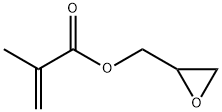
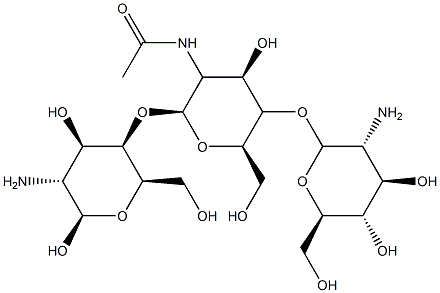
Schematic illustration depicting the preparation of methacrylate-modified carboxymethyl chitosan hydrogel enriched with endothelial cell derivatives (ECd@M−CMCS) and its application in promoting angiogenesis and facilitating full-thickness wound healing. • The hydrogel scaffold containing specific ECM within M−CMCS was successfully prepared. • It features a loose porous 3D structure, excellent hydrophilicity, and water absorption. • It enables adaptability to wound shapes and a moist healing microenvironment. • It demonstrates strong antimicrobial activity and has multiple biological functions. • It enhances wound healing and improves both healing speed and quality. Wound self-repair is prone to forming hard-to-heal chronic wounds due to infections, vascular damage, diabetes and other factors. Selecting the appropriate treatment and dressing can help prevent the deterioration of chronic wounds and facilitate the restoration of normal structure and function. Carboxymethyl chitosan (CMCS)-modified hydrogels can promote tissue repair, while human umbilical vein endothelial cell derivatives (ECd) enhance self-repair. In this study, ECd was prepared into lyophilized powder using vacuum freeze-drying to preserve its original active ingredients. In vitro experimental results revealed that a specific concentration of ECd effectively supported cell proliferation, migration and angiogenesis. ECd was further encapsulated in the designed glycidyl methacrylate-modified carboxymethyl chitosan (M−CMCS) hydrogel. The optimal combination of ECd and M−CMCS hydrogel (ECd@M−CMCS) was evaluated by testing the material properties, analyzing cellular behaviors and assessing antimicrobial effects. Sprague Dawley rat models (tail-breaking, liver incision, skin whole-layer defect) demonstrated ECd@M−CMCS exhibited good biocompatibility and enhanced wound healing and hemostasis in vivo .内皮细胞衍生物增强的羧甲基壳聚糖水凝胶用于血管生成和全层伤口愈合
含内皮细胞衍生物(ECd@M−CMCS)的甲基丙烯酸酯修饰羧甲基壳聚糖水凝胶的制备及其在促进血管生成和伤口全层愈合中的应用。•成功制备了M - CMCS中含有特异性ECM的水凝胶支架。•具有疏松多孔的3D结构,优异的亲水性和吸水性。•它能够适应伤口形状和潮湿的愈合微环境。•具有很强的抗菌活性,并具有多种生物学功能。•增强伤口愈合,提高愈合速度和质量。由于感染、血管损伤、糖尿病等因素,伤口自我修复容易形成难以愈合的慢性伤口。选择合适的治疗方法和敷料有助于防止慢性伤口的恶化,促进正常结构和功能的恢复。羧甲基壳聚糖(CMCS)修饰的水凝胶具有促进组织修复的作用,而人脐静脉内皮细胞衍生物(ECd)具有增强自我修复的作用。本研究采用真空冷冻干燥法制备ECd冻干粉,以保留其原有的有效成分。体外实验结果显示,一定浓度的ECd可有效支持细胞增殖、迁移和血管生成。将ECd进一步封装在设计的甲基丙烯酸缩水甘油酯修饰的羧甲基壳聚糖(M−CMCS)水凝胶中。通过材料性能测试、细胞行为分析和抗菌效果评估来评价ECd与M - CMCS水凝胶(ECd@M - CMCS)的最佳组合。Sprague - Dawley大鼠模型(断尾、肝切口、皮肤全层缺损)表明ECd@M - CMCS具有良好的生物相容性,促进伤口愈合和体内止血。
本文章由计算机程序翻译,如有差异,请以英文原文为准。
求助全文
约1分钟内获得全文
求助全文
来源期刊
自引率
0.00%
发文量
0
期刊介绍:
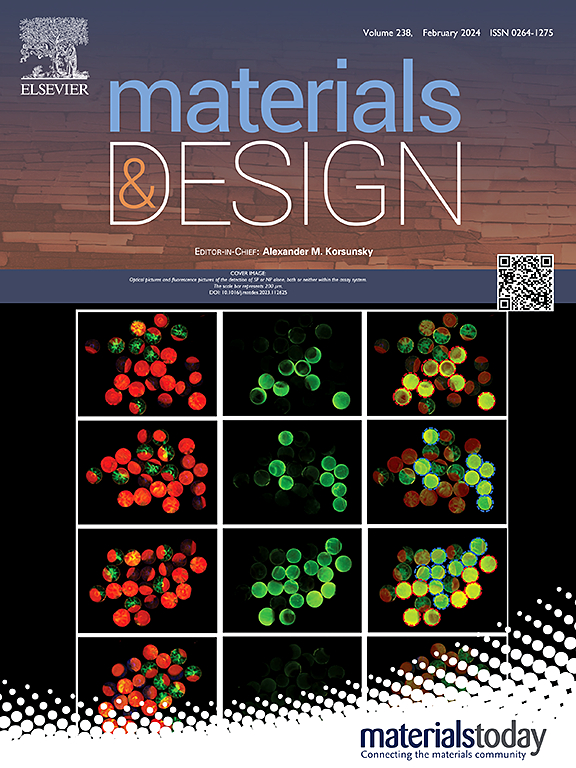
Materials and Design is a multidisciplinary journal that publishes original research reports, review articles, and express communications. It covers a wide range of topics including the structure and properties of inorganic and organic materials, advancements in synthesis, processing, characterization, and testing, as well as the design of materials and engineering systems, and their applications in technology.
The journal aims to integrate various disciplines such as materials science, engineering, physics, and chemistry. By exploring themes from materials to design, it seeks to uncover connections between natural and artificial materials, and between experimental findings and theoretical models. Manuscripts submitted to Materials and Design are expected to offer elements of discovery and surprise, contributing to new insights into the architecture and function of matter.
 求助内容:
求助内容: 应助结果提醒方式:

 京公网安备 11010802042870号


