Improving Interface and Mechanical Properties of CFRPs by Surface Modification of Carbon Fibers Using Tannic Acid‐Fe 3+ ‐ (3‐Aminopropyl)triethoxysilane Complexes

Noel Babu, Maleck Massou, Chenggao Li, Huigang Xiao, Guijun Xian
{"title":"Improving Interface and Mechanical Properties of <scp>CFRPs</scp> by Surface Modification of Carbon Fibers Using Tannic Acid‐Fe <sup>3+</sup> ‐ (3‐Aminopropyl)triethoxysilane Complexes","authors":"Noel Babu, Maleck Massou, Chenggao Li, Huigang Xiao, Guijun Xian","doi":"10.1002/pc.70710","DOIUrl":null,"url":null,"abstract":"ABSTRACT Inspired by mussel adhesion, researchers have explored polydopamine (PDA)‐based sizing solutions to enhance the surface chemistry and texture of carbon fibers. However, PDA‐based solutions face challenges associated with high costs, longer fiber treatment times, and scalability concerns for industrial adoption. Recently, tannic acid, an abundant natural polyphenol, has emerged as an alternative capable of forming similar chemical interactions, such as Michael addition, Schiff‐base reactions, and coordination complexes with metal ions, and so forth, as in PDA. In this work, tannic acid‐Fe 3+ ‐ (3‐aminopropyl)triethoxysilane complexes were deposited on the CF surface by a facile self‐assembly process in 15 min. The deposited nano‐sized aggregates increased reactive surface functional groups on the fiber and enhanced its surface roughness. As a result, the interlaminar shear strength, flexural strength, and modulus of unidirectional CFRPs, reinforced with treated fibers, increased by 35%, 30%, and 12.4%, respectively, compared to those with as‐received CF. The impact load‐bearing capacity of CFRPs with a modified interface also increased by 19.8% and their residual compressive strength after impact increased by 20.8%. This approach to improving the surface characteristics of CF can offer a cost‐effective solution to enhance the performance of CFRPs.","PeriodicalId":510403,"journal":{"name":"Polymer Composites","volume":"1 1","pages":""},"PeriodicalIF":0.0000,"publicationDate":"2025-12-04","publicationTypes":"Journal Article","fieldsOfStudy":null,"isOpenAccess":false,"openAccessPdf":"https://onlinelibrary.wiley.com/doi/pdfdirect/10.1002/pc.70710","citationCount":"0","resultStr":null,"platform":"Semanticscholar","paperid":null,"PeriodicalName":"Polymer Composites","FirstCategoryId":"0","ListUrlMain":"https://doi.org/10.1002/pc.70710","RegionNum":0,"RegionCategory":null,"ArticlePicture":[],"TitleCN":null,"AbstractTextCN":null,"PMCID":null,"EPubDate":"","PubModel":"","JCR":"","JCRName":"","Score":null,"Total":0}
引用次数: 0

Abstract

ABSTRACT Inspired by mussel adhesion, researchers have explored polydopamine (PDA)‐based sizing solutions to enhance the surface chemistry and texture of carbon fibers. However, PDA‐based solutions face challenges associated with high costs, longer fiber treatment times, and scalability concerns for industrial adoption. Recently, tannic acid, an abundant natural polyphenol, has emerged as an alternative capable of forming similar chemical interactions, such as Michael addition, Schiff‐base reactions, and coordination complexes with metal ions, and so forth, as in PDA. In this work, tannic acid‐Fe 3+ ‐ (3‐aminopropyl)triethoxysilane complexes were deposited on the CF surface by a facile self‐assembly process in 15 min. The deposited nano‐sized aggregates increased reactive surface functional groups on the fiber and enhanced its surface roughness. As a result, the interlaminar shear strength, flexural strength, and modulus of unidirectional CFRPs, reinforced with treated fibers, increased by 35%, 30%, and 12.4%, respectively, compared to those with as‐received CF. The impact load‐bearing capacity of CFRPs with a modified interface also increased by 19.8% and their residual compressive strength after impact increased by 20.8%. This approach to improving the surface characteristics of CF can offer a cost‐effective solution to enhance the performance of CFRPs.
单宁酸- fe3 + -(3 -氨基丙基)三乙氧基硅烷配合物对碳纤维表面改性改善cfrp的界面和力学性能
受贻贝粘附性的启发,研究人员探索了基于聚多巴胺(PDA)的上浆解决方案,以增强碳纤维的表面化学和质地。然而,基于PDA的解决方案面临着与高成本、较长的光纤处理时间和工业应用的可扩展性相关的挑战。最近,单宁酸,一种丰富的天然多酚,已经成为一种替代品,能够形成类似的化学相互作用,如迈克尔加成反应,希夫碱反应,以及与金属离子的配合物,等等,如PDA。在这项工作中,单宁酸- fe3 + -(3 -氨基丙基)三乙氧基硅烷配合物通过一个简单的自组装过程在15分钟内沉积在CF表面。沉积的纳米聚集体增加了纤维表面的活性官能团,提高了纤维表面的粗糙度。结果表明,经过处理的纤维增强的单向碳纤维复合材料的层间剪切强度、抗弯强度和模量分别比未处理的碳纤维复合材料提高了35%、30%和12.4%,界面改性的碳纤维复合材料的冲击承载能力提高了19.8%,冲击后残余抗压强度提高了20.8%。这种改善CF表面特性的方法可以为提高cfrp的性能提供一种经济有效的解决方案。
本文章由计算机程序翻译,如有差异,请以英文原文为准。
求助全文
约1分钟内获得全文 求助全文
来源期刊
自引率
0.00%
发文量
0
文献相关原料
原料信息
原料厂家
1
22
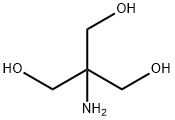
Tris-(hydroxymethyl)aminomethane
77-86-1
¥18.00-¥92153.05
×
引用
GB/T 7714-2015
复制
MLA
复制
APA
复制
导出至
BibTeX EndNote RefMan NoteFirst NoteExpress
×
提示
您的信息不完整,为了账户安全,请先补充。
现在去补充
×
提示
您因"违规操作"
具体请查看互助需知
我知道了
×
提示
确定
请完成安全验证×
copy
已复制链接
快去分享给好友吧!
我知道了
右上角分享
点击右上角分享
0
联系我们:info@booksci.cn Book学术提供免费学术资源搜索服务,方便国内外学者检索中英文文献。致力于提供最便捷和优质的服务体验。 Copyright © 2023 布克学术 All rights reserved.
京ICP备2023020795号-1
ghs 京公网安备 11010802042870号
Book学术文献互助
Book学术文献互助群
群 号:604180095
Book学术官方微信
小红书