
Layer-by-Layer Self-Assembly Marine Antifouling Coating of Phenol Absorbed by Polyvinylpyrrolidone Anchored on Stainless Steel Surfaces
IF 3.2
3区 地球科学
Q1 ENGINEERING, MARINE
引用次数: 2
Abstract
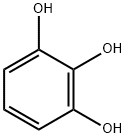
Marine biofouling is a major problem that contributes to the failure of man-made marine structures. Conventional marine antifouling coatings that release heavy metal ions for antimicrobial purposes are no longer in line with today’s environmental issues. In this paper, a layer-by-layer (LBL) self-assembled marine antifouling coating based on an addition reaction between polyvinylpyrrolidone (PVP) and phenols to anchor pyrogallic (PG) with an antimicrobial effect on stainless steel surfaces is presented. For this purpose, three phenolics were selected, and their antifouling effects were compared. Field emission scanning electron microscopy, contact angle measurement, X-ray photoelectron spectroscopy (XPS) and Fourier transform infrared spectroscopy analysis (FTIR) were used to thoroughly characterize the LBLPGs, and the results showed superior homogeneity of the coatings with no significant delamination. Simulated marine antifouling and friction tests showed that the coating inhibited Staphylococcus aureus (S. aureus), Escherichia coli (E. coli), and Phaeodactylum tricornutum (P. tricornutum) by more than 90% and reduced the friction coefficient of the stainless steel surface from 0.38 to 0.24, demonstrating superior antifouling and friction resistance effects.聚乙烯吡咯烷酮吸附苯酚在不锈钢表面的自组装船舶防污涂层
海洋生物污染是导致人造海洋结构物失效的一个主要问题。传统的船舶防污涂料释放重金属离子用于抗菌目的已不再符合当今的环境问题。本文研究了一种基于聚乙烯吡咯烷酮(PVP)与苯酚加成反应锚定焦性没食子(PG)的分层自组装船用防污涂料,该涂料具有不锈钢表面的抗菌效果。为此,选择了三种酚类物质,并比较了它们的防污效果。利用场发射扫描电镜、接触角测量、x射线光电子能谱(XPS)和傅里叶变换红外光谱(FTIR)对lblpg进行了全面表征,结果表明涂层均匀性好,无明显的分层现象。模拟海洋防污和摩擦试验表明,该涂层对金黄色葡萄球菌(S. aureus)、大肠杆菌(E. coli)和三角褐指藻(P. tricornutum)的抑制作用达90%以上,并将不锈钢表面的摩擦系数从0.38降低到0.24,具有良好的防污和摩擦阻力效果。
本文章由计算机程序翻译,如有差异,请以英文原文为准。
求助全文
约1分钟内获得全文
求助全文
来源期刊
Journal of Marine Science and Engineering
Engineering-Ocean Engineering
CiteScore
4.40
自引率
20.70%
发文量
1640
审稿时长
18.09 days
期刊介绍:
Journal of Marine Science and Engineering (JMSE; ISSN 2077-1312) is an international, peer-reviewed open access journal which provides an advanced forum for studies related to marine science and engineering. It publishes reviews, research papers and communications. Our aim is to encourage scientists to publish their experimental and theoretical results in as much detail as possible. There is no restriction on the length of the papers. The full experimental details must be provided so that the results can be reproduced. Electronic files and software regarding the full details of the calculation or experimental procedure, if unable to be published in a normal way, can be deposited as supplementary electronic material.
文献相关原料
原料信息
原料厂家
 求助内容:
 应助结果提醒方式:


 京公网安备 11010802042870号


