
Rational Designing and Stepwise Cascade for Efficient Biosynthesis of Raspberry Ketone
IF 4.5
3区 化学
Q2 CHEMISTRY, PHYSICAL
引用次数: 0
Abstract
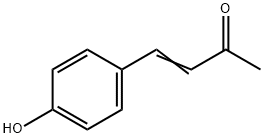
Raspberry ketone (RK) is the primary aromatic compound in raspberry fruit, which is widely utilized in perfume, cosmetics, and food additive industries. Currently, RK is predominantly produced chemically. RK biosynthesis through enzyme or whole cell has garnered significant attention due to the mild reaction conditions and the process being regarded as ‘natural’. This study proposed a ‘dual-microorganism, two-phase’ stepwise cascade strategy to produce RK from an economical precursor, 4-hydroxybenzaldehyde (4-HBD). An acetone-tolerant deoxyribose-phosphate aldolase DERAEc (S238D) mutant was obtained through a site-specific rigidification strategy for converting 4-HBD to 4-hydroxybenzylaceton (4-HBA). Then, an engineered E. coli co-expressing isocitrate dehydrogenase and raspberry ketone synthase RiRZS1 with a citrate-sodium citrate buffer to recycle nicotinamide adenine dinucleotide phosphate (NADPH) was constructed for the conversion of 4-HBA to RK. The final concentration of RK was 50.00 ± 1.92 mmol·L−1 with a yield of 86.96%. This strategy provides a scalable coenzyme self-recycling and two-phase catalysis platform for high-value phenolic compounds.树莓酮高效生物合成的合理设计与逐步级联
树莓酮(RK)是树莓果实中的主要芳香化合物,广泛应用于香水、化妆品、食品添加剂等行业。目前,RK主要是化学生产的。由于温和的反应条件和被认为是“自然”的过程,通过酶或全细胞生物合成RK已经引起了极大的关注。本研究提出了一种“双微生物,两相”逐步级联策略,以经济的前体4-羟基苯甲醛(4-HBD)为原料生产RK。通过位点特异性硬化策略将4-HBD转化为4-羟基苯丙酮(4-HBA),获得了丙酮耐受脱氧核糖-磷酸醛醇酶DERAEc (S238D)突变体。然后,利用柠檬酸-柠檬酸钠缓冲液构建异柠檬酸脱氢酶和覆盆子酮合成酶RiRZS1共表达的工程大肠杆菌,回收烟酰胺腺嘌呤二核苷酸磷酸(NADPH),将4-HBA转化为RK。RK终浓度为50.00±1.92 mmol·L−1,产率为86.96%。该策略为高价值酚类化合物提供了一个可扩展的辅酶自循环和两相催化平台。
本文章由计算机程序翻译,如有差异,请以英文原文为准。
求助全文
约1分钟内获得全文
求助全文
来源期刊
Catalysts
CHEMISTRY, PHYSICAL-
CiteScore
6.80
自引率
7.70%
发文量
1330
审稿时长
3 months
期刊介绍:
Catalysts (ISSN 2073-4344) is an international open access journal of catalysts and catalyzed reactions. Catalysts publishes reviews, regular research papers (articles) and short communications. Our aim is to encourage scientists to publish their experimental and theoretical results in as much detail as possible. Therefore, there is no restriction on the length of the papers. The full experimental details must be provided so that the results can be reproduced.
文献相关原料

 求助内容:
 应助结果提醒方式:


 京公网安备 11010802042870号


