
Aortic and Cardiac Structure From Routine CT Predict Cardiovascular Risk Beyond PREVENT and Coronary Calcium
IF 15.2
1区 医学
Q1 CARDIAC & CARDIOVASCULAR SYSTEMS
JACC. Cardiovascular imaging
Pub Date : 2026-05-01
Epub Date: 2026-02-20
DOI:10.1016/j.jcmg.2026.01.006
引用次数: 0
Abstract
Background
Cardiovascular disease prevention relies on accurate risk assessment; however, existing scores are imprecise. Routine imaging may be opportunistically used to predict risk.
Objectives
The authors tested whether computed tomography (CT)–derived cardiac and aortic structure predicts major adverse cardiac events (MACE) beyond standard-of-care scores.
Methods
The authors developed a least absolute shrinkage and selection operator model to predict cardiovascular mortality using “radiomics” features describing cardiac and aortic structure from 13,437 lung cancer screening CTs from the NLST (National Lung Screening Trial). They compared this score to the PREVENT (Predicting Risk of Cardiovascular Disease Events) tool and the coronary artery calcium (CAC) score in patients with routine chest CT and no prior MACE from Mass General Brigham. They calculated discrimination using Harrel’s C-index and MACE rates in high-risk groups by the PREVENT score (≥7.5% risk) or the radiomics score (≥3.0% in men, ≥1.5% in women).
Results
In external testing (n = 14,577, mean age 61.1 ± 8.6 years, 47.5% male), 6.2% had incident MACE over a median of 5.7 years of follow-up. The radiomics score had higher discrimination for MACE than PREVENT (C-index 0.66 [95% CI: 0.64-0.68] vs 0.61 [95% CI: 0.59-0.63]) and was complementary to CAC (combined C-index 0.69 [95% CI: 0.67-0.71] vs CAC alone 0.66 [95% CI: 0.65-0.68]). High-risk patients by the radiomics score but not PREVENT had 3.6-fold higher MACE incidence than low-risk patients by both scores (23.1 [95% CI: 16.7-30.2] vs 6.5 [95% CI: 5.5-7.5] MACE per 1,000 person-years). Aortic surface-to-volume ratio, left ventricular volume, and left atrial short-axis length were among the most predictive features of MACE.
Conclusions
CT-derived structural cardiac and aortic radiomics identified high-risk patients missed by clinical scores and further stratified risk among CAC risk groups. High-risk patients may benefit from intensified primary prevention.
常规CT显示主动脉和心脏结构可预测心血管风险。
背景:心血管疾病的预防依赖于准确的风险评估;然而,现有的分数并不精确。常规影像学检查可能被投机地用于预测风险。目的:作者测试了计算机断层扫描(CT)衍生的心脏和主动脉结构是否能预测超出标准护理评分的主要心脏不良事件(MACE)。方法:作者开发了一个最小绝对收缩和选择算子模型,利用“放射组学”特征来预测心血管死亡率,该特征描述了来自NLST(国家肺筛查试验)的13437例肺癌筛查ct的心脏和主动脉结构。他们将这一评分与预防(预测心血管疾病事件风险)工具和常规胸部CT且没有MACE的患者的冠状动脉钙(CAC)评分进行了比较。他们通过预防评分(风险≥7.5%)或放射组学评分(男性≥3.0%,女性≥1.5%)计算高危人群的Harrel c指数和MACE率。结果:在外部测试中,(n = 14,577,平均年龄61.1±8.6岁,47.5%男性),6.2%的患者在中位5.7年的随访期间发生了MACE。放射组学评分对MACE的鉴别性高于PREVENT (C-index 0.66 [95% CI: 0.64-0.68] vs 0.61 [95% CI: 0.59-0.63]),并且与CAC互补(联合C-index 0.69 [95% CI: 0.67-0.71] vs单独CAC 0.66 [95% CI: 0.65-0.68])。放射组学评分而非预防的高危患者的MACE发生率比两种评分的低危患者高3.6倍(每1000人年MACE为23.1 [95% CI: 16.7-30.2] vs 6.5 [95% CI: 5.5-7.5])。主动脉表面容积比、左心室容积和左心房短轴长度是MACE最具预测性的特征。结论:ct衍生的心脏和主动脉结构放射组学确定了临床评分遗漏的高危患者,并进一步对CAC风险组进行了风险分层。高危患者可从加强一级预防中获益。
本文章由计算机程序翻译,如有差异,请以英文原文为准。
求助全文
约1分钟内获得全文
求助全文
来源期刊
JACC. Cardiovascular imaging
CARDIAC & CARDIOVASCULAR SYSTEMS-RADIOLOGY, NUCLEAR MEDICINE & MEDICAL IMAGING
CiteScore
24.90
自引率
5.70%
发文量
330
审稿时长
4-8 weeks
期刊介绍:
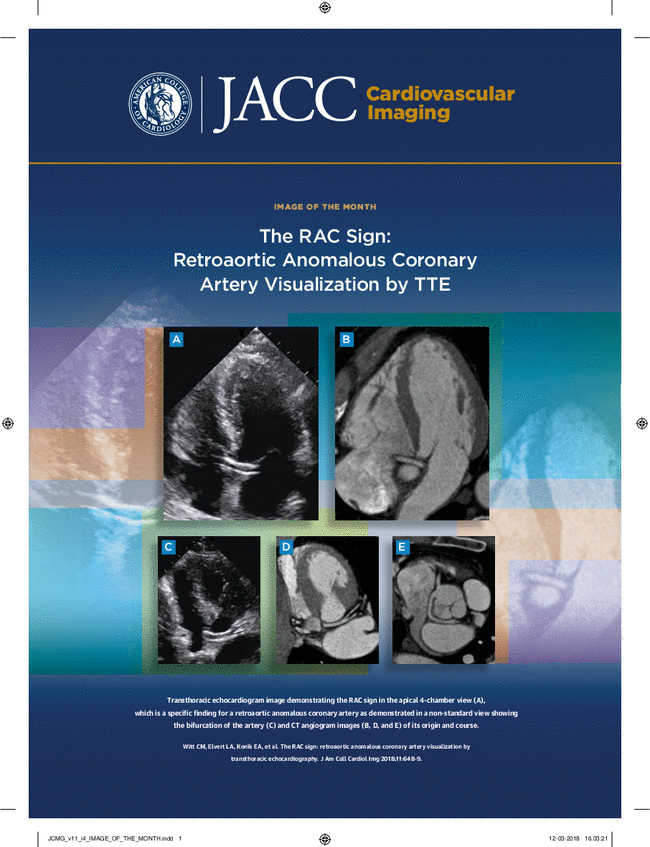
JACC: Cardiovascular Imaging, part of the prestigious Journal of the American College of Cardiology (JACC) family, offers readers a comprehensive perspective on all aspects of cardiovascular imaging. This specialist journal covers original clinical research on both non-invasive and invasive imaging techniques, including echocardiography, CT, CMR, nuclear, optical imaging, and cine-angiography.
JACC. Cardiovascular imaging highlights advances in basic science and molecular imaging that are expected to significantly impact clinical practice in the next decade. This influence encompasses improvements in diagnostic performance, enhanced understanding of the pathogenetic basis of diseases, and advancements in therapy.
In addition to cutting-edge research,the content of JACC: Cardiovascular Imaging emphasizes practical aspects for the practicing cardiologist, including advocacy and practice management.The journal also features state-of-the-art reviews, ensuring a well-rounded and insightful resource for professionals in the field of cardiovascular imaging.
 求助内容:
求助内容: 应助结果提醒方式:

 京公网安备 11010802042870号


