Paula Z Epping, Ramona Hagler, Noah M Werner, Jan Voth, Linea Schmidt, Niklas Huntemann, Ariel D Stern, Tobias Ruck, Sven G Meuth, Marc Pawlitzki, Lars Masanneck
{"title":"Case-Based Lessons on Remote Patient Monitoring in Neurology Using Consumer-Grade Wearables.","authors":"Paula Z Epping, Ramona Hagler, Noah M Werner, Jan Voth, Linea Schmidt, Niklas Huntemann, Ariel D Stern, Tobias Ruck, Sven G Meuth, Marc Pawlitzki, Lars Masanneck","doi":"10.1177/11795735261419641","DOIUrl":null,"url":null,"abstract":"<p><p>Consumer-grade wearables offer promising opportunities for remote patient monitoring (RPM) in neurological disorders, yet their clinical application remains uncertain. In this exploratory analysis, we draw on prospective observational trials using smartwatches in patients with multiple sclerosis, myasthenia gravis, chronic inflammatory demyelinating polyneuropathy, and migraine, who were monitored for 6 to 24 months. Through detailed clinical case narratives, we illustrate both the potential and the limitations of RPM in neurology. Wearable-generated data successfully captured early, clinically meaningful changes, such as the onset of a myasthenic exacerbation, and supported patient engagement in identifying individual triggers, including for migraine. However, external influences such as holidays, infections, or mobility aid use confounded activity signals, underscoring the importance of contextual interpretation. While wearables can enhance neurological care, their integration into clinical workflows is challenged by limited validation and interpretability. Realising their potential requires robust validation in clinical settings and the development of interoperable RPM platforms supported by close collaboration between clinicians, engineers, and patients.</p>","PeriodicalId":15218,"journal":{"name":"Journal of Central Nervous System Disease","volume":"18 ","pages":"11795735261419641"},"PeriodicalIF":2.8000,"publicationDate":"2026-02-11","publicationTypes":"Journal Article","fieldsOfStudy":null,"isOpenAccess":false,"openAccessPdf":"https://www.ncbi.nlm.nih.gov/pmc/articles/PMC12894642/pdf/","citationCount":"0","resultStr":null,"platform":"Semanticscholar","paperid":null,"PeriodicalName":"Journal of Central Nervous System Disease","FirstCategoryId":"1085","ListUrlMain":"https://doi.org/10.1177/11795735261419641","RegionNum":0,"RegionCategory":null,"ArticlePicture":[],"TitleCN":null,"AbstractTextCN":null,"PMCID":null,"EPubDate":"2026/1/1 0:00:00","PubModel":"eCollection","JCR":"Q2","JCRName":"CLINICAL NEUROLOGY","Score":null,"Total":0}
引用次数: 0
Abstract
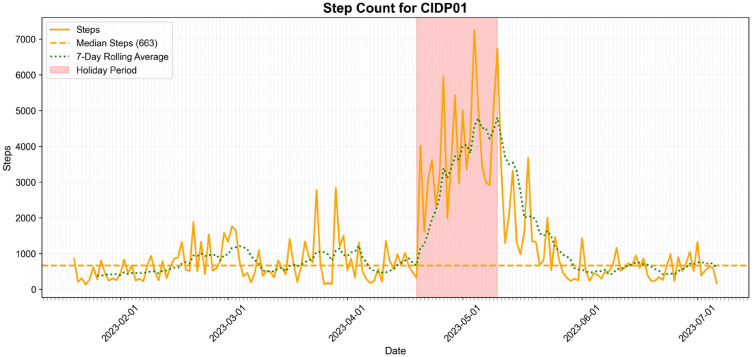
Consumer-grade wearables offer promising opportunities for remote patient monitoring (RPM) in neurological disorders, yet their clinical application remains uncertain. In this exploratory analysis, we draw on prospective observational trials using smartwatches in patients with multiple sclerosis, myasthenia gravis, chronic inflammatory demyelinating polyneuropathy, and migraine, who were monitored for 6 to 24 months. Through detailed clinical case narratives, we illustrate both the potential and the limitations of RPM in neurology. Wearable-generated data successfully captured early, clinically meaningful changes, such as the onset of a myasthenic exacerbation, and supported patient engagement in identifying individual triggers, including for migraine. However, external influences such as holidays, infections, or mobility aid use confounded activity signals, underscoring the importance of contextual interpretation. While wearables can enhance neurological care, their integration into clinical workflows is challenged by limited validation and interpretability. Realising their potential requires robust validation in clinical settings and the development of interoperable RPM platforms supported by close collaboration between clinicians, engineers, and patients.




 求助内容:
求助内容: 应助结果提醒方式:

 京公网安备 11010802042870号


