Maria Heloisa Freire, Rafael Linden, Yraima Cordeiro
{"title":"A phase separation hypothesis for the biological function of PrP: the role of multivalent interactions at the plasma membrane.","authors":"Maria Heloisa Freire, Rafael Linden, Yraima Cordeiro","doi":"10.1042/BST20253081","DOIUrl":null,"url":null,"abstract":"<p><p>Although the prion protein (PrP) is well established as the etiological agent of transmissible spongiform encephalopathies, its biological function remains under debate. Native, cellular PrP (PrPC) is a glycosylphosphatidylinositol-anchored protein that interacts with various proteins and other molecular ligands at the cell surface, triggering diverse cellular responses such as neuritogenesis and neuroprotection. PrPC has been proposed to act as a scaffolding protein, facilitating the assembly of multicomponent complexes at the membrane, with signal transduction occurring through the recruitment of transmembrane proteins. Recent findings demonstrate that PrP undergoes phase separation (PS) in vitro and in cellulo, mostly driven by its multivalency, intrinsically disordered N-terminal domain, and ability to bind polyanions. Considering recent data showing that membrane multicomponent complexes may assemble through PS, we discuss the possible formation of biomolecular condensates containing PrP at the membrane in light of previously described PrP protein ligands. In this mini-review, we examine PrP's interactions with key ligands such as epidermal growth factor receptor, apolipoprotein E, amyloid β oligomers, α-synuclein, N-methyl-D-aspartate receptor, postsynaptic density protein 95, integrin β1, and tau, assessing their relevance in PS-mediated condensate formation. These proteins were selected based on their direct or indirect interaction with PrP, biological effects, presence in a membrane environment, and evidence of participation in biomolecular condensates. Based on current evidence, we propose that PS may be a fundamental mechanism underlying PrP's biological role in the membrane.</p>","PeriodicalId":8841,"journal":{"name":"Biochemical Society transactions","volume":"54 1","pages":"83-93"},"PeriodicalIF":4.3000,"publicationDate":"2026-01-28","publicationTypes":"Journal Article","fieldsOfStudy":null,"isOpenAccess":false,"openAccessPdf":"https://www.ncbi.nlm.nih.gov/pmc/articles/PMC12905493/pdf/","citationCount":"0","resultStr":null,"platform":"Semanticscholar","paperid":null,"PeriodicalName":"Biochemical Society transactions","FirstCategoryId":"99","ListUrlMain":"https://doi.org/10.1042/BST20253081","RegionNum":3,"RegionCategory":"生物学","ArticlePicture":[],"TitleCN":null,"AbstractTextCN":null,"PMCID":null,"EPubDate":"","PubModel":"","JCR":"Q2","JCRName":"BIOCHEMISTRY & MOLECULAR BIOLOGY","Score":null,"Total":0}
引用次数: 0
Abstract
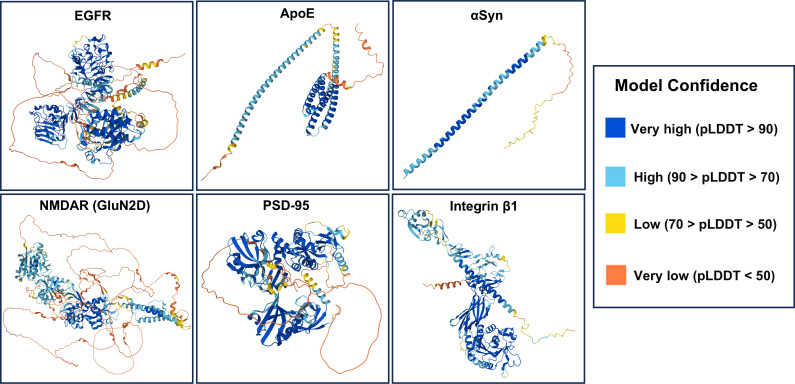
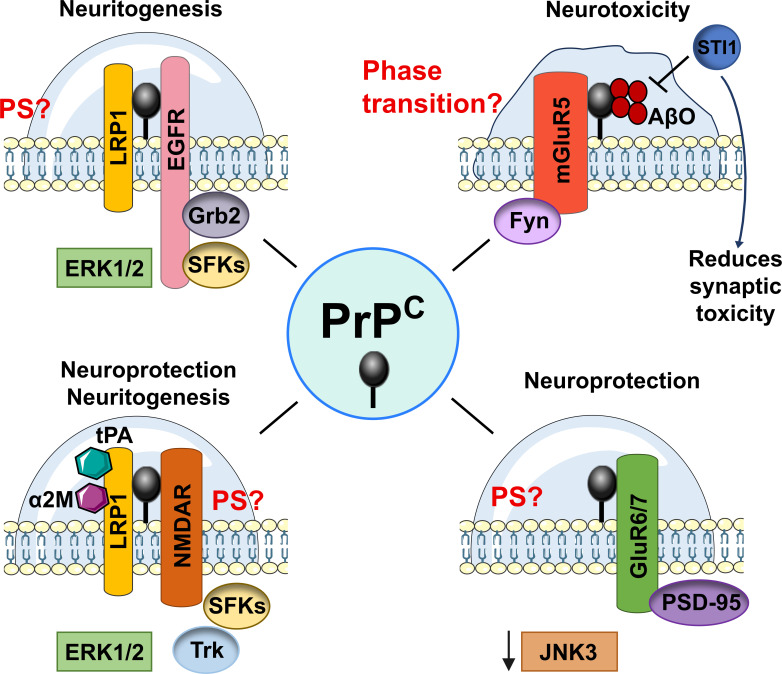
Although the prion protein (PrP) is well established as the etiological agent of transmissible spongiform encephalopathies, its biological function remains under debate. Native, cellular PrP (PrPC) is a glycosylphosphatidylinositol-anchored protein that interacts with various proteins and other molecular ligands at the cell surface, triggering diverse cellular responses such as neuritogenesis and neuroprotection. PrPC has been proposed to act as a scaffolding protein, facilitating the assembly of multicomponent complexes at the membrane, with signal transduction occurring through the recruitment of transmembrane proteins. Recent findings demonstrate that PrP undergoes phase separation (PS) in vitro and in cellulo, mostly driven by its multivalency, intrinsically disordered N-terminal domain, and ability to bind polyanions. Considering recent data showing that membrane multicomponent complexes may assemble through PS, we discuss the possible formation of biomolecular condensates containing PrP at the membrane in light of previously described PrP protein ligands. In this mini-review, we examine PrP's interactions with key ligands such as epidermal growth factor receptor, apolipoprotein E, amyloid β oligomers, α-synuclein, N-methyl-D-aspartate receptor, postsynaptic density protein 95, integrin β1, and tau, assessing their relevance in PS-mediated condensate formation. These proteins were selected based on their direct or indirect interaction with PrP, biological effects, presence in a membrane environment, and evidence of participation in biomolecular condensates. Based on current evidence, we propose that PS may be a fundamental mechanism underlying PrP's biological role in the membrane.
虽然朊蛋白(PrP)已被确定为传染性海绵状脑病的病原,但其生物学功能仍存在争议。原生细胞PrP (PrPC)是一种糖基磷脂酰肌醇锚定蛋白,可与细胞表面的多种蛋白质和其他分子配体相互作用,引发多种细胞反应,如神经生成和神经保护。PrPC被认为是一种支架蛋白,促进多组分复合物在膜上的组装,并通过跨膜蛋白的募集进行信号转导。最近的研究表明,PrP在体外和细胞内发生相分离(PS),主要是由其多价性、内在无序的n端结构域和结合多阴离子的能力驱动的。考虑到最近的数据显示膜多组分复合物可能通过PS组装,我们根据先前描述的PrP蛋白配体讨论了在膜上形成含有PrP的生物分子凝聚物的可能性。在这篇综述中,我们研究了PrP与关键配体(如表皮生长因子受体、载脂蛋白E、β淀粉样蛋白低聚物、α-突触核蛋白、n -甲基- d -天冬氨酸受体、突触后密度蛋白95、整合素β1和tau)的相互作用,评估了它们与ps介导的凝析物形成的相关性。这些蛋白的选择是基于它们与PrP的直接或间接相互作用、生物效应、在膜环境中的存在以及参与生物分子凝聚物的证据。根据目前的证据,我们提出PS可能是PrP在膜中的生物学作用的基本机制。
期刊介绍:
Biochemical Society Transactions is the reviews journal of the Biochemical Society. Publishing concise reviews written by experts in the field, providing a timely snapshot of the latest developments across all areas of the molecular and cellular biosciences.
Elevating our authors’ ideas and expertise, each review includes a perspectives section where authors offer comment on the latest advances, a glimpse of future challenges and highlighting the importance of associated research areas in far broader contexts.

 求助内容:
求助内容: 应助结果提醒方式:

 京公网安备 11010802042870号


