Dosimetric comparison of organs at risk in ultra-hypofractionated versus hypofractionated postoperative radiotherapy for early breast cancer: single center clinical study.
{"title":"Dosimetric comparison of organs at risk in ultra-hypofractionated versus hypofractionated postoperative radiotherapy for early breast cancer: single center clinical study.","authors":"Gordana Petkovska, Ivica Ratosa, Valentina Bojovska Trajanovska, Marina Iljovska, Albina Pupakovski Creslovnik, Emilija Lazareva","doi":"10.2478/raon-2026-0008","DOIUrl":null,"url":null,"abstract":"<p><strong>Background: </strong>Growing evidence of safety and feasibility has prompted a shift toward ultra-hypofractionated (UHF) schedules in postoperative radiotherapy in early breast cancer.</p><p><strong>Patients and methods: </strong>Eighty patients over 50 years of age with early breast cancer (T1-2 and N0-1) who underwent postoperative, 3D conformal, free-breathing whole breast radiotherapy were included. The prospective arm consisted of 40 patients treated with UHF (26 Gy/5 fractions/one week) from 2023-2024, whereas the control arm was retrospective and represented by data from 40 patients treated with hypofractionated radiotherapy (HF) (40.5-42.2Gy/15-16 fractions/3 weeks) between 2015 and 2020. Dosimetric parameters for organs at risk (OARs) (heart and ipsilateral lung) were derived from the dose-volume histograms. Statistical evaluation was done with paired sample t-test and Mann-Whitney U test.</p><p><strong>Results: </strong>Dosimetric analysis revealed that patients treated with UHF schedule received significantly lower equivalent doses in 2 Gy fractions (EQD<sub>2</sub>Gy) to OARs compared with those treated with the HF schedule. The mean ipsilateral lung EQD<sub>2</sub>Gy dose was significantly lower in the UHF group (3.94 ± 2.1 Gy) than in the HF group (6.24 ± 2.4 Gy; <i>p</i> < 0.01). Among patients with left-sided breast cancer, the mean heart EQD<sub>2</sub>Gy dose was also significantly reduced in the UHF group (1.34 ± 0.5 Gy) compared with the HF group (3.02 ± 1.4 Gy; <i>p</i> < 0.01).</p><p><strong>Conclusions: </strong>These findings indicate a consistent dosimetric advantage of the UHF schedule, particularly in reducing radiation exposure to the heart and ipsilateral lung. These results support the dosimetric safety and feasibility of UHF schedules in early breast cancer treatment.</p>","PeriodicalId":21034,"journal":{"name":"Radiology and Oncology","volume":" ","pages":"124-131"},"PeriodicalIF":2.3000,"publicationDate":"2026-02-06","publicationTypes":"Journal Article","fieldsOfStudy":null,"isOpenAccess":false,"openAccessPdf":"https://www.ncbi.nlm.nih.gov/pmc/articles/PMC13012382/pdf/","citationCount":"0","resultStr":null,"platform":"Semanticscholar","paperid":null,"PeriodicalName":"Radiology and Oncology","FirstCategoryId":"3","ListUrlMain":"https://doi.org/10.2478/raon-2026-0008","RegionNum":4,"RegionCategory":"医学","ArticlePicture":[],"TitleCN":null,"AbstractTextCN":null,"PMCID":null,"EPubDate":"2026/3/1 0:00:00","PubModel":"eCollection","JCR":"Q3","JCRName":"ONCOLOGY","Score":null,"Total":0}
引用次数: 0
Abstract
Background: Growing evidence of safety and feasibility has prompted a shift toward ultra-hypofractionated (UHF) schedules in postoperative radiotherapy in early breast cancer.
Patients and methods: Eighty patients over 50 years of age with early breast cancer (T1-2 and N0-1) who underwent postoperative, 3D conformal, free-breathing whole breast radiotherapy were included. The prospective arm consisted of 40 patients treated with UHF (26 Gy/5 fractions/one week) from 2023-2024, whereas the control arm was retrospective and represented by data from 40 patients treated with hypofractionated radiotherapy (HF) (40.5-42.2Gy/15-16 fractions/3 weeks) between 2015 and 2020. Dosimetric parameters for organs at risk (OARs) (heart and ipsilateral lung) were derived from the dose-volume histograms. Statistical evaluation was done with paired sample t-test and Mann-Whitney U test.
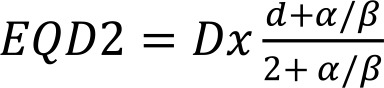
Results: Dosimetric analysis revealed that patients treated with UHF schedule received significantly lower equivalent doses in 2 Gy fractions (EQD2Gy) to OARs compared with those treated with the HF schedule. The mean ipsilateral lung EQD2Gy dose was significantly lower in the UHF group (3.94 ± 2.1 Gy) than in the HF group (6.24 ± 2.4 Gy; p < 0.01). Among patients with left-sided breast cancer, the mean heart EQD2Gy dose was also significantly reduced in the UHF group (1.34 ± 0.5 Gy) compared with the HF group (3.02 ± 1.4 Gy; p < 0.01).
Conclusions: These findings indicate a consistent dosimetric advantage of the UHF schedule, particularly in reducing radiation exposure to the heart and ipsilateral lung. These results support the dosimetric safety and feasibility of UHF schedules in early breast cancer treatment.
期刊介绍:
Radiology and Oncology is a multidisciplinary journal devoted to the publishing original and high quality scientific papers and review articles, pertinent to diagnostic and interventional radiology, computerized tomography, magnetic resonance, ultrasound, nuclear medicine, radiotherapy, clinical and experimental oncology, radiobiology, medical physics and radiation protection. Therefore, the scope of the journal is to cover beside radiology the diagnostic and therapeutic aspects in oncology, which distinguishes it from other journals in the field.

 求助内容:
求助内容: 应助结果提醒方式:

 京公网安备 11010802042870号


