
Recycling coal gangue into advanced CO₂ sorbents: metal-doped Li₄SiO₄ for enhanced capture efficiency
IF 5.7
3区 材料科学
Q2 MATERIALS SCIENCE, MULTIDISCIPLINARY
Materials Research Bulletin
Pub Date : 2026-06-01
Epub Date: 2026-02-10
DOI:10.1016/j.materresbull.2026.114059
引用次数: 0
Abstract
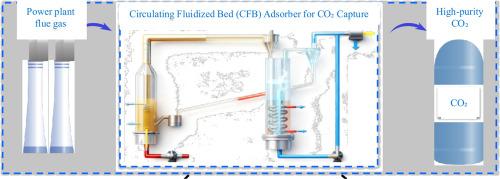
Coal-gangue backfilling offers potential for mineral-based CO₂ sequestration, as gangue can react with injected CO₂ to form stable carbonates. A stable CO₂ supply requires efficient capture technologies, for which lithium orthosilicate (Li₄SiO₄) is a promising high-temperature sorbent. Its broader use is limited by the cost of conventional silica, so in this study, amorphous SiO₂ from coal gangue was used as a sustainable precursor for solid-state synthesis of Li₄SiO₄. Targeted K⁺ and Nd³⁺ doping were employed to improve performance. K⁺ doping promotes LiKCO₃ formation and accelerates surface reactions, achieving high initial CO₂ uptake (36.15 wt%) but lower cyclic stability. In contrast, Nd³⁺ doping preserves the Li₄SiO₄ phase, enhances internal diffusion, and maintains stable uptake (34–36 wt%) over 20 cycles, with LiNd-0.10 showing the best multi-cycle performance. This approach provides a cost-effective, environmentally friendly route to high-performance CO₂ sorbents from waste silica, combining carbon capture and solid waste valorization.
将煤矸石回收为高级CO₂吸附剂:掺杂金属的Li₄SiO₄,提高捕集效率
煤矸石充填为矿物基CO 2封存提供了潜力,因为煤矸石可以与注入的CO 2发生反应,形成稳定的碳酸盐。稳定的CO₂供应需要高效的捕集技术,其中正硅酸锂(Li₄SiO₄)是一种很有前途的高温吸附剂。它的广泛应用受到传统二氧化硅成本的限制,因此在本研究中,以煤矸石中的无定形SiO₂作为固态合成Li₄SiO₄的可持续前体。采用靶向K +和Nd +掺杂来提高性能。K +掺杂促进了LiKCO₃的形成,加速了表面反应,实现了高的初始CO₂吸收率(36.15 wt%),但较低的循环稳定性。Nd³+掺杂保留了Li₄SiO₄相,增强了内部扩散,在20个循环中保持稳定的吸收(34-36 wt%),其中LiNd-0.10表现出最好的多循环性能。这种方法结合了碳捕获和固体废物增值,为从废二氧化硅中提取高性能CO 2吸附剂提供了一种经济高效、环保的途径。
本文章由计算机程序翻译,如有差异,请以英文原文为准。
求助全文
约1分钟内获得全文
求助全文
来源期刊
Materials Research Bulletin
工程技术-材料科学:综合
CiteScore
9.80
自引率
5.60%
发文量
372
审稿时长
42 days
期刊介绍:
Materials Research Bulletin is an international journal reporting high-impact research on processing-structure-property relationships in functional materials and nanomaterials with interesting electronic, magnetic, optical, thermal, mechanical or catalytic properties. Papers purely on thermodynamics or theoretical calculations (e.g., density functional theory) do not fall within the scope of the journal unless they also demonstrate a clear link to physical properties. Topics covered include functional materials (e.g., dielectrics, pyroelectrics, piezoelectrics, ferroelectrics, relaxors, thermoelectrics, etc.); electrochemistry and solid-state ionics (e.g., photovoltaics, batteries, sensors, and fuel cells); nanomaterials, graphene, and nanocomposites; luminescence and photocatalysis; crystal-structure and defect-structure analysis; novel electronics; non-crystalline solids; flexible electronics; protein-material interactions; and polymeric ion-exchange membranes.
 求助内容:
求助内容: 应助结果提醒方式:

 京公网安备 11010802042870号


