
Design of poly(vinyl alcohol)-based nanocomposite hydrogels for removal and degradation of pollutants in wastewater: A critical review
IF 8.1
2区 化学
Q1 POLYMER SCIENCE
Polymer Degradation and Stability
Pub Date : 2026-05-01
Epub Date: 2026-02-04
DOI:10.1016/j.polymdegradstab.2026.111984
引用次数: 0
Abstract
Polymer-based nanocomposite hydrogels have received much attention due to their versatile properties and wide-ranging applications across different fields. Poly(vinyl alcohol) (PVA), rich in hydroxyl groups, readily forms physical and/or chemical bonds with both polymeric and non-polymeric materials, enabling the design of composite hydrogels that exhibit synergistic enhancements in properties. These composite hydrogels can be synthesized in various forms, including bulks, membranes, films, fibers, sponges, and beads, depending on their intended applications. Specifically, nanocomposite hydrogels incorporating metal nanoparticles (mNPs) have been fabricated via diverse approaches, such as chemical and green synthesis. These resulting nanocomposite hydrogels exhibit several crucial functionalities. They demonstrate responsiveness to external stimuli, including changes in pH, temperature, and ionic strength, depending on the nature of the hydrogel, as well as catalytic and antimicrobial properties attributed to the incorporated mNPs. This review discusses the various strategies employed in the design of PVA-based hydrogels, with a specific focus on nanocomposite hydrogels. This study also specifically emphasizes their applications as adsorbents for removing pollutants from water and their innovative roles as catalysts and antimicrobial agents for treating wastewater contaminated with dyes, nitroarenes, and various microorganisms. Finally, the article highlights future directions for research in previously unexplored areas.
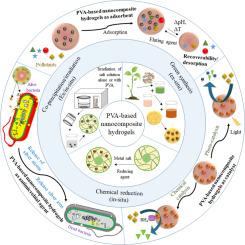
聚乙烯醇基纳米复合水凝胶去除和降解废水中污染物的研究进展
聚合物基纳米复合水凝胶由于其多用途的特性和在不同领域的广泛应用而受到广泛关注。聚乙烯醇(PVA)富含羟基,很容易与聚合物和非聚合物材料形成物理和/或化学键,从而可以设计出具有协同增强性能的复合水凝胶。这些复合水凝胶可以以各种形式合成,包括大块、膜、薄膜、纤维、海绵和珠状,这取决于它们的预期应用。具体来说,包含金属纳米颗粒(mNPs)的纳米复合水凝胶已经通过多种方法制造出来,例如化学合成和绿色合成。这些纳米复合水凝胶表现出几个关键的功能。它们表现出对外部刺激的响应性,包括pH值、温度和离子强度的变化,这取决于水凝胶的性质,以及归因于纳入mNPs的催化和抗菌性能。这篇综述讨论了设计基于聚乙烯醇的水凝胶的各种策略,特别关注纳米复合水凝胶。本研究还特别强调了它们作为吸附剂去除水中污染物的应用,以及它们作为催化剂和抗菌剂处理被染料、硝基芳烃和各种微生物污染的废水的创新作用。最后,文章强调了以前未开发领域的未来研究方向。
本文章由计算机程序翻译,如有差异,请以英文原文为准。
求助全文
约1分钟内获得全文
求助全文
来源期刊
Polymer Degradation and Stability
化学-高分子科学
CiteScore
10.10
自引率
10.20%
发文量
325
审稿时长
23 days
期刊介绍:
Polymer Degradation and Stability deals with the degradation reactions and their control which are a major preoccupation of practitioners of the many and diverse aspects of modern polymer technology.
Deteriorative reactions occur during processing, when polymers are subjected to heat, oxygen and mechanical stress, and during the useful life of the materials when oxygen and sunlight are the most important degradative agencies. In more specialised applications, degradation may be induced by high energy radiation, ozone, atmospheric pollutants, mechanical stress, biological action, hydrolysis and many other influences. The mechanisms of these reactions and stabilisation processes must be understood if the technology and application of polymers are to continue to advance. The reporting of investigations of this kind is therefore a major function of this journal.
However there are also new developments in polymer technology in which degradation processes find positive applications. For example, photodegradable plastics are now available, the recycling of polymeric products will become increasingly important, degradation and combustion studies are involved in the definition of the fire hazards which are associated with polymeric materials and the microelectronics industry is vitally dependent upon polymer degradation in the manufacture of its circuitry. Polymer properties may also be improved by processes like curing and grafting, the chemistry of which can be closely related to that which causes physical deterioration in other circumstances.
 求助内容:
求助内容: 应助结果提醒方式:

 京公网安备 11010802042870号


