{"title":"Expert Consensus on Ethical Governance for Clinical Applications of Generative Medical Artificial Intelligence(2025 Edition).","authors":"Meng-Chun Gong, Yong-Hui Ma, Hui Pan, Hua Bai, Hui Dai, Wei Chen, Hui Liu, Kai Gong, Zhi-Rong Zeng, Hao Wu, Yun Zhou, Zi-Hao Ouyang, Yan Luo, Bo-Han Zhang, Jun-Rong Liu, Xun-Ming Ji","doi":"10.3881/j.issn.1000-503X.17220","DOIUrl":null,"url":null,"abstract":"<p><p>The research and innovative applications of generative medical artificial intelligence(GMAI)are rapidly advancing in the healthcare field.Significant breakthroughs of GMAI have been achieved in areas such as generating diagnostic suggestions,optimizing treatment plans,and assisting doctor-patient communication,profoundly reshaping the paradigm of clinical diagnosis and treatment.However,the open-ended nature of GMAI's generation raises novel ethical challenges,including algorithmic bias,ambiguous accountability,data privacy breaches,and insufficient cultural adaptability.Current ethical governance lags behind technological implementation,necessitating the establishment of a standardized governance framework.Our research team assembled a multidisciplinary panel of experts spanning medical ethics,clinical medicine,medical artificial intelligence,hospital management,public health,and law.According to the governance logic of \"prevention-control-remediation\" and integrating international norms with domestic policies,this consensus was developed through two rounds of expert consultation to unify opinions and perspectives.It aims to provide a reference for the specific practice of clinical ethical review in the research and clinical application of GMAI and to establish an authoritative guidance framework for the clinical ethical governance of GMAI,tailored to China's cultural context and national requirements.</p>","PeriodicalId":6919,"journal":{"name":"中国医学科学院学报","volume":" ","pages":"24-37"},"PeriodicalIF":0.0000,"publicationDate":"2026-02-01","publicationTypes":"Journal Article","fieldsOfStudy":null,"isOpenAccess":false,"openAccessPdf":"","citationCount":"0","resultStr":null,"platform":"Semanticscholar","paperid":null,"PeriodicalName":"中国医学科学院学报","FirstCategoryId":"1087","ListUrlMain":"https://doi.org/10.3881/j.issn.1000-503X.17220","RegionNum":0,"RegionCategory":null,"ArticlePicture":[],"TitleCN":null,"AbstractTextCN":null,"PMCID":null,"EPubDate":"","PubModel":"","JCR":"Q4","JCRName":"Medicine","Score":null,"Total":0}
引用次数: 0
Abstract
The research and innovative applications of generative medical artificial intelligence(GMAI)are rapidly advancing in the healthcare field.Significant breakthroughs of GMAI have been achieved in areas such as generating diagnostic suggestions,optimizing treatment plans,and assisting doctor-patient communication,profoundly reshaping the paradigm of clinical diagnosis and treatment.However,the open-ended nature of GMAI's generation raises novel ethical challenges,including algorithmic bias,ambiguous accountability,data privacy breaches,and insufficient cultural adaptability.Current ethical governance lags behind technological implementation,necessitating the establishment of a standardized governance framework.Our research team assembled a multidisciplinary panel of experts spanning medical ethics,clinical medicine,medical artificial intelligence,hospital management,public health,and law.According to the governance logic of "prevention-control-remediation" and integrating international norms with domestic policies,this consensus was developed through two rounds of expert consultation to unify opinions and perspectives.It aims to provide a reference for the specific practice of clinical ethical review in the research and clinical application of GMAI and to establish an authoritative guidance framework for the clinical ethical governance of GMAI,tailored to China's cultural context and national requirements.
期刊介绍:
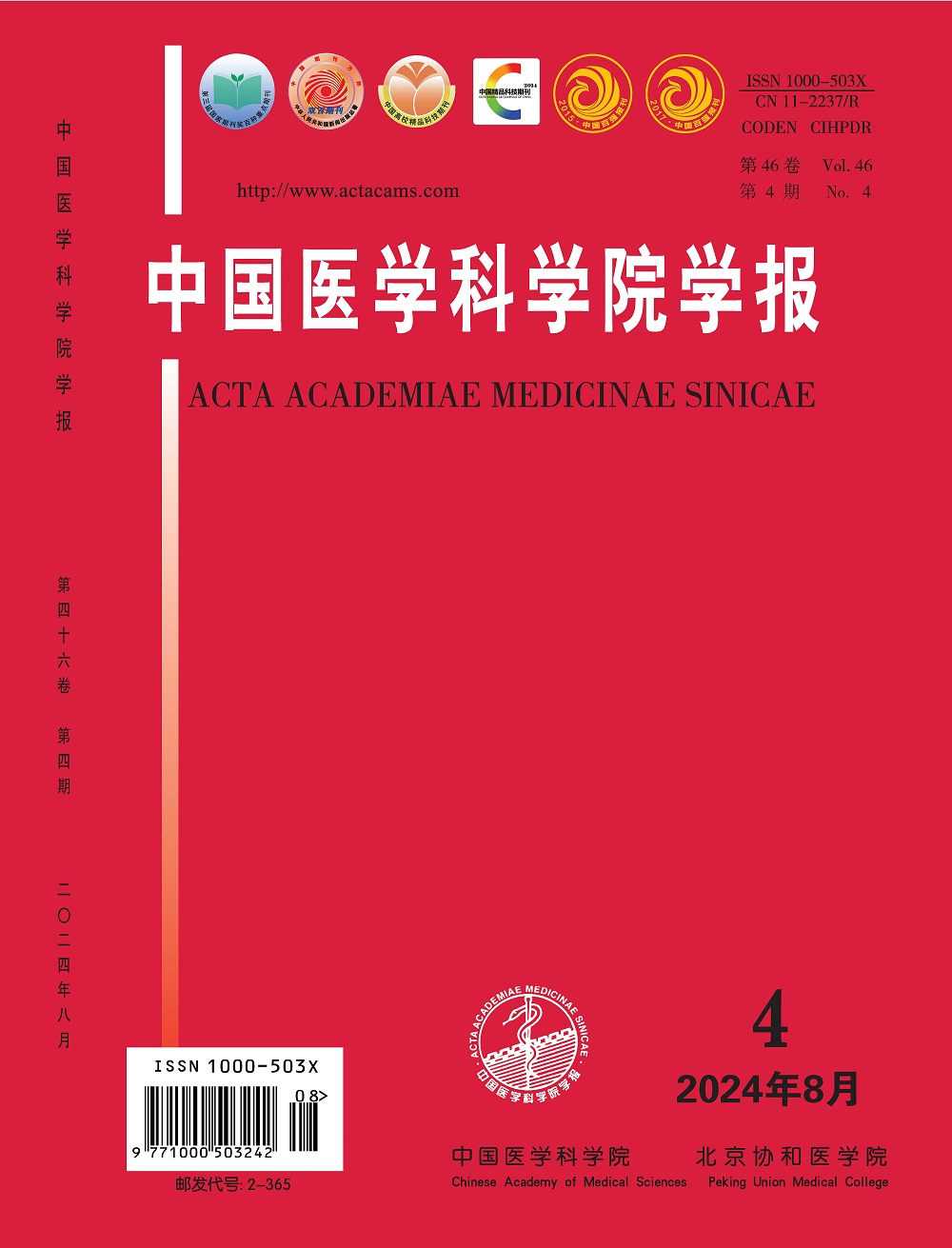
Acta Academiae Medicinae Sinicae was founded in February 1979. It is a comprehensive medical academic journal published in China and abroad, supervised by the Ministry of Health of the People's Republic of China and sponsored by the Chinese Academy of Medical Sciences and Peking Union Medical College.
The journal mainly reports the latest research results, work progress and dynamics in the fields of basic medicine, clinical medicine, pharmacy, preventive medicine, biomedicine, medical teaching and research, aiming to promote the exchange of medical information and improve the academic level of medicine. At present, the journal has been included in 10 famous foreign retrieval systems and their databases [Medline (PubMed online version), Elsevier, EMBASE, CA, WPRIM, ExtraMED, IC, JST, UPD and EBSCO-ASP]; and has been included in important domestic retrieval systems and databases [China Science Citation Database (Documentation and Information Center of the Chinese Academy of Sciences), China Core Journals Overview (Peking University Library), China Science and Technology Paper Statistical Source Database (China Science and Technology Core Journals) (China Institute of Scientific and Technological Information), China Science and Technology Journal Paper and Citation Database (China Institute of Scientific and Technological Information)].

 求助内容:
求助内容: 应助结果提醒方式:

 京公网安备 11010802042870号


