
Structural innovation and electrochemical progress in phosphate-based polyanionic oxide cathodes for high-performance sodium-ion batteries
IF 24.1
1区 材料科学
Q1 MATERIALS SCIENCE, MULTIDISCIPLINARY
引用次数: 0
Abstract
The growing need for sustainable and high-performance energy storage technologies has positioned sodium-ion batteries (SIBs) as a viable alternative to lithium-ion batteries (LIBs), largely owing to the abundance, widespread geographic distribution, and economic benefits of sodium resources. Phosphate- and pyrophosphate-based polyanionic oxide materials are prominent cathode candidates due to their strong structural integrity, excellent thermal stability, and high operational safety. These materials demonstrate elevated working voltages and consistent sodium storage characteristics, rendering them especially suitable for extensive applications. However, their extensive use is constrained by inherent limitations, such as inadequate electronic conductivity and moderate specific capacities, which limit their rate capability and energy density. Despite the increasing amount of research in polyanionic cathodes, there is currently no comprehensive analysis that systematically outlines optimization methodologies from a structural evolution perspective or creates a coherent framework linking crystal chemistry and sodium storage behavior. Addressing this gap is critical for directing rational design and hastening technological adoption. This review examines recent developments in phosphate-based polyanion cathode materials, including simple phosphates, pyrophosphates, and mixed polyanionic frameworks. Modification strategies are emphasized, including elemental doping, surface carbon coating, morphology control, and advanced electrode design, all intended to enhance electrochemical performance and address conductivity limitations. The review critically assesses the relationship among crystal structure, synthesis methodology, and sodium-ion diffusion kinetics. Future research directions are outlined, focusing on scalable synthesis, enhanced rate performance, and commercial viability, to provide a roadmap for advancing next-generation phosphate-based polyanionic cathodes for SIBs.
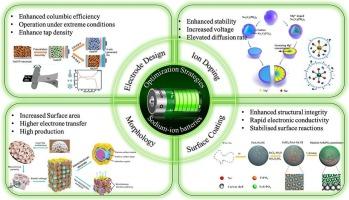
高性能钠离子电池用磷酸盐基聚阴离子氧化物阴极的结构创新和电化学进展
对可持续和高性能储能技术日益增长的需求使钠离子电池(sib)成为锂离子电池(lib)的可行替代品,这主要归功于钠资源的丰富,广泛的地理分布和经济效益。磷酸盐和焦磷酸盐基聚阴离子氧化物材料因其结构完整性强、热稳定性好和操作安全性高而成为阴极材料的重要候选材料。这些材料表现出较高的工作电压和一致的钠储存特性,使它们特别适合广泛应用。然而,它们的广泛使用受到固有限制的限制,例如不充分的电子导电性和适度的比容量,这限制了它们的速率能力和能量密度。尽管对聚阴离子阴极的研究越来越多,但目前还没有全面的分析从结构演化的角度系统地概述优化方法,或者创建一个连接晶体化学和钠储存行为的连贯框架。解决这一差距对于指导合理设计和加速技术采用至关重要。本文综述了磷酸盐基聚阴离子正极材料的最新进展,包括简单磷酸盐、焦磷酸盐和混合聚阴离子框架。强调了修饰策略,包括元素掺杂、表面碳涂层、形貌控制和先进的电极设计,所有这些都旨在提高电化学性能和解决电导率限制。这篇综述批判性地评估了晶体结构、合成方法和钠离子扩散动力学之间的关系。概述了未来的研究方向,重点是可扩展合成,提高速率性能和商业可行性,为推进下一代磷酸基sib聚阴离子阴极提供路线图。
本文章由计算机程序翻译,如有差异,请以英文原文为准。
求助全文
约1分钟内获得全文
求助全文
来源期刊
Materials Today
工程技术-材料科学:综合
CiteScore
36.30
自引率
1.20%
发文量
237
审稿时长
23 days
期刊介绍:
Materials Today is the leading journal in the Materials Today family, focusing on the latest and most impactful work in the materials science community. With a reputation for excellence in news and reviews, the journal has now expanded its coverage to include original research and aims to be at the forefront of the field.
We welcome comprehensive articles, short communications, and review articles from established leaders in the rapidly evolving fields of materials science and related disciplines. We strive to provide authors with rigorous peer review, fast publication, and maximum exposure for their work. While we only accept the most significant manuscripts, our speedy evaluation process ensures that there are no unnecessary publication delays.
 求助内容:
求助内容: 应助结果提醒方式:

 京公网安备 11010802042870号


