
Discovery and functional validation of a gut microbiota-metabolite-miRNA axis in diabetic encephalopathy
IF 3
3区 生物学
Q2 BIOCHEMISTRY & MOLECULAR BIOLOGY
Archives of biochemistry and biophysics
Pub Date : 2026-05-01
Epub Date: 2026-02-04
DOI:10.1016/j.abb.2026.110759
引用次数: 0
Abstract
Background
Diabetic encephalopathy (DE), a severe neurological complication of diabetes, is characterized by cognitive decline and neuronal damage. While gut microbiota dysbiosis has been implicated in diabetes pathogenesis, its specific role and molecular mechanisms in DE remain unclear.
Methods
A multi-omics approach integrating 16S rRNA sequencing and untargeted metabolomics was performed on fecal samples from 29 DE patients and 31 diabetic controls (DM). An in vitro DE model was established using high glucose (HG)-treated HT22 cells, which were further incubated with sterile fecal microbiota supernatant (FMS) from DE patients. Neuronal viability, apoptosis, oxidative stress markers (SOD, MDA, ROS), and miR-493-3p expression were assessed. The miR-493-3p/RAF1 interaction was validated using dual-luciferase reporter assays and Western blot.
Results
No significant differences in overall microbial diversity were identified in DE and DM cohorts. However, DE patients exhibited distinct gut microbiota composition, with elevated Verrucomicrobiotaand Bacteroidota, and reduced Proteobacteriaand Firmicutes. Metabolomic analysis revealed 160 differentially abundant metabolites enriched in amino acid and lipid metabolism pathways. In vitro, DE-derived FMS dose-dependently exacerbated HG-induced neuronal oxidative damage and apoptosis, concomitant with miR-493-3p upregulation. Inhibition of miR-493-3p attenuated these damaging effects and restored RAF1 expression. RAF1 was confirmed as a direct target of miR-493-3p, and its downregulation was critical in mediating FMS-induced neuronal injury.
Conclusion
This study identified a novel gut-brain axis pathway in DE, whereby gut microbiota dysbiosis and metabolic alterations promote neuronal damage via the miR-493-3p/RAF1 signaling axis. These findings provide new insights into DE pathogenesis and suggest potential therapeutic targets for this debilitating complication.
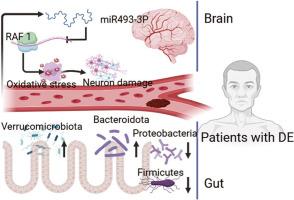
糖尿病脑病中肠道微生物-代谢物- mirna轴的发现和功能验证。
背景:糖尿病性脑病(Diabetic enceopathy, DE)是糖尿病的一种严重神经系统并发症,以认知能力下降和神经元损伤为特征。虽然肠道菌群失调与糖尿病发病有关,但其在DE中的具体作用和分子机制尚不清楚。方法:采用多组学方法整合16S rRNA测序和非靶向代谢组学对29例DE患者和31例糖尿病对照组(DM)的粪便样本进行分析。采用高糖(HG)处理的HT22细胞建立体外DE模型,并与DE患者无菌粪便微生物群上清(FMS)孵育。评估神经元活力、凋亡、氧化应激标志物(SOD、MDA、ROS)和miR-493-3p的表达。通过双荧光素酶报告基因检测和Western blot验证miR-493-3p/RAF1的相互作用。结果:在DE组和DM组中,总体微生物多样性没有显著差异。然而,DE患者表现出不同的肠道菌群组成,疣菌群和拟杆菌群升高,变形菌群和厚壁菌群减少。代谢组学分析显示160种差异丰富的代谢物富集于氨基酸和脂质代谢途径。在体外,de来源的FMS剂量依赖性地加重了hg诱导的神经元氧化损伤和凋亡,同时伴有miR-493-3p上调。抑制miR-493-3p可减轻这些损伤作用并恢复RAF1的表达。证实RAF1是miR-493-3p的直接靶点,其下调在介导fms诱导的神经元损伤中起关键作用。结论:本研究在DE中发现了一种新的肠-脑轴通路,肠道微生物群失调和代谢改变通过miR-493-3p/RAF1信号轴促进神经元损伤。这些发现为DE的发病机制提供了新的见解,并提出了这种衰弱并发症的潜在治疗靶点。
本文章由计算机程序翻译,如有差异,请以英文原文为准。
求助全文
约1分钟内获得全文
求助全文
来源期刊
Archives of biochemistry and biophysics
生物-生化与分子生物学
CiteScore
7.40
自引率
0.00%
发文量
245
审稿时长
26 days
期刊介绍:
Archives of Biochemistry and Biophysics publishes quality original articles and reviews in the developing areas of biochemistry and biophysics.
Research Areas Include:
• Enzyme and protein structure, function, regulation. Folding, turnover, and post-translational processing
• Biological oxidations, free radical reactions, redox signaling, oxygenases, P450 reactions
• Signal transduction, receptors, membrane transport, intracellular signals. Cellular and integrated metabolism.
 求助内容:
求助内容: 应助结果提醒方式:

 京公网安备 11010802042870号


