
Raman spectroscopy with machine-learning classification for the prediction of stereotactic radiotherapy induced treatment toxicity in high-risk localised prostate cancer
IF 4.6
2区 化学
Q1 SPECTROSCOPY
Spectrochimica Acta Part A: Molecular and Biomolecular Spectroscopy
Pub Date : 2026-05-05
Epub Date: 2026-01-29
DOI:10.1016/j.saa.2026.127529
引用次数: 0
Abstract
Radiotherapy can lead to late-onset toxicity, to varying extents between individuals due to differences in radiosensitivity. Predicting which patients are most at risk is key to augmenting the therapeutic window. However, the underlying biological mechanisms remain poorly understood, and current experimental methods often lack clinical applicability. This study employs Raman spectroscopy to analyse biochemical profiles in peripheral lymphocytes and plasma, aiming to monitor radiotherapeutic response and predict intrinsic radiosensitivity in high-risk localised prostate cancer patients treated with stereotactic radiotherapy. Partial-least squares discriminant analysis classification of Raman spectra at baseline (n = 20) from post-hormone therapy (n = 19), mid-treatment (pre-4th fraction; n = 21) and 3-months after treatment (n = 18) returned mean area under the curve values ranging from 0.88 to 0.93. Ensemble classifiers applied to imbalanced late toxicity datasets (grade 0–1, n = 16; grade 2+, n = 4) yielded mean F1 scores of 0.74 (random forest, lymphocytes) and 0.69 (AdaBoost, plasma); metrics based on best performing model for minority-class. Classical least squares lymphocyte and plasma toxicity models identified major concentration differences in amino acids, proteins, lipids, DNA and related biomolecules (p < 0.05). These findings demonstrate the potential of Raman spectroscopy as a minimally invasive, objective tool for classifying blood-based biochemical profiles across radiotherapy treatment time points and distinguishing patients with late grade 0–1 and grade 2+ toxicity.
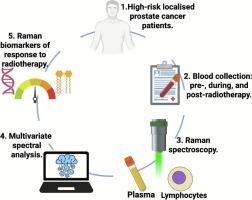
拉曼光谱与机器学习分类预测立体定向放疗诱导的高风险局部前列腺癌治疗毒性。
放射治疗可导致迟发性毒性,由于放射敏感性的差异,个体之间的毒性程度不同。预测哪些患者风险最大是扩大治疗窗口期的关键。然而,潜在的生物学机制仍然知之甚少,目前的实验方法往往缺乏临床适用性。本研究采用拉曼光谱分析外周淋巴细胞和血浆的生化特征,旨在监测立体定向放疗治疗的高危局部前列腺癌患者的放射治疗反应并预测其内在放射敏感性。对激素治疗后(n = 19)、治疗中期(前4段,n = 21)和治疗后3个月(n = 18)基线(n = 20)的拉曼光谱进行偏最小二乘判别分析分类,得到曲线下平均面积为0.88 ~ 0.93。集成分类器应用于不平衡的晚期毒性数据集(0-1级,n = 16; 2+级,n = 4),平均F1评分为0.74(随机森林,淋巴细胞)和0.69 (AdaBoost,血浆);基于少数族裔最佳表现模型的指标。经典的最小二乘淋巴细胞和血浆毒性模型确定了氨基酸、蛋白质、脂质、DNA和相关生物分子的主要浓度差异
本文章由计算机程序翻译,如有差异,请以英文原文为准。
求助全文
约1分钟内获得全文
求助全文
来源期刊
CiteScore
8.40
自引率
11.40%
发文量
1364
审稿时长
40 days
期刊介绍:
Spectrochimica Acta, Part A: Molecular and Biomolecular Spectroscopy (SAA) is an interdisciplinary journal which spans from basic to applied aspects of optical spectroscopy in chemistry, medicine, biology, and materials science.
The journal publishes original scientific papers that feature high-quality spectroscopic data and analysis. From the broad range of optical spectroscopies, the emphasis is on electronic, vibrational or rotational spectra of molecules, rather than on spectroscopy based on magnetic moments.
Criteria for publication in SAA are novelty, uniqueness, and outstanding quality. Routine applications of spectroscopic techniques and computational methods are not appropriate.
Topics of particular interest of Spectrochimica Acta Part A include, but are not limited to:
Spectroscopy and dynamics of bioanalytical, biomedical, environmental, and atmospheric sciences,
Novel experimental techniques or instrumentation for molecular spectroscopy,
Novel theoretical and computational methods,
Novel applications in photochemistry and photobiology,
Novel interpretational approaches as well as advances in data analysis based on electronic or vibrational spectroscopy.
 求助内容:
求助内容: 应助结果提醒方式:

 京公网安备 11010802042870号


