
Molecular prevalence of Ehrlichia canis in dogs examined at the Hospital de Clínicas Veterinárias of Universidade Federal de Pelotas, Southern Rio Grande do Sul, Brazil
IF 2.4
Q3 INFECTIOUS DISEASES
Parasite Epidemiology and Control
Pub Date : 2026-05-01
Epub Date: 2026-02-04
DOI:10.1016/j.parepi.2026.e00480
引用次数: 0
Abstract
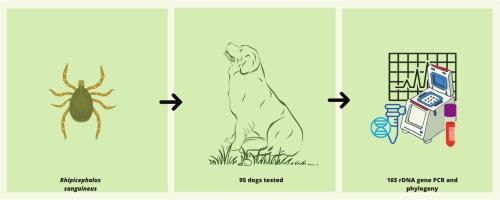
Ehrlichia canis is a pathogen that causes a multisystemic disease in dogs of all ages and sexes and belongs to a genus with zoonotic potential. This study aimed to determine the molecular prevalence of E. canis in a population of dogs with no clinical suspicion of ehrlichiosis, examined at the Hospital de Clínicas Veterinária, Universidade Federal de Pelotas (HCV, UFPel). Blood samples from 95 dogs were analyzed at the Veterinary Molecular Biology Laboratory (LabMol-Vet) using nested PCR (nPCR) targeting a 16S rDNA fragment. Amplified products were analyzed by electrophoresis on 1.5% agarose gel and visualized under UV light, revealing a molecular prevalence of 16.84% (16/95). Two PCR products were sequenced for phylogenetic analysis, providing complementary confirmation. This study represents one of the few molecular prevalence investigations conducted in Rio Grande do Sul, Brazil, and underscore the need for continuous monitoring and further studies to better understand the dynamics of infection.
在巴西南部大南州佩洛塔斯联邦大学兽医诊所医院检查的狗中犬埃利克氏菌的分子流行率
犬埃利希体是一种在所有年龄和性别的狗中引起多系统疾病的病原体,属于具有人畜共患潜力的属。本研究旨在确定犬E. canis在一群没有临床埃利希体病嫌疑的狗中的分子流行率,这些狗在Clínicas Veterinária联邦佩洛塔斯大学医院进行了检查。在兽医分子生物学实验室(LabMol-Vet)使用巢式PCR (nPCR)对95只狗的血液样本进行了分析,目标是16S rDNA片段。扩增产物在1.5%琼脂糖凝胶上进行电泳分析,并在紫外光下观察,结果显示其分子流行率为16.84%(16/95)。两个PCR产物测序进行系统发育分析,提供互补确认。这项研究是在巴西南巴西大德州进行的为数不多的分子流行病学调查之一,强调了持续监测和进一步研究以更好地了解感染动态的必要性。
本文章由计算机程序翻译,如有差异,请以英文原文为准。
求助全文
约1分钟内获得全文
求助全文
来源期刊

Parasite Epidemiology and Control
Medicine-Infectious Diseases
CiteScore
5.70
自引率
3.10%
发文量
44
审稿时长
17 weeks
期刊介绍:
Parasite Epidemiology and Control is an Open Access journal. There is an increasing amount of research in the parasitology area that analyses the patterns, causes, and effects of health and disease conditions in defined populations. This epidemiology of parasite infectious diseases is predominantly studied in human populations but also spans other major hosts of parasitic infections and as such this journal will have a broad remit. We will focus on the major areas of epidemiological study including disease etiology, disease surveillance, drug resistance and geographical spread and screening, biomonitoring, and comparisons of treatment effects in clinical trials for both human and other animals. We will also look at the epidemiology and control of vector insects. The journal will also cover the use of geographic information systems (Epi-GIS) for epidemiological surveillance which is a rapidly growing area of research in infectious diseases. Molecular epidemiological approaches are also particularly encouraged.
 求助内容:
求助内容: 应助结果提醒方式:

 京公网安备 11010802042870号


