
ROS-responsive diselenide exosomes restore mitophagy to resolve sterile inflammation in liver IRI
IF 4.7
3区 医学
Q1 PHARMACOLOGY & PHARMACY
European Journal of Pharmaceutical Sciences
Pub Date : 2026-04-01
Epub Date: 2026-02-02
DOI:10.1016/j.ejps.2026.107457
引用次数: 0
Abstract
Liver ischemia–reperfusion injury (IRI) drives graft dysfunction and postsurgical morbidity. We show that hepatocellular MST1 is markedly upregulated in IRI and exacerbates damage by blocking PINK1-dependent mitophagy. Defective mitochondrial clearance causes mtDNA leakage, which activates macrophage cGAS–STING signaling and fuels inflammatory injury. Curcumin inhibits this MST1–PINK1 axis, restoring mitophagy and limiting mtDNA release. To translate these insights, we engineered Curcumin@EV@Se—stem-cell–derived extracellular vesicles surface-modified with diselenide-PEG for ROS-responsive, “stealth” delivery. In oxygen–glucose deprivation/reoxygenation models, Curcumin@EV@Se improved hepatocyte viability, preserved mitochondrial potential, reduced ROS and inflammatory cytokines, and promoted reparative/angiogenic programs. In a murine hepatic IRI model, systemic Curcumin@EV@Se decreased necrosis and TUNEL positivity and improved serum transaminases and histology, indicating enhanced liver function and regeneration. These data identify MST1-mediated mitophagy blockade with secondary cGAS–STING activation as a central pathogenic axis in IRI and present Curcumin@EV@Se as a mechanism-guided therapy that restores mitochondrial quality control and dampens innate immune activation, with translational promise for liver transplantation and acute hepatic injury.
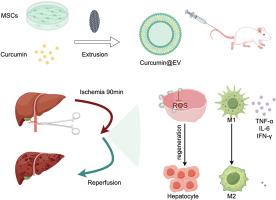
ros反应的二硒外泌体恢复有丝分裂以解决肝脏IRI中的无菌炎症。
肝缺血再灌注损伤(IRI)驱动移植物功能障碍和术后发病率。我们发现肝细胞MST1在IRI中显著上调,并通过阻断pink1依赖性的线粒体自噬加剧损伤。线粒体清除缺陷导致mtDNA泄漏,从而激活巨噬细胞cGAS-STING信号并引发炎症损伤。姜黄素抑制MST1-PINK1轴,恢复线粒体自噬并限制mtDNA释放。为了转化这些见解,我们设计了Curcumin@EV@ se干细胞衍生的细胞外囊泡,表面修饰了二硒醚-聚乙二醇,用于ros响应,“隐形”递送。在氧-葡萄糖剥夺/再氧化模型中,Curcumin@EV@Se提高了肝细胞活力,保留了线粒体电位,减少了ROS和炎症细胞因子,并促进了修复/血管生成程序。在小鼠肝脏IRI模型中,系统Curcumin@EV@Se减少了坏死和TUNEL阳性,改善了血清转氨酶和组织学,表明肝脏功能和再生增强。这些数据确定了mst1介导的线粒体自噬阻断和继发性cGAS-STING激活是IRI的中心致病轴,并提出Curcumin@EV@Se作为一种机制指导的治疗方法,可以恢复线粒体质量控制并抑制先天免疫激活,在肝移植和急性肝损伤方面具有转化前景。
本文章由计算机程序翻译,如有差异,请以英文原文为准。
求助全文
约1分钟内获得全文
求助全文
来源期刊
CiteScore
9.60
自引率
2.20%
发文量
248
审稿时长
50 days
期刊介绍:
The journal publishes research articles, review articles and scientific commentaries on all aspects of the pharmaceutical sciences with emphasis on conceptual novelty and scientific quality. The Editors welcome articles in this multidisciplinary field, with a focus on topics relevant for drug discovery and development.
More specifically, the Journal publishes reports on medicinal chemistry, pharmacology, drug absorption and metabolism, pharmacokinetics and pharmacodynamics, pharmaceutical and biomedical analysis, drug delivery (including gene delivery), drug targeting, pharmaceutical technology, pharmaceutical biotechnology and clinical drug evaluation. The journal will typically not give priority to manuscripts focusing primarily on organic synthesis, natural products, adaptation of analytical approaches, or discussions pertaining to drug policy making.
Scientific commentaries and review articles are generally by invitation only or by consent of the Editors. Proceedings of scientific meetings may be published as special issues or supplements to the Journal.
 求助内容:
求助内容: 应助结果提醒方式:

 京公网安备 11010802042870号


