
Arbuscular mycorrhizal fungi in desert ecosystems: Adaptive mechanisms to co-occurring drought, temperature, and salinity stress
IF 4.6
2区 生物学
Q1 MYCOLOGY
引用次数: 0
Abstract
Arid ecosystems, covering over 40 % of Earth's land, face increasing stress from drought, salinity, and extreme temperatures. Arbuscular mycorrhizal fungi (AMF) form keystone symbioses with desert plants, enhancing their resilience to these co-occurring stressors. This review synthesizes mechanistic and field-based evidence from deserts (e.g., Caatinga, Atacama, and Arabian Peninsula), showing AMF mediate drought tolerance through osmotic adjustment and improved water/nutrient uptake via extensive hyphal networks. In saline conditions, AMF enhance ion homeostasis, reducing Na+ toxicity. Key mechanisms include activation of antioxidant defense systems (e.g., superoxide dismutase, catalase, and ascorbate peroxidase) and modulation of phytohormones (e.g., abscisic acid) and stress-responsive genes (e.g., aquaporins). Morphological adaptations like improved soil aggregation via glomalin-related soil proteins further aid water retention. However, benefits are context-dependent, varying with fungal and host identity, and can be absent under hyper-arid extremes. Field studies confirm native AMF communities, particularly Glomeraceae, are critically adapted for local stress tolerance and are vital for soil health and combating desertification. Their functionality declines at environmental thresholds, underscoring the need to conserve indigenous symbionts. Future research must prioritize multi-stress interactions, molecular cross-talk in tripartite symbioses (e.g., AMF-endobacteria-plant), and developing climate-resilient AMF inoculants for restoration. Integrating omics with field studies will elucidate microbial consortia dynamics, advancing sustainable agriculture in arid frontiers and advocating for AMF-centric approaches to preserve biodiversity in a warming climate.
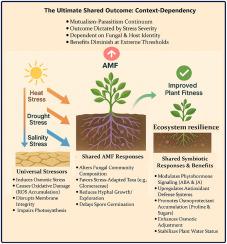
沙漠生态系统中的丛枝菌根真菌:对同时发生的干旱、温度和盐度胁迫的适应机制
覆盖地球40%以上土地的干旱生态系统正面临着干旱、盐碱化和极端温度带来的越来越大的压力。丛枝菌根真菌(AMF)与沙漠植物形成关键的共生关系,增强了它们对这些共同发生的压力源的适应能力。本文综合了来自沙漠(如卡廷加、阿塔卡马和阿拉伯半岛)的机械和实地证据,表明AMF通过渗透调节和通过广泛的菌丝网络改善水/养分吸收来调节耐旱性。在盐水条件下,AMF增强离子稳态,降低Na+毒性。关键机制包括激活抗氧化防御系统(如超氧化物歧化酶、过氧化氢酶和抗坏血酸过氧化物酶)和调节植物激素(如脱落酸)和应激反应基因(如水通道蛋白)。形态上的适应,如通过球小球素相关的土壤蛋白质改善土壤聚集,进一步帮助水分保持。然而,益处是依赖于环境的,随真菌和宿主的身份而变化,并且在极度干旱的极端条件下可能没有益处。实地研究证实,当地的AMF群落,特别是小球科植物,对当地的抗逆性有很大的适应性,对土壤健康和防治荒漠化至关重要。它们的功能在环境阈值下下降,强调了保护本地共生体的必要性。未来的研究必须优先考虑多胁迫相互作用、三方共生(如AMF-内生细菌-植物)中的分子串扰,以及开发气候适应型AMF接种剂进行修复。将组学与实地研究相结合将阐明微生物群落动态,促进干旱地区的可持续农业,并倡导以amf为中心的方法来保护气候变暖中的生物多样性。
本文章由计算机程序翻译,如有差异,请以英文原文为准。
求助全文
约1分钟内获得全文
求助全文
来源期刊
Fungal Biology Reviews
MYCOLOGY-
CiteScore
10.60
自引率
0.00%
发文量
36
期刊介绍:
Fungal Biology Reviews is an international reviews journal, owned by the British Mycological Society. Its objective is to provide a forum for high quality review articles within fungal biology. It covers all fields of fungal biology, whether fundamental or applied, including fungal diversity, ecology, evolution, physiology and ecophysiology, biochemistry, genetics and molecular biology, cell biology, interactions (symbiosis, pathogenesis etc), environmental aspects, biotechnology and taxonomy. It considers aspects of all organisms historically or recently recognized as fungi, including lichen-fungi, microsporidia, oomycetes, slime moulds, stramenopiles, and yeasts.
 求助内容:
求助内容: 应助结果提醒方式:

 京公网安备 11010802042870号


