
Er–Tm co-doped δ-Bi₂O₃ electrolytes: structural stability and high oxide-ion conductivity for IT-SOFC applications
IF 4.6
3区 材料科学
Q2 MATERIALS SCIENCE, MULTIDISCIPLINARY
Materials Science and Engineering: B
Pub Date : 2026-05-01
Epub Date: 2026-01-28
DOI:10.1016/j.mseb.2026.119259
引用次数: 0
Abstract
In this study, (Bi₂O₃)₁₋ₓ₋ᵧ(Er₂O₃)ₓ(Tm₂O₃)ᵧ ternary solid solutions were synthesized via a solid-state reaction method to achieve high oxygen-ion conductivity and phase stability for intermediate-temperature solid oxide fuel cells (IT-SOFCs). High-purity Bi₂O₃, Er₂O₃, and Tm₂O₃ powders were mixed in stoichiometric ratios and subjected to calcination, pressing, and sintering steps. Their structural, thermal, and electrical properties were then examined in detail. X-ray diffraction (XRD) analysis confirmed that all samples retained the δ-Bi₂O₃ phase at room temperature, indicating the formation of a single-phase crystalline structure. Crystallite size calculations revealed that increasing the dopant concentration reduced the grain size to the 35–45 nm range and intensified lattice defects. Electrical conductivity measurements exhibited Arrhenius-type behavior with distinct activation energies in the low- and high-temperature regimes. Notably, the E5T composition (20 mol% Er₂O₃ – 5 mol% Tm₂O₃) achieved the highest conductivity of approximately 1.14 × 10⁻¹ Ω−1·cm−1 at 750 °C and the lowest activation energy of 1.33 eV. Thermogravimetric (TG) and differential thermal analysis (DTA) results showed no significant mass loss between 100 and 600 °C and revealed no clear endothermic or exothermic peaks associated with phase transitions, confirming excellent thermal stability. These findings demonstrate that co-doping with Er and Tm enhances both the oxygen-ion conductivity and the long-term thermal durability of δ-Bi₂O₃-based systems. Such characteristics position these materials as a strong alternative to conventional YSZ electrolytes for high-performance IT-SOFC applications operating at lower temperatures.
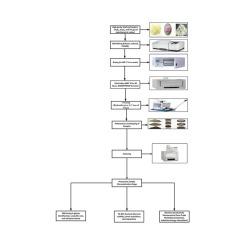
Er-Tm共掺杂δ-Bi₂O₃电解质:用于IT-SOFC应用的结构稳定性和高氧化离子电导率
在本研究中,通过固相反应法合成了(Bi₂O₃)₁₁ₓ₁ᵧ(Er₂O₃)ₓ(Tm₂O₃)ᵧ三元固溶体,以实现中温固体氧化物燃料电池(IT-SOFCs)的高氧离子电导率和相稳定性。高纯度的Bi₂O₃、Er₂O₃和Tm₂O₃粉末按化学计量比混合,并经过煅烧、压制和烧结步骤。然后详细检查了它们的结构、热学和电学性能。x射线衍射(XRD)分析证实,所有样品在室温下都保留了δ-Bi₂O₃相,表明形成了单相晶体结构。晶粒尺寸计算表明,随着掺杂浓度的增加,晶粒尺寸减小到35 ~ 45 nm范围内,晶格缺陷加剧。电导率测量显示出在低温和高温条件下具有不同活化能的arrhenius型行为。值得注意的是,E5T组成(20 mol% Er₂O₃- 5 mol% Tm₂O₃)在750℃时获得了最高的电导率,约为1.14 × 10⁻¹ Ω−1·cm−1,最低的活化能为1.33 eV。热重(TG)和差热分析(DTA)结果显示,在100至600°C之间没有明显的质量损失,也没有明显的与相变相关的吸热或放热峰,证实了优异的热稳定性。这些发现表明,Er和Tm的共掺杂提高了δ-Bi₂O₃基体系的氧离子电导率和长期热耐久性。这些特性使这些材料成为传统YSZ电解质的强大替代品,可用于在较低温度下工作的高性能IT-SOFC应用。
本文章由计算机程序翻译,如有差异,请以英文原文为准。
求助全文
约1分钟内获得全文
求助全文
来源期刊
Materials Science and Engineering: B
工程技术-材料科学:综合
CiteScore
5.60
自引率
2.80%
发文量
481
审稿时长
3.5 months
期刊介绍:
The journal provides an international medium for the publication of theoretical and experimental studies and reviews related to the electronic, electrochemical, ionic, magnetic, optical, and biosensing properties of solid state materials in bulk, thin film and particulate forms. Papers dealing with synthesis, processing, characterization, structure, physical properties and computational aspects of nano-crystalline, crystalline, amorphous and glassy forms of ceramics, semiconductors, layered insertion compounds, low-dimensional compounds and systems, fast-ion conductors, polymers and dielectrics are viewed as suitable for publication. Articles focused on nano-structured aspects of these advanced solid-state materials will also be considered suitable.
 求助内容:
求助内容: 应助结果提醒方式:

 京公网安备 11010802042870号


