Martina Esposito Soccoio, Robert P Mason, Julien Devilliers, Roberto Feuda, Mary E W Collier, Flaviano Giorgini
{"title":"Glucocorticoid Treatment Dampens Kynurenine Pathway Activation and Cytokine Release in Immune Stimulated Human Microglia.","authors":"Martina Esposito Soccoio, Robert P Mason, Julien Devilliers, Roberto Feuda, Mary E W Collier, Flaviano Giorgini","doi":"10.1177/11786469261416782","DOIUrl":null,"url":null,"abstract":"<p><p>As a first line of defence for the central nervous system (CNS), microglia play a critical role in maintaining homeostasis within the brain. Upon detection of damage or threats, activated cells release factors to communicate and potentiate immune responses. This activation also increases activity of the kynurenine pathway (KP) and alters expression of key KP enzymes such as indoleamine 2,3-dioxygenase (IDO-1) and kynurenine 3-monooxygenase (KMO), both major contributors in the pathology of several neurodegenerative and psychiatric disorders. This study investigated the impact of pro-inflammatory stimuli on the C20 human microglial cell line, focussing on the regulation of <i>KMO</i> and <i>IDO-1</i> expression, and the production of cytokines. Additionally, we explored whether the anti-inflammatory effects of dexamethasone (DEXA) influenced these outcomes. This additional characterisation of a physiologically relevant human microglial cell line offers a novel and reliable platform for investigating human-specific microglial biology and function. C20 were challenged for 24 hours with cytokines or lipopolysaccharide (LPS). Gene expression was measured by RT-qPCR and excreted cytokines were quantified using a multiplex array. Our results showed up-regulation of <i>IDO-1</i> and <i>KMO</i> transcripts, and increased release of pro- and anti-inflammatory cytokines. Notably, these effects were significantly dampened by pre-incubation with DEXA. Furthermore, transcriptomic analyses supported these data by highlighting TNF-α-activated enriched pathways, as well as those down-regulated in samples co-treated with DEXA. This study contributes to the understanding of key mechanisms regulated in human microglia by immune challenges and supports the crucial role of synthetic glucocorticoids (GCs) in moderating the microglial immune response induced by pro-inflammatory signals. These data support the use of GCs as possible therapeutic interventions for diseases associated with neuroinflammation, particularly those with altered KP metabolism.</p>","PeriodicalId":46603,"journal":{"name":"International Journal of Tryptophan Research","volume":"19 ","pages":"11786469261416782"},"PeriodicalIF":4.1000,"publicationDate":"2026-01-23","publicationTypes":"Journal Article","fieldsOfStudy":null,"isOpenAccess":false,"openAccessPdf":"https://www.ncbi.nlm.nih.gov/pmc/articles/PMC12833124/pdf/","citationCount":"0","resultStr":null,"platform":"Semanticscholar","paperid":null,"PeriodicalName":"International Journal of Tryptophan Research","FirstCategoryId":"1085","ListUrlMain":"https://doi.org/10.1177/11786469261416782","RegionNum":0,"RegionCategory":null,"ArticlePicture":[],"TitleCN":null,"AbstractTextCN":null,"PMCID":null,"EPubDate":"2026/1/1 0:00:00","PubModel":"eCollection","JCR":"Q3","JCRName":"NEUROSCIENCES","Score":null,"Total":0}
引用次数: 0
Abstract
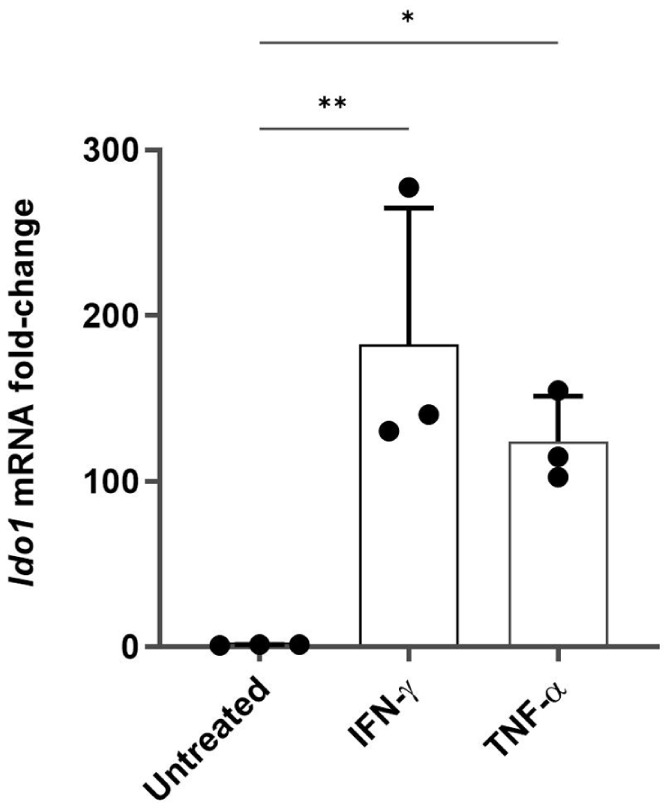
As a first line of defence for the central nervous system (CNS), microglia play a critical role in maintaining homeostasis within the brain. Upon detection of damage or threats, activated cells release factors to communicate and potentiate immune responses. This activation also increases activity of the kynurenine pathway (KP) and alters expression of key KP enzymes such as indoleamine 2,3-dioxygenase (IDO-1) and kynurenine 3-monooxygenase (KMO), both major contributors in the pathology of several neurodegenerative and psychiatric disorders. This study investigated the impact of pro-inflammatory stimuli on the C20 human microglial cell line, focussing on the regulation of KMO and IDO-1 expression, and the production of cytokines. Additionally, we explored whether the anti-inflammatory effects of dexamethasone (DEXA) influenced these outcomes. This additional characterisation of a physiologically relevant human microglial cell line offers a novel and reliable platform for investigating human-specific microglial biology and function. C20 were challenged for 24 hours with cytokines or lipopolysaccharide (LPS). Gene expression was measured by RT-qPCR and excreted cytokines were quantified using a multiplex array. Our results showed up-regulation of IDO-1 and KMO transcripts, and increased release of pro- and anti-inflammatory cytokines. Notably, these effects were significantly dampened by pre-incubation with DEXA. Furthermore, transcriptomic analyses supported these data by highlighting TNF-α-activated enriched pathways, as well as those down-regulated in samples co-treated with DEXA. This study contributes to the understanding of key mechanisms regulated in human microglia by immune challenges and supports the crucial role of synthetic glucocorticoids (GCs) in moderating the microglial immune response induced by pro-inflammatory signals. These data support the use of GCs as possible therapeutic interventions for diseases associated with neuroinflammation, particularly those with altered KP metabolism.



 求助内容:
求助内容: 应助结果提醒方式:

 京公网安备 11010802042870号


