Alexina K Morang'a, Dishon M Muloi, Hannah Aanonsen, Arshnee Moodley
{"title":"Assessing the antimicrobial resistance testing capacity of public and private veterinary laboratories in Kenya.","authors":"Alexina K Morang'a, Dishon M Muloi, Hannah Aanonsen, Arshnee Moodley","doi":"10.1186/s42522-025-00192-2","DOIUrl":null,"url":null,"abstract":"<p><p>Veterinary diagnostic laboratories are crucial in managing animal infections, disease surveillance, and supporting antimicrobial resistance (AMR) stewardship. We assessed the AMR testing capacity of veterinary diagnostic laboratories in Kenya and explored the level of awareness and use of these services. Data was collected through focus group discussions, individual and key informant interviews on access to diagnostic services, and the regulatory framework for veterinary laboratories. The FAO ATLASS survey tool was also used to assess the veterinary laboratory capacity for AMR surveillance. Between October 2023 and February 2024, we engaged farmers (n = 86) and animal health service providers (AHSPs) (n = 40) from Kiambu and Kajiado counties, regulatory authorities (n = 2), and laboratory managers (n = 11) from both public and private veterinary diagnostic laboratories. Ordinal data from the FAO-ATLASS tool were summarized descriptively, while qualitative data from interviews and discussions were thematically analyzed. Kenyan veterinary laboratories are categorized into public and private, and both are regulated by the Kenya Veterinary Board. In the four assessed areas, quality assurance scored the highest mean (57.58%), while activity had the lowest mean (53.03%). Under the category level, highest scores were recorded in workflow organization (87.88%), bacteriology technical practice (63.6%), and antimicrobial susceptibility testing methods (63.14%). Lowest scores were noted in molecular tools (0%), collaborations (33.57%), and sustainability (33.31%). Some of the challenges included frequent reagent shortages, financial constraints, and outdated equipment. Despite being well-equipped, laboratories are underutilized due to limited awareness among farmers and AHSPs, logistical issues with sample transport, high costs, long turnaround time, failure to receive test results, and low trust. To enhance AMR stewardship, increasing awareness, improving service accessibility, ensuring sustained funding for reagents, equipment maintenance, and maintenance and continuous staff development are critical.</p>","PeriodicalId":94348,"journal":{"name":"One health outlook","volume":" ","pages":"10"},"PeriodicalIF":5.9000,"publicationDate":"2026-01-24","publicationTypes":"Journal Article","fieldsOfStudy":null,"isOpenAccess":false,"openAccessPdf":"https://www.ncbi.nlm.nih.gov/pmc/articles/PMC12879395/pdf/","citationCount":"0","resultStr":null,"platform":"Semanticscholar","paperid":null,"PeriodicalName":"One health outlook","FirstCategoryId":"1085","ListUrlMain":"https://doi.org/10.1186/s42522-025-00192-2","RegionNum":0,"RegionCategory":null,"ArticlePicture":[],"TitleCN":null,"AbstractTextCN":null,"PMCID":null,"EPubDate":"","PubModel":"","JCR":"Q2","JCRName":"INFECTIOUS DISEASES","Score":null,"Total":0}
引用次数: 0
Abstract
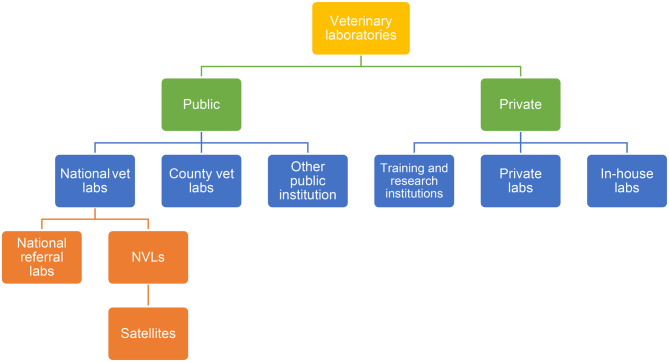
Veterinary diagnostic laboratories are crucial in managing animal infections, disease surveillance, and supporting antimicrobial resistance (AMR) stewardship. We assessed the AMR testing capacity of veterinary diagnostic laboratories in Kenya and explored the level of awareness and use of these services. Data was collected through focus group discussions, individual and key informant interviews on access to diagnostic services, and the regulatory framework for veterinary laboratories. The FAO ATLASS survey tool was also used to assess the veterinary laboratory capacity for AMR surveillance. Between October 2023 and February 2024, we engaged farmers (n = 86) and animal health service providers (AHSPs) (n = 40) from Kiambu and Kajiado counties, regulatory authorities (n = 2), and laboratory managers (n = 11) from both public and private veterinary diagnostic laboratories. Ordinal data from the FAO-ATLASS tool were summarized descriptively, while qualitative data from interviews and discussions were thematically analyzed. Kenyan veterinary laboratories are categorized into public and private, and both are regulated by the Kenya Veterinary Board. In the four assessed areas, quality assurance scored the highest mean (57.58%), while activity had the lowest mean (53.03%). Under the category level, highest scores were recorded in workflow organization (87.88%), bacteriology technical practice (63.6%), and antimicrobial susceptibility testing methods (63.14%). Lowest scores were noted in molecular tools (0%), collaborations (33.57%), and sustainability (33.31%). Some of the challenges included frequent reagent shortages, financial constraints, and outdated equipment. Despite being well-equipped, laboratories are underutilized due to limited awareness among farmers and AHSPs, logistical issues with sample transport, high costs, long turnaround time, failure to receive test results, and low trust. To enhance AMR stewardship, increasing awareness, improving service accessibility, ensuring sustained funding for reagents, equipment maintenance, and maintenance and continuous staff development are critical.




 求助内容:
 应助结果提醒方式:


 京公网安备 11010802042870号


