
Incidence, characteristics and long-term outcomes of peripartum cardiomyopathy: Insights from the Bergen peripartum cardiomyopathy study
IF 3.3
3区 医学
Q2 CARDIAC & CARDIOVASCULAR SYSTEMS
Current Problems in Cardiology
Pub Date : 2026-04-01
Epub Date: 2026-01-21
DOI:10.1016/j.cpcardiol.2026.103276
引用次数: 0
Abstract
Background
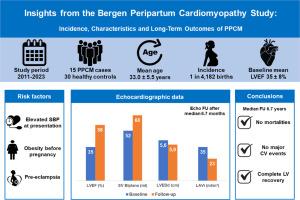
Peripartum cardiomyopathy (PPCM) is a rare but potentially fatal condition characterized by heart failure occurring at the end of pregnancy or within the first months after delivery in women without prior history of structural heart disease. This single-center case-control study aimed to describe the incidence, clinical profile, echocardiographic findings and outcomes of PPCM in a West-Norwegian population.
Methods
Between 2011 and 2023, a total of 15 cases of PPCM were identified at Haukeland University Hospital. The Bergen Birth Registry was used to determine the total number of births in the same period, and to recruit 30 age-matched healthy controls. Clinical characteristics, echocardiographic data, and outcomes were collected.
Results
The incidence rate of PPCM was 1 in 4,182 births. Risk factors included higher pre-pregnancy body mass index (BMI) (OR 1.25) and elevated systolic blood pressure at presentation (OR 1.11). The prevalence of pre-eclampsia and primiparity was significantly higher in PPCM patients compared to controls (p < 0.01). Mean left ventricular (LV) ejection fraction increased from 35% at presentation to 58% at the 6-month follow-up (p < 0.001). There were no maternal or neonatal mortalities. Three patients required ICU treatment, but none experienced major cardiovascular events.
Conclusions
The incidence of PPCM in this West-Norwegian study was relatively low. Higher pre-pregnancy BMI and elevated systolic blood pressure, both important modifiable cardiovascular risk factors, were identified as predictors of PPCM. All patients experienced successful clinical and LV function recovery. Future large collaborative studies are necessary to provide a reliable description of incidence and outcomes nationwide.
围产期心肌病的发生率、特征和长期预后:来自卑尔根围产期心肌病研究的见解。
背景:围产期心肌病(PPCM)是一种罕见但具有潜在致命性的疾病,其特征是无结构性心脏病病史的妇女在妊娠末期或分娩后第一个月内发生心力衰竭。本单中心病例对照研究旨在描述挪威西部人群PPCM的发病率、临床特征、超声心动图结果和结局。方法:选取2011 - 2023年在新西兰豪克兰大学医院确诊的PPCM患者15例。使用卑尔根出生登记处来确定同一时期的出生总数,并招募30名年龄匹配的健康对照。收集临床特征、超声心动图数据和结果。结果:4182例新生儿中PPCM发生率为1例。危险因素包括较高的孕前体重指数(BMI) (OR 1.25)和分娩时收缩压升高(OR 1.11)。与对照组相比,PPCM患者先兆子痫和初产的患病率明显更高(结论:在挪威西部的这项研究中,PPCM的发病率相对较低。较高的孕前BMI和收缩压升高,这两个重要的可改变的心血管危险因素,被确定为PPCM的预测因素。所有患者临床和左室功能均恢复成功。未来的大型合作研究是必要的,以提供全国发病率和结果的可靠描述。
本文章由计算机程序翻译,如有差异,请以英文原文为准。
求助全文
约1分钟内获得全文
求助全文
来源期刊
Current Problems in Cardiology
医学-心血管系统
CiteScore
4.80
自引率
2.40%
发文量
392
审稿时长
6 days
期刊介绍:
Under the editorial leadership of noted cardiologist Dr. Hector O. Ventura, Current Problems in Cardiology provides focused, comprehensive coverage of important clinical topics in cardiology. Each monthly issues, addresses a selected clinical problem or condition, including pathophysiology, invasive and noninvasive diagnosis, drug therapy, surgical management, and rehabilitation; or explores the clinical applications of a diagnostic modality or a particular category of drugs. Critical commentary from the distinguished editorial board accompanies each monograph, providing readers with additional insights. An extensive bibliography in each issue saves hours of library research.
 求助内容:
求助内容: 应助结果提醒方式:

 京公网安备 11010802042870号


