{"title":"Traumatic wound dehiscence after penetrating keratoplasty: a retrospective analysis.","authors":"Mustafa Yıldırım, Sadullah Keleş","doi":"10.18999/nagjms.87.4.742","DOIUrl":null,"url":null,"abstract":"<p><p>Traumatic wound dehiscence is one of the most serious postoperative complications that can be seen after penetrating keratoplasty (PK). Depending on the damage caused by the trauma to the anterior and posterior segments of the eye, the level of vision can be most severely affected. Data from 17 eyes of 17 patients treated for traumatic wound dehiscence after PK between 2013 and 2024 were retrospectively reviewed. Patient records were reviewed for type and time of injury, corrected distance visual acuity (CDVA), surgical method, and final results. The incidence of graft dehiscence was 2.46% (17 eyes) in 690 PK eyes. The interval between PK and trauma ranged from 2 months to 60 months, with a median of 10 months. The median age at trauma was 36.7 years (range, 12-78 years). Wound dehiscence occurred at the donor-recipient interface in all patients, and 75.2% of graft dehiscence occurred at 16 months postoperatively. In all patients, the wound was closed by primary repair under general anesthesia. The mean follow-up period was 16.4±12.3 months (4-66 months). Median CDVA was 4 mps (range, 2 mps- 0.2, Snellen chart) at final visit. Graft failure was the most common complication after wound repair (29.42%). This study aimed to demonstrate the postoperative outcomes due to traumatic wound dehiscence after PK.</p>","PeriodicalId":49014,"journal":{"name":"Nagoya Journal of Medical Science","volume":"87 4","pages":"742-746"},"PeriodicalIF":0.9000,"publicationDate":"2025-11-01","publicationTypes":"Journal Article","fieldsOfStudy":null,"isOpenAccess":false,"openAccessPdf":"https://www.ncbi.nlm.nih.gov/pmc/articles/PMC12805132/pdf/","citationCount":"0","resultStr":null,"platform":"Semanticscholar","paperid":null,"PeriodicalName":"Nagoya Journal of Medical Science","FirstCategoryId":"3","ListUrlMain":"https://doi.org/10.18999/nagjms.87.4.742","RegionNum":4,"RegionCategory":"医学","ArticlePicture":[],"TitleCN":null,"AbstractTextCN":null,"PMCID":null,"EPubDate":"","PubModel":"","JCR":"Q4","JCRName":"MEDICINE, RESEARCH & EXPERIMENTAL","Score":null,"Total":0}
引用次数: 0
Abstract
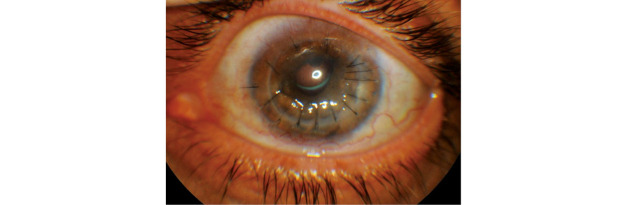
Traumatic wound dehiscence is one of the most serious postoperative complications that can be seen after penetrating keratoplasty (PK). Depending on the damage caused by the trauma to the anterior and posterior segments of the eye, the level of vision can be most severely affected. Data from 17 eyes of 17 patients treated for traumatic wound dehiscence after PK between 2013 and 2024 were retrospectively reviewed. Patient records were reviewed for type and time of injury, corrected distance visual acuity (CDVA), surgical method, and final results. The incidence of graft dehiscence was 2.46% (17 eyes) in 690 PK eyes. The interval between PK and trauma ranged from 2 months to 60 months, with a median of 10 months. The median age at trauma was 36.7 years (range, 12-78 years). Wound dehiscence occurred at the donor-recipient interface in all patients, and 75.2% of graft dehiscence occurred at 16 months postoperatively. In all patients, the wound was closed by primary repair under general anesthesia. The mean follow-up period was 16.4±12.3 months (4-66 months). Median CDVA was 4 mps (range, 2 mps- 0.2, Snellen chart) at final visit. Graft failure was the most common complication after wound repair (29.42%). This study aimed to demonstrate the postoperative outcomes due to traumatic wound dehiscence after PK.
期刊介绍:
The Journal publishes original papers in the areas of medical science and its related fields. Reviews, symposium reports, short communications, notes, case reports, hypothesis papers, medical image at a glance, video and announcements are also accepted.
Manuscripts should be in English. It is recommended that an English check of the manuscript by a competent and knowledgeable native speaker be completed before submission.

 求助内容:
求助内容: 应助结果提醒方式:

 京公网安备 11010802042870号


