
Comparative analyses of Bothrops fonsecai snake venom: individual variability and sex-based differences
IF 2.8
4区 医学
Q2 PHARMACOLOGY & PHARMACY
引用次数: 0
Abstract
Snakebite envenomation is a neglected tropical disease affecting thousands of people globally, especially in tropical and subtropical regions. An estimated 81,000 to 138,000 deaths occur annually, with many survivors experiencing permanent disabilities. In Brazil, around 26,000 cases are reported each year, with the genus Bothrops responsible for 83.8 % of them. Bothrops venoms are rich in metalloproteases, serine proteases, phospholipases A2, and L-amino acid oxidases, which can cause hemorrhage, tissue necrosis, coagulation disorders, and hypotension. This study focuses on the biochemical and toxicological characterization of Bothrops fonsecai venom, an understudied and near-threatened species endemic to southeastern Brazil, not included in the venom pool for antibotropic serum preparation. Venoms from male and female specimens maintained at the Butantan Institute were compared using standard biochemical, enzymatic, immunological assays, and protein composition. Females tented to exhibited higher enzymatic activity than males in nearly all tests performed. Significant differences were found in EC50 values for indirect hemolysis and in the minimum coagulant dose, also indicating sex-based variation in venom potency. SDS-PAGE and RP-HPLC analyses revealed qualitative and quantitative differences in protein composition between sexes and individually. Immunological assays (ELISA and Western Blotting) demonstrated good immune recognition patterns, with only a few exceptions, which may reflect intraspecific variability in venom antigenicity. Although some biochemical information on Bothrops fonsecai is available, studies remain scarce and fragmented. This work advances current knowledge by providing a broader characterization of the venom and by examining intraspecific patterns—such as sex-related and individual variation—that had not been previously explored in an integrated way. These findings contribute to a more complete understanding of the species, which is especially relevant given its limited representation in venom research and may contribute to improving the effectiveness of antivenom therapies and clinical management of envenomations caused by this species.

丰塞蛇蛇毒的比较分析:个体变异和性别差异。
蛇咬伤中毒是一种被忽视的热带病,影响全球成千上万的人,特别是在热带和亚热带地区。据估计,每年有81 000至138 000人死亡,许多幸存者终身残疾。在巴西,每年报告的病例约为26,000例,其中Bothrops属占83.8%。肉毒杆菌毒液中含有丰富的金属蛋白酶、丝氨酸蛋白酶、磷脂酶A2和l -氨基酸氧化酶,可引起出血、组织坏死、凝血功能障碍和低血压。本研究的重点是Bothrops fonsecai毒液的生化和毒理学特征,Bothrops fonsecai是巴西东南部特有的一种未被充分研究和近威胁的物种,未被纳入用于制备抗血清的毒液池。用标准的生化、酶、免疫学测定和蛋白质组成对保存在Butantan研究所的雄性和雌性标本的毒液进行比较。在几乎所有的测试中,雌性都表现出比雄性更高的酶活性。间接溶血的EC50值和最小凝血剂剂量存在显著差异,也表明毒液效力存在性别差异。SDS-PAGE和RP-HPLC分析显示了两性和个体之间蛋白质组成的定性和定量差异。免疫试验(ELISA和Western Blotting)显示出良好的免疫识别模式,只有少数例外,这可能反映了毒液抗原性的种内变异性。虽然有一些关于丰塞角虱的生物化学信息,但研究仍然很少,而且支离破碎。这项工作通过提供更广泛的毒液特征和检查种内模式(如性别相关和个体差异)来推进现有的知识,这些模式以前没有以综合的方式探索过。这些发现有助于更全面地了解该物种,特别是考虑到其在毒液研究中的代表性有限,并可能有助于提高抗蛇毒治疗的有效性和由该物种引起的中毒的临床管理。
本文章由计算机程序翻译,如有差异,请以英文原文为准。
求助全文
约1分钟内获得全文
求助全文
来源期刊
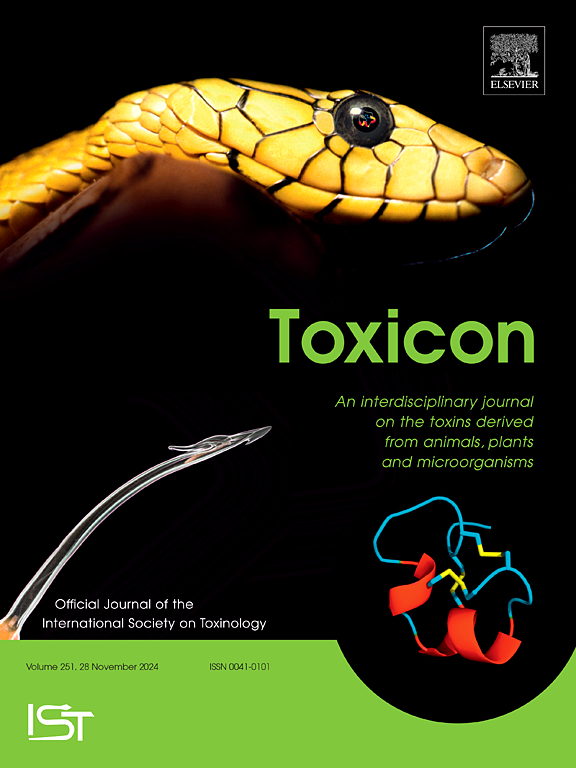
Toxicon
医学-毒理学
CiteScore
4.80
自引率
10.70%
发文量
358
审稿时长
68 days
期刊介绍:
Toxicon has an open access mirror Toxicon: X, sharing the same aims and scope, editorial team, submission system and rigorous peer review. An introductory offer Toxicon: X - full waiver of the Open Access fee.
Toxicon''s "aims and scope" are to publish:
-articles containing the results of original research on problems related to toxins derived from animals, plants and microorganisms
-papers on novel findings related to the chemical, pharmacological, toxicological, and immunological properties of natural toxins
-molecular biological studies of toxins and other genes from poisonous and venomous organisms that advance understanding of the role or function of toxins
-clinical observations on poisoning and envenoming where a new therapeutic principle has been proposed or a decidedly superior clinical result has been obtained.
-material on the use of toxins as tools in studying biological processes and material on subjects related to venom and antivenom problems.
-articles on the translational application of toxins, for example as drugs and insecticides
-epidemiological studies on envenoming or poisoning, so long as they highlight a previously unrecognised medical problem or provide insight into the prevention or medical treatment of envenoming or poisoning. Retrospective surveys of hospital records, especially those lacking species identification, will not be considered for publication. Properly designed prospective community-based surveys are strongly encouraged.
-articles describing well-known activities of venoms, such as antibacterial, anticancer, and analgesic activities of arachnid venoms, without any attempt to define the mechanism of action or purify the active component, will not be considered for publication in Toxicon.
-review articles on problems related to toxinology.
To encourage the exchange of ideas, sections of the journal may be devoted to Short Communications, Letters to the Editor and activities of the affiliated societies.
 求助内容:
 应助结果提醒方式:


 京公网安备 11010802042870号


