
Current landscape and therapeutic prospects of indole hybrids for prostate cancer treatment: A mini-review
IF 6.7
2区 医学
Q1 CHEMISTRY, MEDICINAL
European Journal of Medicinal Chemistry
Pub Date : 2026-03-05
Epub Date: 2026-01-13
DOI:10.1016/j.ejmech.2026.118583
引用次数: 0
Abstract
Prostate cancer ranks second in incidence and fifth in mortality among all cancer types in males. This striking epidemiological profile highlights its status as a major health concern that poses a severe threat to men's lives and health globally. Although traditional chemotherapeutics and targeted therapies for prostate cancer have made considerable progress, critical challenges remain, including high metastatic potential, acquired drug resistance, and unfavorable prognosis in patients with advanced disease, highlighting the imperative to develop novel therapeutic strategies. Indole hybrids, versatile and promising anticancer scaffolds formed by integrating indole moieties with other pharmacophores, exhibit prominent multi-targeted regulatory capabilities in prostate cancer therapy, enabling simultaneous modulation of key oncogenic pathways to address the complex molecular mechanisms of both hormone-sensitive and castration-resistant subtypes. Compared to single-scaffold derivatives, indole hybrids demonstrate enhanced anticancer potency and reduced off-target toxicity via synergistic effects between conjugated moieties, while also showing potential in overcoming drug resistance by circumventing single-target mutation-induced resistance and inhibiting ABC transporters to reverse multidrug resistance. Moreover, their structural flexibility facilitates structural optimization for improved pharmacokinetic properties and tailored efficacy against specific prostate cancer phenotypes, making indole hybrids valuable candidates for developing novel therapeutic agents to meet unmet clinical needs in prostate cancer treatment. This review summarizes the recent advances in indole hybrids with anti-prostate cancer activity from 2021 to date, striving to open new directions for developing novel prostate cancer therapeutics.
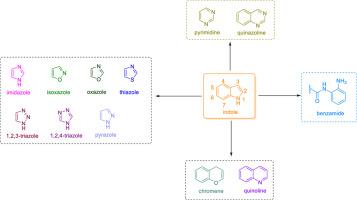
吲哚复合物治疗前列腺癌的现状和治疗前景:综述
在男性所有癌症类型中,前列腺癌的发病率排名第二,死亡率排名第五。这一引人注目的流行病学概况凸显了其作为对全球男性生命和健康构成严重威胁的主要健康问题的地位。尽管前列腺癌的传统化疗和靶向治疗已经取得了相当大的进展,但仍然存在一些关键的挑战,包括高转移性、获得性耐药和晚期患者的不良预后,这突出了开发新的治疗策略的必要性。吲哚杂合体是一种多功能且有前景的抗癌支架,通过将吲哚部分与其他药物载体整合而成,在前列腺癌治疗中表现出突出的多靶点调节能力,能够同时调节关键的致癌途径,以解决激素敏感亚型和去势抵抗亚型的复杂分子机制。与单支架衍生物相比,吲哚杂合体通过缀合部分之间的协同作用显示出增强的抗癌效力和降低的脱靶毒性,同时也显示出克服耐药性的潜力,通过绕过单靶点突变诱导的耐药性和抑制ABC转运蛋白来逆转多药耐药性。此外,它们的结构灵活性有助于结构优化,以改善药代动力学特性和针对特定前列腺癌表型的定制疗效,使吲哚杂合物成为开发新型治疗药物的有价值的候选者,以满足前列腺癌治疗中未满足的临床需求。本文综述了2021年至今具有抗前列腺癌活性的吲哚杂合体的最新研究进展,力求为开发新的前列腺癌治疗药物开辟新的方向。
本文章由计算机程序翻译,如有差异,请以英文原文为准。
求助全文
约1分钟内获得全文
求助全文
来源期刊
CiteScore
11.70
自引率
9.00%
发文量
863
审稿时长
29 days
期刊介绍:
The European Journal of Medicinal Chemistry is a global journal that publishes studies on all aspects of medicinal chemistry. It provides a medium for publication of original papers and also welcomes critical review papers.
A typical paper would report on the organic synthesis, characterization and pharmacological evaluation of compounds. Other topics of interest are drug design, QSAR, molecular modeling, drug-receptor interactions, molecular aspects of drug metabolism, prodrug synthesis and drug targeting. The journal expects manuscripts to present the rational for a study, provide insight into the design of compounds or understanding of mechanism, or clarify the targets.
 求助内容:
求助内容: 应助结果提醒方式:

 京公网安备 11010802042870号


