Angela Alfarano, Roberto Marzollo, Serena Amighetti, Cesare Tomasi, Maria Ilaria Bosio, Salvatore Aversa, Elena Borelli, Mario Motta, Francesco Maria Risso
{"title":"Pulmonary Peak Flow Assessment: An Easy Tool for Cardiac Output Estimation in Hemodynamically Stable Neonates.","authors":"Angela Alfarano, Roberto Marzollo, Serena Amighetti, Cesare Tomasi, Maria Ilaria Bosio, Salvatore Aversa, Elena Borelli, Mario Motta, Francesco Maria Risso","doi":"10.1155/ijpe/8395241","DOIUrl":null,"url":null,"abstract":"<p><strong>Objectives: </strong>Right ventricular output (RVO) assessment can estimate systemic blood flow (SBF) in neonates but requires advanced echocardiography expertise. Pulmonary peak flow (PPF) could be an easier surrogate for RVO. This study is aimed at evaluating the correlation between RVO and PPF in neonates and assessing their intraobserver variability.</p><p><strong>Methods: </strong>In this single-center, longitudinal, observational study, we included term and preterm neonates admitted to our Neonatal Intensive Care Unit between February and July 2022. A neonatologist with experience in functional echocardiography recorded targeted neonatal scans. Recordings were analyzed off-line for echocardiographic measurements. After 12 months, a second analysis of the recordings was performed by the same examiner to avoid recall bias. We compared the two analyses for intraobserver variability assessment.</p><p><strong>Results: </strong>We analyzed a cohort of 33 term and preterm infants. We found a strong positive correlation between RVO and PPF (<i>p</i> < 0.001). RVO showed a mean intra-observer difference of 34.2 mL/kg/min; PPF showed a mean intraobserver difference of 2.2 cm/s.</p><p><strong>Conclusions: </strong>Our findings support the use of PPF as a surrogate for RVO for cardiac output estimation in term and preterm neonates. Because of its simplicity, rapidity, and low intraobserver variability, PPF could be a useful tool for SBF assessment. Future studies should be performed to evaluate the correlation between PPF and other echocardiographic markers of low SBF.</p>","PeriodicalId":51591,"journal":{"name":"International Journal of Pediatrics","volume":"2026 ","pages":"8395241"},"PeriodicalIF":1.3000,"publicationDate":"2026-01-08","publicationTypes":"Journal Article","fieldsOfStudy":null,"isOpenAccess":false,"openAccessPdf":"https://www.ncbi.nlm.nih.gov/pmc/articles/PMC12781998/pdf/","citationCount":"0","resultStr":null,"platform":"Semanticscholar","paperid":null,"PeriodicalName":"International Journal of Pediatrics","FirstCategoryId":"3","ListUrlMain":"https://doi.org/10.1155/ijpe/8395241","RegionNum":0,"RegionCategory":null,"ArticlePicture":[],"TitleCN":null,"AbstractTextCN":null,"PMCID":null,"EPubDate":"2026/1/1 0:00:00","PubModel":"eCollection","JCR":"Q3","JCRName":"PEDIATRICS","Score":null,"Total":0}
引用次数: 0
Abstract
Objectives: Right ventricular output (RVO) assessment can estimate systemic blood flow (SBF) in neonates but requires advanced echocardiography expertise. Pulmonary peak flow (PPF) could be an easier surrogate for RVO. This study is aimed at evaluating the correlation between RVO and PPF in neonates and assessing their intraobserver variability.
Methods: In this single-center, longitudinal, observational study, we included term and preterm neonates admitted to our Neonatal Intensive Care Unit between February and July 2022. A neonatologist with experience in functional echocardiography recorded targeted neonatal scans. Recordings were analyzed off-line for echocardiographic measurements. After 12 months, a second analysis of the recordings was performed by the same examiner to avoid recall bias. We compared the two analyses for intraobserver variability assessment.
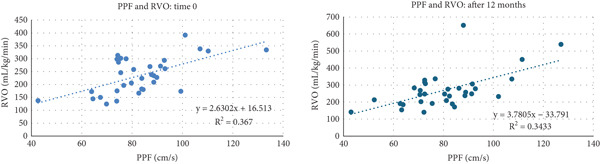
Results: We analyzed a cohort of 33 term and preterm infants. We found a strong positive correlation between RVO and PPF (p < 0.001). RVO showed a mean intra-observer difference of 34.2 mL/kg/min; PPF showed a mean intraobserver difference of 2.2 cm/s.
Conclusions: Our findings support the use of PPF as a surrogate for RVO for cardiac output estimation in term and preterm neonates. Because of its simplicity, rapidity, and low intraobserver variability, PPF could be a useful tool for SBF assessment. Future studies should be performed to evaluate the correlation between PPF and other echocardiographic markers of low SBF.
期刊介绍:
International Journal of Pediatrics is a peer-reviewed, open access journal that publishes original researcharticles, review articles, and clinical studies in all areas of pediatric research. The journal accepts submissions presented as an original article, short communication, case report, review article, systematic review, or letter to the editor.


 求助内容:
求助内容: 应助结果提醒方式:

 京公网安备 11010802042870号


