Andreu Arinyo I Prats, Dennis Sandgathe, Felix Riede, Mark Collard
{"title":"Use it or lose it: A model-based assessment of the hypothesis that European Neanderthals relied on wildfires to create their campfires.","authors":"Andreu Arinyo I Prats, Dennis Sandgathe, Felix Riede, Mark Collard","doi":"10.12688/openreseurope.20477.2","DOIUrl":null,"url":null,"abstract":"<p><strong>Background: </strong>There remains debate about the pyrotechnical capabilities of Neanderthals. Evidence of fire has been found at many Middle Palaeolithic sites, widely accepted to be associated with Neanderthals. However, multiple Neanderthal sites show a marked decrease in evidence for fire use during colder periods. This counterintuitive pattern was explained by the possibility that some Neanderthal groups were unable to create fire at will and relied on wildfire. Here, we evaluate the plausibility of this \"wildfire hypothesis\" through formal modeling.</p><p><strong>Methods: </strong>We computed the probability of a group of Neanderthals losing campfire-making skills due to cultural loss. The EMBERS model codes four empirically motivated mechanisms of skill loss: variability in use, period in between uses, memory decay and number of experts.</p><p><strong>Results: </strong>Our results indicate that losing the ability to use wildfire was more likely than retaining it for most of our parameter values within reasonable ranges. Significantly, demography, in the form of expert numbers, was the least significant mechanism of loss. The rate of memory loss at group level, and intervals between uses were markedly more important than demography. Variability in time between uses was by far the strongest driver of loss. These results, linked with the estimated climatic, mnemonic, and demographic conditions for the Neanderthals' occupation of Europe in cold periods, support the plausibility of the wildfire hypothesis. Our results also highlight the need to pay more attention to cultural loss as a factor in cultural evolution.</p><p><strong>Teaser: </strong>Our modeling demonstrates the feasibility of the controversial hypothesis that some European Neanderthal groups were unable to create fire at will and instead relied on wildfire to start their campfires.</p>","PeriodicalId":74359,"journal":{"name":"Open research Europe","volume":"5 ","pages":"205"},"PeriodicalIF":0.0000,"publicationDate":"2025-11-27","publicationTypes":"Journal Article","fieldsOfStudy":null,"isOpenAccess":false,"openAccessPdf":"https://www.ncbi.nlm.nih.gov/pmc/articles/PMC12775662/pdf/","citationCount":"0","resultStr":null,"platform":"Semanticscholar","paperid":null,"PeriodicalName":"Open research Europe","FirstCategoryId":"1085","ListUrlMain":"https://doi.org/10.12688/openreseurope.20477.2","RegionNum":0,"RegionCategory":null,"ArticlePicture":[],"TitleCN":null,"AbstractTextCN":null,"PMCID":null,"EPubDate":"2025/1/1 0:00:00","PubModel":"eCollection","JCR":"","JCRName":"","Score":null,"Total":0}
引用次数: 0
Abstract
Background: There remains debate about the pyrotechnical capabilities of Neanderthals. Evidence of fire has been found at many Middle Palaeolithic sites, widely accepted to be associated with Neanderthals. However, multiple Neanderthal sites show a marked decrease in evidence for fire use during colder periods. This counterintuitive pattern was explained by the possibility that some Neanderthal groups were unable to create fire at will and relied on wildfire. Here, we evaluate the plausibility of this "wildfire hypothesis" through formal modeling.
Methods: We computed the probability of a group of Neanderthals losing campfire-making skills due to cultural loss. The EMBERS model codes four empirically motivated mechanisms of skill loss: variability in use, period in between uses, memory decay and number of experts.
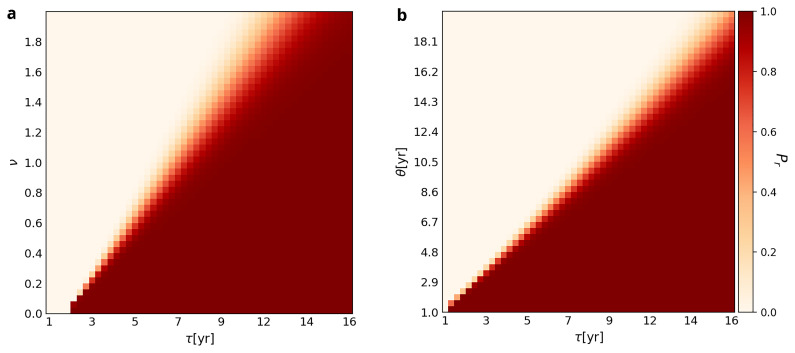
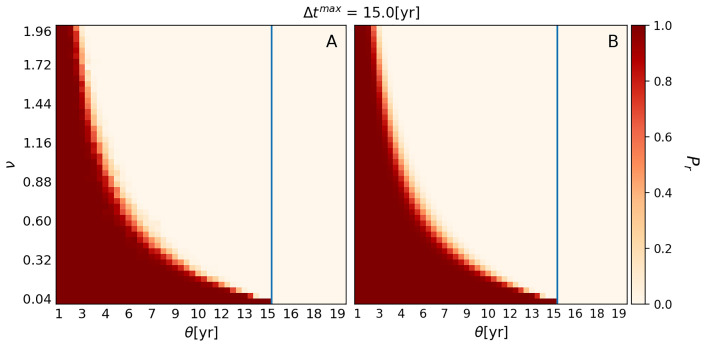
Results: Our results indicate that losing the ability to use wildfire was more likely than retaining it for most of our parameter values within reasonable ranges. Significantly, demography, in the form of expert numbers, was the least significant mechanism of loss. The rate of memory loss at group level, and intervals between uses were markedly more important than demography. Variability in time between uses was by far the strongest driver of loss. These results, linked with the estimated climatic, mnemonic, and demographic conditions for the Neanderthals' occupation of Europe in cold periods, support the plausibility of the wildfire hypothesis. Our results also highlight the need to pay more attention to cultural loss as a factor in cultural evolution.
Teaser: Our modeling demonstrates the feasibility of the controversial hypothesis that some European Neanderthal groups were unable to create fire at will and instead relied on wildfire to start their campfires.



 求助内容:
求助内容: 应助结果提醒方式:

 京公网安备 11010802042870号


