
Effect of Ce doping on the magnetic properties of LaFeO3 nanofibers
IF 6.9
3区 工程技术
Q1 ENGINEERING, CHEMICAL
Journal of the Taiwan Institute of Chemical Engineers
Pub Date : 2026-06-01
Epub Date: 2026-01-03
DOI:10.1016/j.jtice.2025.106615
引用次数: 0
Abstract
Background
LaFeO3 has unique physicochemical properties and exhibits great application potential in fields such as catalysis, sensors, energy conversion and storage, as well as magnetic storage. LaFeO3 possesses fascinating magnetic characteristics. Ce doping in LaFeO3 can bring about changes in the physicochemical properties.
Method
A simple electrospinning and annealing way were used to fabricate Ce-doped LaFeO3 nanofibers, such as La0.9Ce0.1FeO3, La0.8Ce0.2FeO3, and La0.7Ce0.3FeO3. The perovskite orthorhombic structures of the fabricated samples were revealed by Rietveld refined XRD patterns. The magnetic characteristics of these fabricated nanofibers were clarified by a Quantum Design SQUID vibrating sample magnetometer.
Significant finding
Magnetic properties indicated that LaFeO3 nanofibers featured the coexistence of weak ferromagnetism and antiferromagnetism. An appropriate amount of Ce doping can notably enhance the ferromagnetism, with the magnetization increasing significantly. The internal mechanism through which Ce doping influenced the magnetism of LaFeO3 nanofibers was thoroughly explored, providing a crucial theoretical basis and experimental reference for the optimal design and extensive application of LaFeO3-based magnetic materials. These findings are expected to inspire the advancement of lanthanum ferrite nanomaterials for applications in storage devices and sensors.
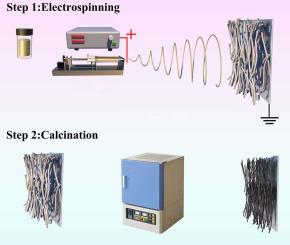
Ce掺杂对LaFeO3纳米纤维磁性能的影响
lafeo3具有独特的物理化学性质,在催化、传感器、能量转换与存储、磁存储等领域显示出巨大的应用潜力。LaFeO3具有迷人的磁性。在LaFeO3中掺杂Ce会引起其物理化学性质的变化。方法采用简单的静电纺丝和退火法制备La0.9Ce0.1FeO3、La0.8Ce0.2FeO3和La0.7Ce0.3FeO3掺杂的LaFeO3纳米纤维。用Rietveld细化XRD图分析了制备样品的钙钛矿正交结构。利用量子设计SQUID振动样品磁强计对制备的纳米纤维的磁性特性进行了研究。磁性能表明LaFeO3纳米纤维具有弱铁磁性和反铁磁性共存的特点。适量的Ce掺杂能显著增强材料的铁磁性,磁化强度显著提高。深入探讨了Ce掺杂影响LaFeO3纳米纤维磁性的内在机理,为LaFeO3基磁性材料的优化设计和广泛应用提供了重要的理论依据和实验参考。这些发现有望激发铁酸镧纳米材料在存储设备和传感器中的应用。
本文章由计算机程序翻译,如有差异,请以英文原文为准。
求助全文
约1分钟内获得全文
求助全文
来源期刊
CiteScore
9.10
自引率
14.00%
发文量
362
审稿时长
35 days
期刊介绍:
Journal of the Taiwan Institute of Chemical Engineers (formerly known as Journal of the Chinese Institute of Chemical Engineers) publishes original works, from fundamental principles to practical applications, in the broad field of chemical engineering with special focus on three aspects: Chemical and Biomolecular Science and Technology, Energy and Environmental Science and Technology, and Materials Science and Technology. Authors should choose for their manuscript an appropriate aspect section and a few related classifications when submitting to the journal online.
 求助内容:
求助内容: 应助结果提醒方式:

 京公网安备 11010802042870号


