
Indoor dust, immune activation, and household exposure risk after Hurricane Maria: a two-year pilot prospective cohort study in Puerto Rico
IF 4.7
3区 医学
Q2 ENVIRONMENTAL SCIENCES
Journal of Exposure Science and Environmental Epidemiology
Pub Date : 2025-12-14
DOI:10.1038/s41370-025-00835-6
引用次数: 0
Abstract
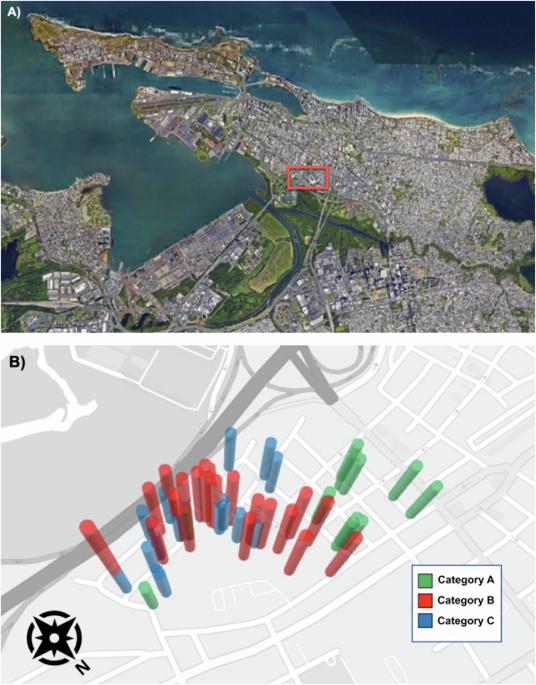
Hurricane Maria left many homes in Puerto Rico with prolonged flooding, structural damage, and indoor microbial growth, conditions that can drive respiratory illness and immune dysregulation. To assess the pro-inflammatory potential of post-flooding indoor dust and track two-year shifts in household risk profiles by integrating pro-inflammatory biomarkers, fungal exposure, and self-reported structural damage, mental health, and respiratory outcomes. Dust samples were collected from 50 households in a San Juan community one year and again from 35 of those same households two years after the hurricane. Dust sample extracts (DSEs) were prepared and incubated with pooled peripheral blood from volunteers residing outside Puerto Rico. Pro-inflammatory cytokines interleukin-1β (IL-1β), IL-6, and IL-8 were quantified using ELISA; airborne fungal abundance was assessed on malt extract and G25N agars. Survey data captured self-reported respiratory and mental-health scores using the SF-12v2 Health Survey, structural water damage, and remediation efforts. Principal component analysis (PCA) and k-means clustering were applied to identify household clusters, while Sankey plots were used to visualize the transitions of household risk. IL-1β emerged as the most responsive cytokine, showing the greatest median reduction from Year 1 to Year 2 and across household water-damage categories. Three clusters emerged in Year 1, driven by structural damage, IL-1β, and fungal load. By Year 2, only two clusters remained, shaped more by self-reported respiratory and psychological distress than by structural damage. Sankey analysis revealed that some households transitioned into higher-risk profiles over time despite apparent household structural recovery.
玛丽亚飓风后室内灰尘、免疫激活和家庭暴露风险:波多黎各一项为期两年的试点前瞻性队列研究。
背景:飓风玛丽亚给波多黎各的许多房屋留下了长期的洪水、结构破坏和室内微生物的生长,这些条件会导致呼吸系统疾病和免疫失调。目的:通过整合促炎生物标志物、真菌暴露、自我报告的结构损伤、心理健康和呼吸结果,评估洪水后室内灰尘的促炎潜力,并追踪家庭风险概况的两年变化。方法:从圣胡安社区的50个家庭中收集了一年的灰尘样本,并在飓风发生两年后再次收集了其中35个家庭的灰尘样本。制备粉尘样品提取物(DSEs),并与居住在波多黎各以外的志愿者的外周血孵育。采用ELISA法定量检测促炎细胞因子白介素-1β (IL-1β)、IL-6、IL-8;测定了麦芽提取物和G25N琼脂的空气真菌丰度。调查数据包括使用SF-12v2健康调查、结构水损害和修复工作的自我报告的呼吸和心理健康评分。采用主成分分析(PCA)和k-means聚类来识别家庭集群,而Sankey图用于可视化家庭风险的转移。结果:IL-1β是反应最灵敏的细胞因子,从1年到2年,在家庭水损害类别中,IL-1β的中位数下降幅度最大。在结构损伤、IL-1β和真菌负荷的驱动下,第一年出现了三个集群。到了第二年,只剩下两组,更多的是由自我报告的呼吸和心理困扰造成的,而不是由结构损伤造成的。桑基分析显示,尽管家庭结构明显复苏,但随着时间的推移,一些家庭转变为高风险家庭。影响:在飓风过后的洪水退去后,室内环境危害仍会持续很长时间,但很少有研究整合生物、环境、结构、社会心理和呼吸健康数据来追踪家庭风险。利用人类全血热原测定和多变量聚类,这项对波多黎各Hurricane-María-affected家庭进行的为期两年的研究表明,灰尘诱导的IL-1β是一种敏感的促炎生物标志物,并且在恢复期间,残留风险从结构-微生物驱动因素转变为心理-社会-呼吸负担。多领域“风险状况”框架为灾后风险评估提供了可复制的模板,可以帮助公共卫生官员在气候相关灾害增加时优先考虑有针对性的补救、健康监测和心理健康支持。
本文章由计算机程序翻译,如有差异,请以英文原文为准。
求助全文
约1分钟内获得全文
求助全文
来源期刊
CiteScore
8.90
自引率
6.70%
发文量
93
审稿时长
3 months
期刊介绍:
Journal of Exposure Science and Environmental Epidemiology (JESEE) aims to be the premier and authoritative source of information on advances in exposure science for professionals in a wide range of environmental and public health disciplines.
JESEE publishes original peer-reviewed research presenting significant advances in exposure science and exposure analysis, including development and application of the latest technologies for measuring exposures, and innovative computational approaches for translating novel data streams to characterize and predict exposures. The types of papers published in the research section of JESEE are original research articles, translation studies, and correspondence. Reported results should further understanding of the relationship between environmental exposure and human health, describe evaluated novel exposure science tools, or demonstrate potential of exposure science to enable decisions and actions that promote and protect human health.
 求助内容:
求助内容: 应助结果提醒方式:

 京公网安备 11010802042870号


