
Molecular characterization and analysis of enoyl-CoA hydratase/isomerase family protein of Eimeria tenella
IF 1.6
2区 生物学
Q4 MICROBIOLOGY
European journal of protistology
Pub Date : 2026-02-01
Epub Date: 2025-12-05
DOI:10.1016/j.ejop.2025.126177
引用次数: 0
Abstract
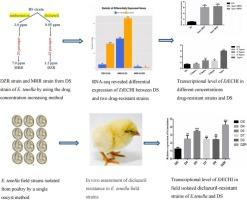
Avian coccidiosis is an important intestinal disease caused by Eimeria spp., which leads to significant economic losses in the poultry industry. Although anticoccidial drugs can effectively control it in intensive farming, their extensive and irrational use has induced drug resistance in Eimeria species. Our previous RNA-seq study revealed differential expression of the enoyl-CoA hydratase/isomerase family protein (EtECHI) between drug-sensitive (DS) and drug-resistant Eimeria tenella strains. In this study, qPCR analysis showed that EtECHI mRNA levels were significantly upregulated in diclazuril-resistant (DZR) and maduramicin-resistant (MRR) strains compared to the DS strain. Furthermore, EtECHI transcription increased progressively with rising concentrations of MRR and DZR. Additionally, EtECHI transcript levels were significantly higher in field-isolated diclazuril-resistant strains than in the DS strain. qPCR and western blot analyses showed that EtECHI expression levels were highest in E. tenella unsporulated oocysts. Indirect immunofluorescence assays (IFA) revealed that EtECHI was primarily localized in the cytoplasm of the parasite, with additional surface distribution. An in vitro inhibition assay demonstrated that anti-rEtECHI polyclonal antibodies significantly reduced E. tenella sporozoites' invasion of DF-1 cells. These findings suggest that EtECHI may be associated with the drug resistance of E. tenella and may play a role in parasite growth and development within host cells.
柔嫩艾美耳球虫烯酰辅酶a水合酶/异构酶家族蛋白的分子特征及分析
禽球虫病是由艾美耳球虫引起的一种重要的肠道疾病,给家禽业造成了重大的经济损失。虽然抗球虫药物在集约化养殖中可以有效控制球虫,但其广泛和不合理的使用导致球虫产生耐药性。我们之前的RNA-seq研究显示,烯酰辅酶a水合酶/异构酶家族蛋白(EtECHI)在药物敏感(DS)和耐药的柔弱艾美球虫菌株之间的表达存在差异。在本研究中,qPCR分析显示,与DS菌株相比,dilazuril resistant (DZR)和maduramicin resistant (MRR)菌株中EtECHI mRNA水平显著上调。此外,随着MRR和DZR浓度的升高,EtECHI转录量逐渐增加。此外,在田间分离的耐双唑利菌株中,EtECHI转录物水平显著高于DS菌株。qPCR和western blot分析显示,EtECHI在无孢子的tenella卵囊中表达量最高。间接免疫荧光分析(IFA)显示,EtECHI主要定位于寄生虫的细胞质中,并有额外的表面分布。体外抑制实验表明,抗retechi多克隆抗体可显著降低tenella孢子子对DF-1细胞的侵袭。这些发现表明,EtECHI可能与线虫的耐药性有关,并可能在宿主细胞内寄生虫的生长发育中发挥作用。
本文章由计算机程序翻译,如有差异,请以英文原文为准。
求助全文
约1分钟内获得全文
求助全文
来源期刊
European journal of protistology
生物-微生物学
CiteScore
4.60
自引率
20.70%
发文量
55
审稿时长
14.6 weeks
期刊介绍:
Articles deal with protists, unicellular organisms encountered free-living in various habitats or as parasites or used in basic research or applications. The European Journal of Protistology covers topics such as the structure and systematics of protists, their development, ecology, molecular biology and physiology. Beside publishing original articles the journal offers a forum for announcing scientific meetings. Reviews of recently published books are included as well. With its diversity of topics, the European Journal of Protistology is an essential source of information for every active protistologist and for biologists of various fields.
 求助内容:
求助内容: 应助结果提醒方式:

 京公网安备 11010802042870号


