
Point of care ultrasound (PoCUS) in low- and middle-income countries
IF 2.8
3区 医学
Q1 ANESTHESIOLOGY
Best Practice & Research-Clinical Anaesthesiology
Pub Date : 2025-12-01
Epub Date: 2025-11-10
DOI:10.1016/j.bpa.2025.11.005
引用次数: 0
Abstract
Point-of-Care Ultrasound (PoCUS) is a portable, affordable, and versatile diagnostic and procedural tool that enhances bedside decision-making. Its simplicity and safety make it especially valuable in low- and middle-income countries (LMICs), where access to advanced imaging is limited. PoCUS helps bridge diagnostic gaps by enabling real-time, noninvasive assessment and procedural guidance across anesthesiology, perioperative care, critical care, and emergency-medicine. However, implementation in LMICs faces barriers such as limited device availability, high costs, maintenance difficulties, and insufficient training. Equipment availability, accessibility and structured education remain key determinants of adoption. Training programs are often short-term and externally led, with limited long-term integration into local systems. Emerging strategies including “train-the-trainer” approaches, blended learning, and tele-mentoring—offer scalable solutions. Coordinated efforts across access, education, and sustainability—supported by mentorship and standardized credentialing—are essential. Ultimately, PoCUS represents more than a diagnostic tool; it is a driver of equity, safety, and empowerment in global health.
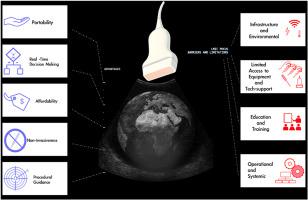
低收入和中等收入国家的护理点超声(PoCUS)
即时超声(PoCUS)是一种便携、经济、多功能的诊断和程序工具,可提高床边决策。它的简单性和安全性使其在获得先进成像的机会有限的低收入和中等收入国家(LMICs)特别有价值。PoCUS通过实现麻醉学、围手术期护理、重症监护和急诊医学的实时、无创评估和程序指导,帮助弥合诊断差距。然而,在中低收入国家的实施面临着诸如设备可用性有限、成本高、维护困难和培训不足等障碍。设备可用性、可及性和结构化教育仍然是采用的关键决定因素。培训项目通常是短期的,由外部主导,与当地系统的长期整合有限。新兴战略包括“培训培训师”方法、混合学习和远程指导,提供了可扩展的解决方案。在指导和标准化证书的支持下,在获取、教育和可持续性方面的协调努力至关重要。最终,PoCUS不仅仅是一种诊断工具;它推动全球卫生领域的公平、安全和赋权。
本文章由计算机程序翻译,如有差异,请以英文原文为准。
求助全文
约1分钟内获得全文
求助全文
来源期刊
Best Practice & Research-Clinical Anaesthesiology
ANESTHESIOLOGY-
自引率
0.00%
发文量
37
审稿时长
36 days
 求助内容:
求助内容: 应助结果提醒方式:

 京公网安备 11010802042870号


