From Bench to Bedside: Translating Research on miR-138 miR-195-5p and Long Non-Coding RNA H19 into Therapeutic Applications of Orthodontic Tooth Movement.
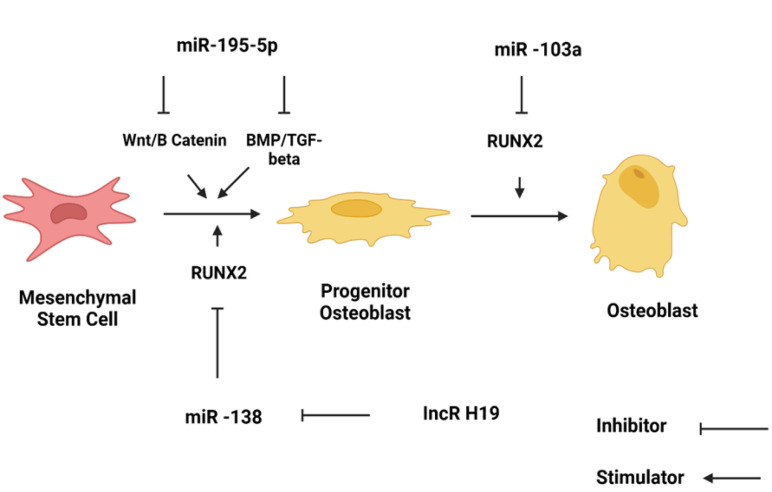
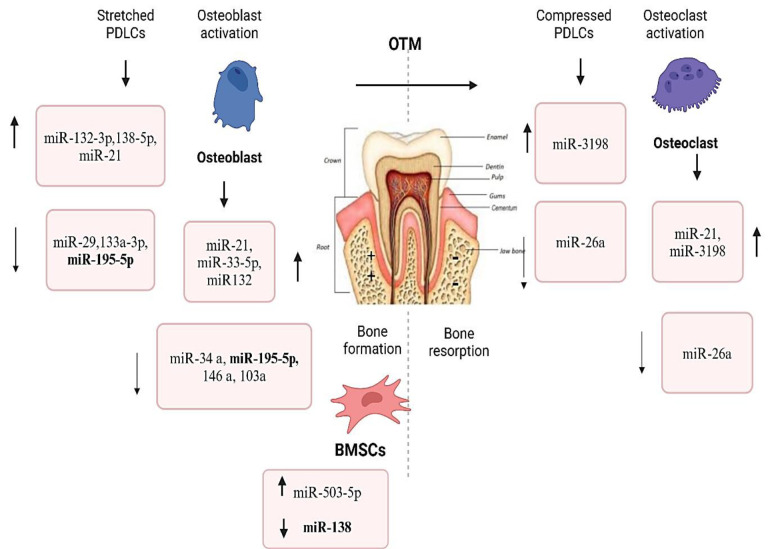
{"title":"From Bench to Bedside: Translating Research on miR-138 miR-195-5p and Long Non-Coding RNA H19 into Therapeutic Applications of Orthodontic Tooth Movement.","authors":"Dorsa Nikeghbal, Sajjad Rostamzadeh, Sarah Qutaiba Badraldeen, Soroor Soltani, Reza Mahmoudi Anzabi, Sahar Ghanbaran, Fatemeh Abedi Diznab","doi":"10.22088/IJMCM.BUMS.14.3.949","DOIUrl":null,"url":null,"abstract":"<p><p>This research investigates the roles of microRNAs (miR-138, miR-195-5p) and the long non-coding RNA (lncRNA) H19 in orthodontic tooth movement (OTM). A literature review using databases such as PubMed and Scopus identified 148 articles, which were subsequently narrowed down to 61 unique studies after duplicate removal. The findings underscore the significance of mechanical stimulation in bone metabolism and the complex biological mechanisms of OTM, with a focus on the functions of osteoblasts and osteoclasts. The study aimed to elucidate the expression patterns of non-coding RNA and microRNA in response to orthodontic force, potentially revealing new clinical methods to enhance the safety of orthodontic treatment. Additionally, it examines the therapeutic roles of miRNAs in orthodontics, specifically their influence on inflammation and bone regeneration. Notably, recent evidence has suggested miR-138 may inhibit osteogenesis, indicating its potential role in regulating bone remodeling during OTM, as mechanical forces affect both alveolar bone and periodontal tissues. Furthermore, miR-195-5p has been shown to directly interact with crucial osteogenic proteins, such as Wingless/Integrated 3 A (WNT3A), fibroblast growth factor 2 (FGF2), and bone morphogenetic protein receptor type 1A (BMPR1A). By downregulating these proteins, miR-195-5p negatively impacts essential osteogenic pathways related to bone formation and stability. The cyclic strain was found to upregulate lncRNA H19 while downregulating miR-138, promoting osteogenic differentiation of MSCs. This review outlines the complex regulatory networks involving these molecules, contributing to an understanding of OTM in dental and skeletal health, and aims to enhance treatment outcomes for malocclusion.</p>","PeriodicalId":14152,"journal":{"name":"International Journal of Molecular and Cellular Medicine","volume":"14 3","pages":"949-963"},"PeriodicalIF":0.8000,"publicationDate":"2025-10-01","publicationTypes":"Journal Article","fieldsOfStudy":null,"isOpenAccess":false,"openAccessPdf":"https://www.ncbi.nlm.nih.gov/pmc/articles/PMC12665270/pdf/","citationCount":"0","resultStr":null,"platform":"Semanticscholar","paperid":null,"PeriodicalName":"International Journal of Molecular and Cellular Medicine","FirstCategoryId":"1085","ListUrlMain":"https://doi.org/10.22088/IJMCM.BUMS.14.3.949","RegionNum":0,"RegionCategory":null,"ArticlePicture":[],"TitleCN":null,"AbstractTextCN":null,"PMCID":null,"EPubDate":"2025/1/1 0:00:00","PubModel":"eCollection","JCR":"Q3","JCRName":"MEDICINE, RESEARCH & EXPERIMENTAL","Score":null,"Total":0}
引用次数: 0
Abstract
This research investigates the roles of microRNAs (miR-138, miR-195-5p) and the long non-coding RNA (lncRNA) H19 in orthodontic tooth movement (OTM). A literature review using databases such as PubMed and Scopus identified 148 articles, which were subsequently narrowed down to 61 unique studies after duplicate removal. The findings underscore the significance of mechanical stimulation in bone metabolism and the complex biological mechanisms of OTM, with a focus on the functions of osteoblasts and osteoclasts. The study aimed to elucidate the expression patterns of non-coding RNA and microRNA in response to orthodontic force, potentially revealing new clinical methods to enhance the safety of orthodontic treatment. Additionally, it examines the therapeutic roles of miRNAs in orthodontics, specifically their influence on inflammation and bone regeneration. Notably, recent evidence has suggested miR-138 may inhibit osteogenesis, indicating its potential role in regulating bone remodeling during OTM, as mechanical forces affect both alveolar bone and periodontal tissues. Furthermore, miR-195-5p has been shown to directly interact with crucial osteogenic proteins, such as Wingless/Integrated 3 A (WNT3A), fibroblast growth factor 2 (FGF2), and bone morphogenetic protein receptor type 1A (BMPR1A). By downregulating these proteins, miR-195-5p negatively impacts essential osteogenic pathways related to bone formation and stability. The cyclic strain was found to upregulate lncRNA H19 while downregulating miR-138, promoting osteogenic differentiation of MSCs. This review outlines the complex regulatory networks involving these molecules, contributing to an understanding of OTM in dental and skeletal health, and aims to enhance treatment outcomes for malocclusion.
期刊介绍:
The International Journal of Molecular and Cellular Medicine (IJMCM) is a peer-reviewed, quarterly publication of Cellular and Molecular Biology Research Center (CMBRC), Babol University of Medical Sciences, Babol, Iran. The journal covers all cellular & molecular biology and medicine disciplines such as the genetic basis of disease, biomarker discovery in diagnosis and treatment, genomics and proteomics, bioinformatics, computer applications in human biology, stem cells and tissue engineering, medical biotechnology, nanomedicine, cellular processes related to growth, death and survival, clinical biochemistry, molecular & cellular immunology, molecular and cellular aspects of infectious disease and cancer research. IJMCM is a free access journal. All open access articles published in IJMCM are distributed under the terms of the Creative Commons Attribution CC BY. The journal doesn''t have any submission and article processing charges (APCs).



 求助内容:
求助内容: 应助结果提醒方式:

 京公网安备 11010802042870号


