
Glycosylation in invertebrate immunity: Host response and pathogen evasion strategies
IF 2.4
3区 生物学
Q1 ZOOLOGY
Journal of invertebrate pathology
Pub Date : 2026-02-01
Epub Date: 2025-11-28
DOI:10.1016/j.jip.2025.108503
引用次数: 0
Abstract
Glycosylation, a key post-translational protein modification, has been found central to host-pathogen interactions, underpinning numerous critical interactions mediated by carbohydrate structures (glycans). Glycan-dependent interactions regulate pathogen adhesion, recognition, invasion, and immune evasion. Invertebrates represent the largest and most diverse group of species on Earth, from established classical model organisms such as Drosophila and Caenorhabditis, to medically relevant parasites and disease-carrying vectors. However, glycan-mediated interactions between invertebrates and their pathogens remain far less studied compared to vertebrate systems. This review summarizes current knowledge on the role of invertebrate glycosylation, including N- and O-glycans and glycosaminoglycans, in defense against diverse pathogens, and the immune-evasive role of glycosylation employed by invertebrate (or invertebrate-borne) pathogens during host infection. While current research highlights the critical importance of glycosylation in these interactions, some key gaps persist: a lack of comprehensive glycomic and glycoproteomics analysis across representative invertebrate species, and poor understanding of receptor molecules and signaling mechanisms for these glycans and glycoproteins. We hope this review will stimulate further research into this critical yet underexplored facet of invertebrate-pathogen interactions.
无脊椎动物免疫中的糖基化:宿主反应和病原体逃避策略。
糖基化是一种关键的翻译后蛋白质修饰,是宿主-病原体相互作用的核心,是由碳水化合物结构(聚糖)介导的许多关键相互作用的基础。聚糖依赖性相互作用调节病原体粘附、识别、入侵和免疫逃避。无脊椎动物代表了地球上最大和最多样化的物种群,从果蝇和隐杆线虫等已建立的经典模式生物,到与医学相关的寄生虫和疾病携带媒介。然而,与脊椎动物系统相比,聚糖介导的无脊椎动物与其病原体之间的相互作用仍然很少被研究。本文综述了目前对无脊椎动物糖基化(包括N-和o -聚糖和糖胺聚糖)在防御多种病原体中的作用的研究,以及无脊椎动物(或无脊椎传播的)病原体在宿主感染过程中糖基化的免疫规避作用。虽然目前的研究强调了糖基化在这些相互作用中的关键重要性,但一些关键的差距仍然存在:缺乏对代表性无脊椎动物物种的全面糖组学和糖蛋白组学分析,以及对这些聚糖和糖蛋白的受体分子和信号传导机制的了解不足。我们希望这篇综述将激发对无脊椎动物-病原体相互作用这一关键但尚未被充分探索的方面的进一步研究。
本文章由计算机程序翻译,如有差异,请以英文原文为准。
求助全文
约1分钟内获得全文
求助全文
来源期刊
CiteScore
6.10
自引率
5.90%
发文量
94
审稿时长
1 months
期刊介绍:
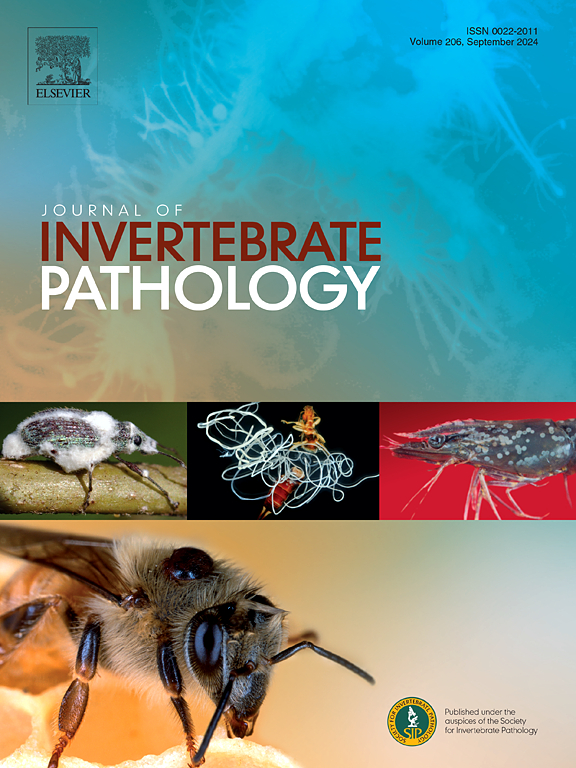
The Journal of Invertebrate Pathology presents original research articles and notes on the induction and pathogenesis of diseases of invertebrates, including the suppression of diseases in beneficial species, and the use of diseases in controlling undesirable species. In addition, the journal publishes the results of physiological, morphological, genetic, immunological and ecological studies as related to the etiologic agents of diseases of invertebrates.
The Journal of Invertebrate Pathology is the adopted journal of the Society for Invertebrate Pathology, and is available to SIP members at a special reduced price.
 求助内容:
 应助结果提醒方式:


 京公网安备 11010802042870号


