
Comparing the respiratory tract microbiome in captive elephants and humans in Chitwan National Park: Implications for conservation medicine
IF 2
3区 农林科学
Q4 IMMUNOLOGY
Comparative Immunology Microbiology and Infectious Diseases
Pub Date : 2026-01-01
Epub Date: 2025-11-15
DOI:10.1016/j.cimid.2025.102422
引用次数: 0
Abstract
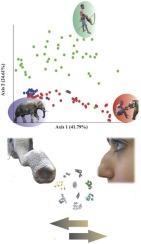
The study of gut microbiome in both animals and humans living in proximity has proven crucial in understanding their coevolution, the potential for microbial transfer and the dynamics behind various diseases. Similarly, the investigation of respiratory microbiomes has been gaining popularity due to its significance and impact on respiratory health. Here, we use 16S rRNA metabarcoding to explore the respiratory microbiome of captive Asian elephants (Elephas maximus) and their mahouts (i.e., trainers and handlers) in Chitwan National Park (Nepal), with local villagers residing out of the protected area acting as control. Sputum samples were collected to characterize their bacterial composition, while its functional profile was inferred with PICRUSt2. Additionally, the occurrence of genera hosting potentially pathogenic ESKAPE-E species was evaluated. Our findings revealed high similarity in the bacterial and functional composition of the respiratory microbiome of elephants and mahouts, with Bacillota and Pseudomonadota emerging as the most abundant phyla across all host categories and the controls displaying the highest diversity. A striking difference was observed in relation to the family Bacillaceae that dominated the microbial composition of both mahouts and elephants but not controls. Genera hosting potentially pathogenic ESKAPE-E bacteria were found in all host categories, which underscores the need for in-depth analyses to identify the species involved. Our study delivers valuable insights in the respiratory microbial community of both Asian elephants and humans, thus laying the basis for further investigations on their diversity and function, unveiling their role in respiratory health of both host species.
奇旺国家公园圈养大象和人类呼吸道微生物组的比较:对保护医学的影响
事实证明,对生活在附近的动物和人类肠道微生物组的研究对于理解它们的共同进化、微生物转移的潜力和各种疾病背后的动力学至关重要。同样,呼吸道微生物组的研究也因其对呼吸健康的重要性和影响而越来越受欢迎。本研究采用16S rRNA元编码技术,对尼泊尔奇旺国家公园圈养亚洲象及其驯象员(即驯象员和训象员)的呼吸微生物群进行了研究,并以居住在保护区外的当地村民为对照。收集痰样本以表征其细菌组成,同时用PICRUSt2推断其功能谱。此外,还评估了潜在致病性ESKAPE-E物种宿主属的发生情况。我们的研究结果显示,大象和象群呼吸微生物组的细菌和功能组成高度相似,杆状杆菌和假单胞菌是所有宿主类别中数量最多的门,而对照组的多样性最高。在象象和大象的微生物组成中,杆菌科占主导地位,而对照组则不占主导地位。在所有宿主类别中都发现了潜在致病性ESKAPE-E细菌的宿主属,这强调了对所涉及的物种进行深入分析的必要性。我们的研究为亚洲象和人类的呼吸微生物群落提供了有价值的见解,从而为进一步研究它们的多样性和功能奠定了基础,揭示了它们在两种宿主物种呼吸健康中的作用。
本文章由计算机程序翻译,如有差异,请以英文原文为准。
求助全文
约1分钟内获得全文
求助全文
来源期刊
CiteScore
4.60
自引率
0.00%
发文量
102
审稿时长
40 days
期刊介绍:
Comparative Immunology, Microbiology & Infectious Diseases aims to respond to the concept of "One Medicine" and to provide a venue for scientific exchange. Based on the concept of "Comparative Medicine" interdisciplinary cooperation between specialists in human and animal medicine is of mutual interest and benefit. Therefore, there is need to combine the respective interest of physicians, veterinarians and other health professionals for comparative studies relevant to either human or animal medicine .
The journal is open to subjects of common interest related to the immunology, immunopathology, microbiology, parasitology and epidemiology of human and animal infectious diseases, especially zoonotic infections, and animal models of human infectious diseases. The role of environmental factors in disease emergence is emphasized. CIMID is mainly focusing on applied veterinary and human medicine rather than on fundamental experimental research.
 求助内容:
求助内容: 应助结果提醒方式:

 京公网安备 11010802042870号


