{"title":"Effect of V-ATPase a3 subunit on microglial phagosome maturation in zebrafish.","authors":"Han-Jing Kou, Zhi-Bin Huang, Wen-Qing Zhang, Qi Chen","doi":"10.16288/j.yczz.25-117","DOIUrl":null,"url":null,"abstract":"<p><p>Microglia, as the resident immune cells of the central nervous system (CNS), maintain neural homeostasis by orchestrating the clearance of necrotic neurons, cellular debris, and pathogens through phagocytosis. This intracellular process involves a dynamic cascade of protein-mediated events, including cargo recognition and phagosome formation, phagosome maturation, and lysosomal degradation. Phagosome maturation critically relies on V-ATPase-driven acidification, with proton transport efficiency predominantly determined by its a subunit. In mammals, the V-ATPase a subunit has four isoforms (a1, a2, a3 and a4), whereas zebrafish (<i>Danio rerio</i>) possess only the three isoforms (a1, a2 and a3), with marked differences observed in their targeted cell types and suborganellar localization patterns. Notably, the V-ATPase a3 subunit is primarily localized on osteoclast lysosomes, facilitating bone resorption by acidification. The preliminary studies have revealed its conserved lysosomal localization in zebrafish microglia; however, its functional role in microglial development and regulatory mechanisms underlying phagosome maturation remain elusive. To address this knowledge gap, we employed a V-ATPase a3 subunit-deficient (<i>tcirg1b<sup>-/-</sup></i>) zebrafish model, integrating whole-mount <i>in situ</i> hybridization, immunofluorescence, co-immunoprecipitation (Co-IP), and apoptosis assays. Key findings include: The a3 subunit is expressed during early zebrafish development; a3 subunit deficiency caused abnormal phagosome accumulation, microglial swelling and decreased activity, showing an \"indigestion-like\" phenotype; By exogenous labeling of late phagosomes and immunofluorescence staining, it was confirmed that the defect of V-ATPase a3 subunit impaired late phagosome-lysosome fusion in microglia; Co-IP demonstrated direct binding between the a3 subunit and Rab7. Rab7 knockdown phenocopied the \"indigestion\" morphology, suggesting a cooperative role in phagosome degradation. These results demonstrate that the V-ATPase a3 subunit regulates microglial phagosome maturation by mediating Rab7-dependent phagolysosomal fusion. In conclusion, this study not only elucidates the molecular mechanism underlying microglial phagocytic capacity but also provides novel insights into the evolutionarily conserved roles of V-ATPase isoforms in cellular clearance pathways.</p>","PeriodicalId":35536,"journal":{"name":"遗传","volume":"47 11","pages":"1256-1268"},"PeriodicalIF":0.0000,"publicationDate":"2025-11-01","publicationTypes":"Journal Article","fieldsOfStudy":null,"isOpenAccess":false,"openAccessPdf":"","citationCount":"0","resultStr":null,"platform":"Semanticscholar","paperid":null,"PeriodicalName":"遗传","FirstCategoryId":"1091","ListUrlMain":"https://doi.org/10.16288/j.yczz.25-117","RegionNum":0,"RegionCategory":null,"ArticlePicture":[],"TitleCN":null,"AbstractTextCN":null,"PMCID":null,"EPubDate":"","PubModel":"","JCR":"Q3","JCRName":"Medicine","Score":null,"Total":0}
引用次数: 0
Abstract
Microglia, as the resident immune cells of the central nervous system (CNS), maintain neural homeostasis by orchestrating the clearance of necrotic neurons, cellular debris, and pathogens through phagocytosis. This intracellular process involves a dynamic cascade of protein-mediated events, including cargo recognition and phagosome formation, phagosome maturation, and lysosomal degradation. Phagosome maturation critically relies on V-ATPase-driven acidification, with proton transport efficiency predominantly determined by its a subunit. In mammals, the V-ATPase a subunit has four isoforms (a1, a2, a3 and a4), whereas zebrafish (Danio rerio) possess only the three isoforms (a1, a2 and a3), with marked differences observed in their targeted cell types and suborganellar localization patterns. Notably, the V-ATPase a3 subunit is primarily localized on osteoclast lysosomes, facilitating bone resorption by acidification. The preliminary studies have revealed its conserved lysosomal localization in zebrafish microglia; however, its functional role in microglial development and regulatory mechanisms underlying phagosome maturation remain elusive. To address this knowledge gap, we employed a V-ATPase a3 subunit-deficient (tcirg1b-/-) zebrafish model, integrating whole-mount in situ hybridization, immunofluorescence, co-immunoprecipitation (Co-IP), and apoptosis assays. Key findings include: The a3 subunit is expressed during early zebrafish development; a3 subunit deficiency caused abnormal phagosome accumulation, microglial swelling and decreased activity, showing an "indigestion-like" phenotype; By exogenous labeling of late phagosomes and immunofluorescence staining, it was confirmed that the defect of V-ATPase a3 subunit impaired late phagosome-lysosome fusion in microglia; Co-IP demonstrated direct binding between the a3 subunit and Rab7. Rab7 knockdown phenocopied the "indigestion" morphology, suggesting a cooperative role in phagosome degradation. These results demonstrate that the V-ATPase a3 subunit regulates microglial phagosome maturation by mediating Rab7-dependent phagolysosomal fusion. In conclusion, this study not only elucidates the molecular mechanism underlying microglial phagocytic capacity but also provides novel insights into the evolutionarily conserved roles of V-ATPase isoforms in cellular clearance pathways.
期刊介绍:
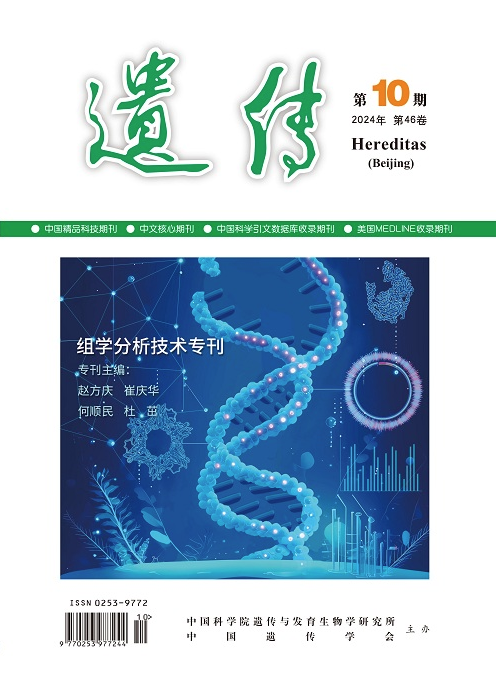
Hereditas is a national academic journal sponsored by the Institute of Genetics and Developmental Biology of the Chinese Academy of Sciences and the Chinese Society of Genetics and published by Science Press. It is a Chinese core journal and a Chinese high-quality scientific journal. The journal mainly publishes innovative research papers in the fields of genetics, genomics, cell biology, developmental biology, biological evolution, genetic engineering and biotechnology; new technologies and new methods; monographs and reviews on hot issues in the discipline; academic debates and discussions; experience in genetics teaching; introductions to famous geneticists at home and abroad; genetic counseling; information on academic conferences at home and abroad, etc. Main columns: review, frontier focus, research report, technology and method, resources and platform, experimental operation guide, genetic resources, genetics teaching, scientific news, etc.

 求助内容:
 应助结果提醒方式:


 京公网安备 11010802042870号


