Sumeet Goel, Motlalepula Matsabisa, Fei Jiao, Caio Portella, Vijayalakshmi Asthana, Nilce Ekandzi, Manjeet S Saluja, Stefan Germann, João P Souza
{"title":"Traditional knowledge on health: balancing innovation, ethics and intellectual property.","authors":"Sumeet Goel, Motlalepula Matsabisa, Fei Jiao, Caio Portella, Vijayalakshmi Asthana, Nilce Ekandzi, Manjeet S Saluja, Stefan Germann, João P Souza","doi":"10.2471/BLT.25.293487","DOIUrl":null,"url":null,"abstract":"<p><p>Traditional knowledge on health has long contributed to global health-care systems. Rooted in the cultural and ecological heritage of Indigenous Peoples and local communities, traditional knowledge has influenced pharmaceutical research, biodiversity conservation and public health strategies. However, concerns over misappropriation of traditional knowledge and inadequate benefit-sharing with the sources of such knowledge persist. The World Intellectual Property Organization Treaty on Intellectual Property, Genetic Resources and Associated Traditional Knowledge mandates patent disclosure requirements for genetic resources and traditional knowledge. While a step forward, the treaty's success depends on its effective implementation, ethical documentation of traditional knowledge, governance of artificial intelligence and equitable benefit-sharing mechanisms, among other factors. We examine traditional knowledge protection under intellectual property systems, the provisions of the World Intellectual Property Organization treaty, challenges to documentation of traditional knowledge and the role of artificial intelligence in the governance of traditional knowledge. By fostering a legally robust and technology-driven protection system for traditional knowledge, policy-makers can ensure that traditional knowledge remains both a protected cultural heritage and a resource for sustainable innovation in global health.</p>","PeriodicalId":9465,"journal":{"name":"Bulletin of the World Health Organization","volume":"103 11","pages":"708-714"},"PeriodicalIF":5.7000,"publicationDate":"2025-11-01","publicationTypes":"Journal Article","fieldsOfStudy":null,"isOpenAccess":false,"openAccessPdf":"https://www.ncbi.nlm.nih.gov/pmc/articles/PMC12578522/pdf/","citationCount":"0","resultStr":null,"platform":"Semanticscholar","paperid":null,"PeriodicalName":"Bulletin of the World Health Organization","FirstCategoryId":"3","ListUrlMain":"https://doi.org/10.2471/BLT.25.293487","RegionNum":2,"RegionCategory":"医学","ArticlePicture":[],"TitleCN":null,"AbstractTextCN":null,"PMCID":null,"EPubDate":"2025/9/16 0:00:00","PubModel":"Epub","JCR":"Q1","JCRName":"PUBLIC, ENVIRONMENTAL & OCCUPATIONAL HEALTH","Score":null,"Total":0}
引用次数: 0
Abstract
Traditional knowledge on health has long contributed to global health-care systems. Rooted in the cultural and ecological heritage of Indigenous Peoples and local communities, traditional knowledge has influenced pharmaceutical research, biodiversity conservation and public health strategies. However, concerns over misappropriation of traditional knowledge and inadequate benefit-sharing with the sources of such knowledge persist. The World Intellectual Property Organization Treaty on Intellectual Property, Genetic Resources and Associated Traditional Knowledge mandates patent disclosure requirements for genetic resources and traditional knowledge. While a step forward, the treaty's success depends on its effective implementation, ethical documentation of traditional knowledge, governance of artificial intelligence and equitable benefit-sharing mechanisms, among other factors. We examine traditional knowledge protection under intellectual property systems, the provisions of the World Intellectual Property Organization treaty, challenges to documentation of traditional knowledge and the role of artificial intelligence in the governance of traditional knowledge. By fostering a legally robust and technology-driven protection system for traditional knowledge, policy-makers can ensure that traditional knowledge remains both a protected cultural heritage and a resource for sustainable innovation in global health.
期刊介绍:
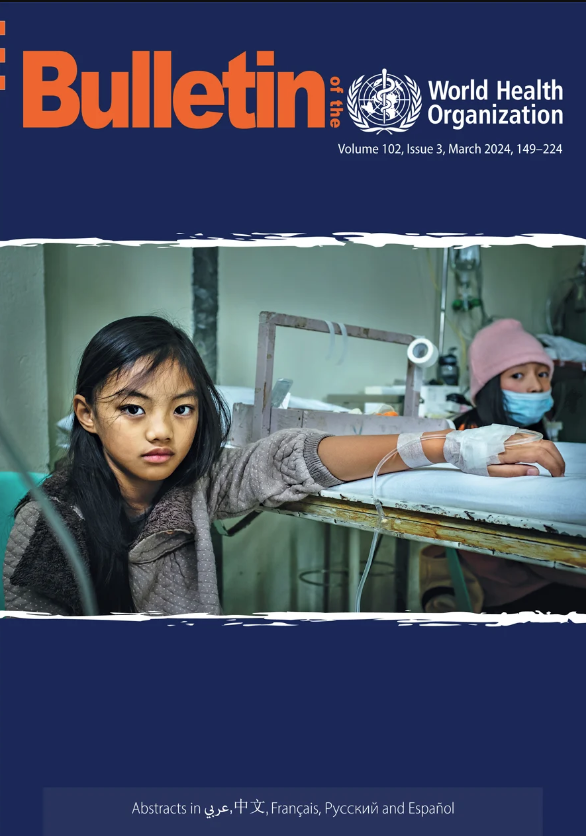
The Bulletin of the World Health Organization
Journal Overview:
Leading public health journal
Peer-reviewed monthly journal
Special focus on developing countries
Global scope and authority
Top public and environmental health journal
Impact factor of 6.818 (2018), according to Web of Science ranking
Audience:
Essential reading for public health decision-makers and researchers
Provides blend of research, well-informed opinion, and news

 求助内容:
求助内容: 应助结果提醒方式:

 京公网安备 11010802042870号


