Tanner L Anderson, Artin Asadipooya, Pavel I Ortinski
{"title":"Psychedelics Reverse the Polarity of Long-Term Synaptic Plasticity in Cortical-Projecting Claustrum Neurons.","authors":"Tanner L Anderson, Artin Asadipooya, Pavel I Ortinski","doi":"10.1523/ENEURO.0047-25.2025","DOIUrl":null,"url":null,"abstract":"<p><p>Psychedelic drugs have garnered increasing attention for their therapeutic potential in treating a variety of psychiatric diseases, such as depression, anxiety, and substance use disorder. The claustrum (CLA), a brain area with remarkable interconnectivity to frontal cortices, has recently been shown to have a dense population of serotonin 2 receptors (5-HT2Rs) that are activated by psychedelics. Because psychedelic therapy can require as little as one treatment session, it has been speculated that psychedelics achieve their long-term remedial effects by inducing neuroplasticity in brain areas responsible for psychiatric disease states, such as the anterior cingulate cortex (ACC). However, the effects of psychedelics on synaptic plasticity in serotonin receptor-rich brain areas remain entirely unexplored. We applied presynaptic stimuli paired with postsynaptic action potentials (APs) to a subpopulation of CLA neurons projecting to ACC in male rats to find that the psychedelic drug, 2,5-dimethoxy-4-iodoamphetamine (DOI), reverses the polarity of synaptic plasticity from long-term depression (LTD) to long-term potentiation (LTP) in a manner that may reflect contribution of excitatory or inhibitory neurotransmission but is specific to synapses activated by local electrical stimulation. Additionally, we characterize intrinsic electrophysiological properties of CLA-ACC neurons with and without DOI application, noting several changes to AP dynamics induced by DOI. These findings align with the view that psychedelics induce rapid and lasting synaptic plasticity and strengthen the hypothesis that claustrocortical circuits are highly sensitive to psychedelic drug action.</p>","PeriodicalId":11617,"journal":{"name":"eNeuro","volume":" ","pages":""},"PeriodicalIF":2.7000,"publicationDate":"2025-10-29","publicationTypes":"Journal Article","fieldsOfStudy":null,"isOpenAccess":false,"openAccessPdf":"https://www.ncbi.nlm.nih.gov/pmc/articles/PMC12571499/pdf/","citationCount":"0","resultStr":null,"platform":"Semanticscholar","paperid":null,"PeriodicalName":"eNeuro","FirstCategoryId":"3","ListUrlMain":"https://doi.org/10.1523/ENEURO.0047-25.2025","RegionNum":3,"RegionCategory":"医学","ArticlePicture":[],"TitleCN":null,"AbstractTextCN":null,"PMCID":null,"EPubDate":"2025/10/1 0:00:00","PubModel":"Print","JCR":"Q3","JCRName":"NEUROSCIENCES","Score":null,"Total":0}
引用次数: 0
Abstract
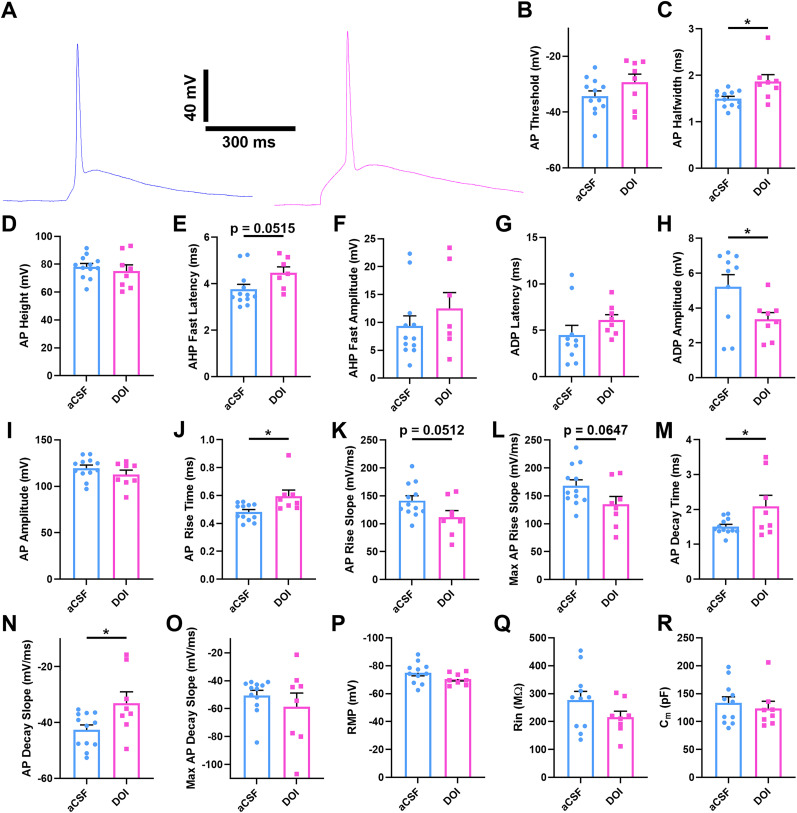
Psychedelic drugs have garnered increasing attention for their therapeutic potential in treating a variety of psychiatric diseases, such as depression, anxiety, and substance use disorder. The claustrum (CLA), a brain area with remarkable interconnectivity to frontal cortices, has recently been shown to have a dense population of serotonin 2 receptors (5-HT2Rs) that are activated by psychedelics. Because psychedelic therapy can require as little as one treatment session, it has been speculated that psychedelics achieve their long-term remedial effects by inducing neuroplasticity in brain areas responsible for psychiatric disease states, such as the anterior cingulate cortex (ACC). However, the effects of psychedelics on synaptic plasticity in serotonin receptor-rich brain areas remain entirely unexplored. We applied presynaptic stimuli paired with postsynaptic action potentials (APs) to a subpopulation of CLA neurons projecting to ACC in male rats to find that the psychedelic drug, 2,5-dimethoxy-4-iodoamphetamine (DOI), reverses the polarity of synaptic plasticity from long-term depression (LTD) to long-term potentiation (LTP) in a manner that may reflect contribution of excitatory or inhibitory neurotransmission but is specific to synapses activated by local electrical stimulation. Additionally, we characterize intrinsic electrophysiological properties of CLA-ACC neurons with and without DOI application, noting several changes to AP dynamics induced by DOI. These findings align with the view that psychedelics induce rapid and lasting synaptic plasticity and strengthen the hypothesis that claustrocortical circuits are highly sensitive to psychedelic drug action.
期刊介绍:
An open-access journal from the Society for Neuroscience, eNeuro publishes high-quality, broad-based, peer-reviewed research focused solely on the field of neuroscience. eNeuro embodies an emerging scientific vision that offers a new experience for authors and readers, all in support of the Society’s mission to advance understanding of the brain and nervous system.




 求助内容:
求助内容: 应助结果提醒方式:

 京公网安备 11010802042870号


