Lun Ai, Stephen H Muggleton, Shi-Shun Liang, Geoff S Baldwin
{"title":"Boolean matrix logic programming for active learning of gene functions in genome-scale metabolic network models.","authors":"Lun Ai, Stephen H Muggleton, Shi-Shun Liang, Geoff S Baldwin","doi":"10.1007/s10994-025-06868-0","DOIUrl":null,"url":null,"abstract":"<p><p>Reasoning about hypotheses and updating knowledge through empirical observations are central to scientific discovery. In this work, we applied logic-based machine learning methods to drive biological discovery by guiding experimentation. Genome-scale metabolic network models (GEMs) - comprehensive representations of metabolic genes and reactions - are widely used to evaluate genetic engineering of biological systems. However, GEMs often fail to accurately predict the behaviour of genetically engineered cells, primarily due to incomplete annotations of gene interactions. The task of learning the intricate genetic interactions within GEMs presents computational and empirical challenges. To efficiently predict using GEM, we describe a novel approach called Boolean Matrix Logic Programming (BMLP) by leveraging Boolean matrices to evaluate large logic programs. We developed a new system, [Formula: see text], which guides cost-effective experimentation and uses interpretable logic programs to encode a state-of-the-art GEM of a model bacterial organism. Notably, [Formula: see text] successfully learned the interaction between a gene pair with fewer training examples than random experimentation, overcoming the increase in experimental design space. [Formula: see text] enables rapid optimisation of metabolic models to reliably engineer biological systems for producing useful compounds. It offers a realistic approach to creating a self-driving lab for biological discovery, which would then facilitate microbial engineering for practical applications.</p>","PeriodicalId":49900,"journal":{"name":"Machine Learning","volume":"114 11","pages":"254"},"PeriodicalIF":2.9000,"publicationDate":"2025-01-01","publicationTypes":"Journal Article","fieldsOfStudy":null,"isOpenAccess":false,"openAccessPdf":"https://www.ncbi.nlm.nih.gov/pmc/articles/PMC12535945/pdf/","citationCount":"0","resultStr":null,"platform":"Semanticscholar","paperid":null,"PeriodicalName":"Machine Learning","FirstCategoryId":"94","ListUrlMain":"https://doi.org/10.1007/s10994-025-06868-0","RegionNum":3,"RegionCategory":"计算机科学","ArticlePicture":[],"TitleCN":null,"AbstractTextCN":null,"PMCID":null,"EPubDate":"2025/10/19 0:00:00","PubModel":"Epub","JCR":"Q2","JCRName":"COMPUTER SCIENCE, ARTIFICIAL INTELLIGENCE","Score":null,"Total":0}
引用次数: 0
Abstract
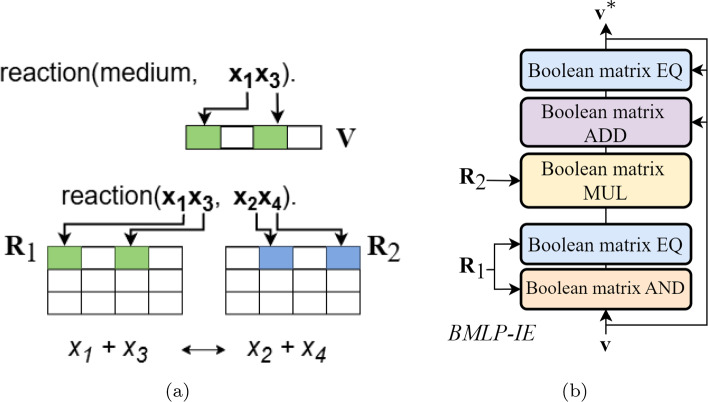
Reasoning about hypotheses and updating knowledge through empirical observations are central to scientific discovery. In this work, we applied logic-based machine learning methods to drive biological discovery by guiding experimentation. Genome-scale metabolic network models (GEMs) - comprehensive representations of metabolic genes and reactions - are widely used to evaluate genetic engineering of biological systems. However, GEMs often fail to accurately predict the behaviour of genetically engineered cells, primarily due to incomplete annotations of gene interactions. The task of learning the intricate genetic interactions within GEMs presents computational and empirical challenges. To efficiently predict using GEM, we describe a novel approach called Boolean Matrix Logic Programming (BMLP) by leveraging Boolean matrices to evaluate large logic programs. We developed a new system, [Formula: see text], which guides cost-effective experimentation and uses interpretable logic programs to encode a state-of-the-art GEM of a model bacterial organism. Notably, [Formula: see text] successfully learned the interaction between a gene pair with fewer training examples than random experimentation, overcoming the increase in experimental design space. [Formula: see text] enables rapid optimisation of metabolic models to reliably engineer biological systems for producing useful compounds. It offers a realistic approach to creating a self-driving lab for biological discovery, which would then facilitate microbial engineering for practical applications.
期刊介绍:
Machine Learning serves as a global platform dedicated to computational approaches in learning. The journal reports substantial findings on diverse learning methods applied to various problems, offering support through empirical studies, theoretical analysis, or connections to psychological phenomena. It demonstrates the application of learning methods to solve significant problems and aims to enhance the conduct of machine learning research with a focus on verifiable and replicable evidence in published papers.



 求助内容:
求助内容: 应助结果提醒方式:

 京公网安备 11010802042870号


