Alexander Somerville, Keith Joiner, Timothy Lynar, Graham Wild
{"title":"Applications of extended reality in pilot flight simulator training: a systematic review with meta-analysis.","authors":"Alexander Somerville, Keith Joiner, Timothy Lynar, Graham Wild","doi":"10.1186/s42492-025-00206-w","DOIUrl":null,"url":null,"abstract":"<p><p>The use of extended reality (XR) spectrum technologies as substitutes to augment traditional simulators in pilot flight training has received significant interest in recent times. A systematic review was conducted to evaluate the efficacy of XR technologies for this purpose and better understand the motivating factors for this use. The systematic review followed the QUOROM framework (adapted for educational studies), screening 1237 candidate articles to 67 eligible for thematic analysis, with 5 of these also meeting meta-analysis criteria. Existing literature emphasizes the benefits of these technologies, particularly as a result of immersiveness and spatial awareness, enabling the application of more modern educational theories. Although the existing literature is concerned with much of the industry, there is a specific focus on general aviation and the more ab initio skills of flight. The results of the meta-analysis indicate improvements in pilot performance, with an overall meta-analytic effect size estimate of 0.884 (z = 2.248, P = 0.025), which is positive, statistically significant, and moderately strong. The findings of this review indicate support for the use and intention for the use of XR in pilot flight training simulators. However, multiple serious research gaps exist, such as the potential higher occurrence of simulator sickness and cybersickness, and a lack of robust research trials that examine transfer of training across the full pilot skill set and curricular contexts. This novel systematic review and meta-analysis represent a significant attempt to shape and direct better research to help to direct flourishing technological XR development in a time of increasing pilot shortages and aviation growth.</p>","PeriodicalId":29931,"journal":{"name":"Visual Computing for Industry Biomedicine and Art","volume":"8 1","pages":"25"},"PeriodicalIF":6.0000,"publicationDate":"2025-10-23","publicationTypes":"Journal Article","fieldsOfStudy":null,"isOpenAccess":false,"openAccessPdf":"https://www.ncbi.nlm.nih.gov/pmc/articles/PMC12546163/pdf/","citationCount":"0","resultStr":null,"platform":"Semanticscholar","paperid":null,"PeriodicalName":"Visual Computing for Industry Biomedicine and Art","FirstCategoryId":"94","ListUrlMain":"https://doi.org/10.1186/s42492-025-00206-w","RegionNum":4,"RegionCategory":"计算机科学","ArticlePicture":[],"TitleCN":null,"AbstractTextCN":null,"PMCID":null,"EPubDate":"","PubModel":"","JCR":"Q2","JCRName":"COMPUTER SCIENCE, INTERDISCIPLINARY APPLICATIONS","Score":null,"Total":0}
引用次数: 0
Abstract
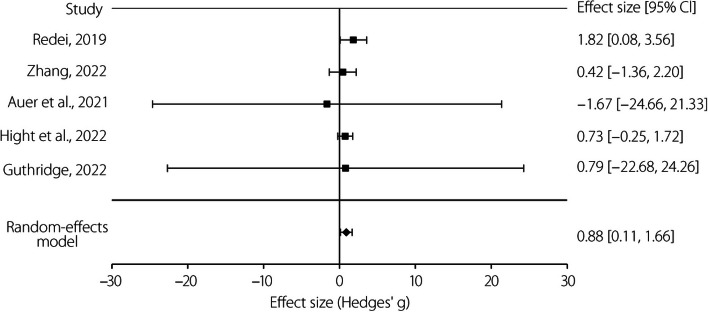
The use of extended reality (XR) spectrum technologies as substitutes to augment traditional simulators in pilot flight training has received significant interest in recent times. A systematic review was conducted to evaluate the efficacy of XR technologies for this purpose and better understand the motivating factors for this use. The systematic review followed the QUOROM framework (adapted for educational studies), screening 1237 candidate articles to 67 eligible for thematic analysis, with 5 of these also meeting meta-analysis criteria. Existing literature emphasizes the benefits of these technologies, particularly as a result of immersiveness and spatial awareness, enabling the application of more modern educational theories. Although the existing literature is concerned with much of the industry, there is a specific focus on general aviation and the more ab initio skills of flight. The results of the meta-analysis indicate improvements in pilot performance, with an overall meta-analytic effect size estimate of 0.884 (z = 2.248, P = 0.025), which is positive, statistically significant, and moderately strong. The findings of this review indicate support for the use and intention for the use of XR in pilot flight training simulators. However, multiple serious research gaps exist, such as the potential higher occurrence of simulator sickness and cybersickness, and a lack of robust research trials that examine transfer of training across the full pilot skill set and curricular contexts. This novel systematic review and meta-analysis represent a significant attempt to shape and direct better research to help to direct flourishing technological XR development in a time of increasing pilot shortages and aviation growth.
近年来,在飞行员飞行训练中使用扩展现实(XR)频谱技术作为传统模拟器的替代品已经引起了人们的极大兴趣。我们进行了一项系统评价,以评估XR技术在这方面的功效,并更好地了解这种使用的激励因素。系统评价遵循QUOROM框架(适用于教育研究),筛选1237篇候选文章,其中67篇符合主题分析标准,其中5篇也符合元分析标准。现有文献强调了这些技术的好处,特别是由于沉浸式和空间意识,使更多现代教育理论的应用成为可能。虽然现有的文献是有关行业的大部分,有一个特别的重点是通用航空和更多的从头开始的飞行技能。meta分析结果表明,飞行员绩效有所改善,总体meta分析效应量估计为0.884 (z = 2.248, P = 0.025),具有统计学显著性,且中等强度。本综述的研究结果表明支持XR在飞行员飞行训练模拟器中的使用和意图。然而,存在许多严重的研究空白,例如模拟器病和晕动病的发生率可能更高,以及缺乏检查整个飞行员技能和课程背景下培训转移的强有力的研究试验。这项新颖的系统综述和荟萃分析代表了一项重要的尝试,旨在塑造和指导更好的研究,以帮助指导在飞行员短缺和航空业增长日益严重的情况下蓬勃发展的技术XR发展。



 求助内容:
求助内容: 应助结果提醒方式:

 京公网安备 11010802042870号


