Olav Magnus Fredheim, Eva Gravdahl, Ingeborg Skulberg, Morten Magelssen
{"title":"Attitudes Toward Euthanasia and Physician-Assisted Suicide Among Norwegian Palliative Care Physicians.","authors":"Olav Magnus Fredheim, Eva Gravdahl, Ingeborg Skulberg, Morten Magelssen","doi":"10.1177/26892820251372012","DOIUrl":null,"url":null,"abstract":"<p><strong>Background: </strong>Data from other countries have indicated that palliative care physicians are more opposed to assisted dying compared with other physicians. However, little is known about reasons for support/opposition among palliative care physicians.</p><p><strong>Objectives: </strong>To explore Norwegian palliative care physicians' attitudes toward assisted dying, with focus on filling knowledge gaps regarding reasons for support/opposition.</p><p><strong>Methods: </strong>The study is a cross-sectional descriptive survey. All 285 members of the Norwegian Association for Palliative Medicine were invited by e-mail to participate. To allow comparison with previous data, most questions and response alternatives were similar to a 2024 study of Norwegian physicians.</p><p><strong>Results: </strong>Among the 117 respondents opposition toward assisted dying was observed with 85 (73%) strongly disagreeing and 14 (12%) somewhat disagreeing with legalization of physician-assisted suicide for patients with short life expectancy. There was a clear pattern of less support for assisted dying if indications were wider, with only one respondent partially agreeing that assisted dying should be legalized for patients without severe illness who are tired of life and want to die. The most common reason for opposition was assisted dying representing a breach with professional ethics (88 subjects). The most common reason for support was that legalization could provide a safety for patients and next of kin that suffering could be avoided (14 subjects).</p><p><strong>Discussion: </strong>A large majority of Norwegian palliative care physicians reject the legalization of assisted dying. Among the small minority who support assisted dying, most believe it should be limited to patients with a short life expectancy.</p>","PeriodicalId":74394,"journal":{"name":"Palliative medicine reports","volume":"6 1","pages":"415-423"},"PeriodicalIF":1.3000,"publicationDate":"2025-09-03","publicationTypes":"Journal Article","fieldsOfStudy":null,"isOpenAccess":false,"openAccessPdf":"https://www.ncbi.nlm.nih.gov/pmc/articles/PMC12516118/pdf/","citationCount":"0","resultStr":null,"platform":"Semanticscholar","paperid":null,"PeriodicalName":"Palliative medicine reports","FirstCategoryId":"1085","ListUrlMain":"https://doi.org/10.1177/26892820251372012","RegionNum":0,"RegionCategory":null,"ArticlePicture":[],"TitleCN":null,"AbstractTextCN":null,"PMCID":null,"EPubDate":"2025/1/1 0:00:00","PubModel":"eCollection","JCR":"Q4","JCRName":"HEALTH CARE SCIENCES & SERVICES","Score":null,"Total":0}
引用次数: 0
Abstract
Background: Data from other countries have indicated that palliative care physicians are more opposed to assisted dying compared with other physicians. However, little is known about reasons for support/opposition among palliative care physicians.
Objectives: To explore Norwegian palliative care physicians' attitudes toward assisted dying, with focus on filling knowledge gaps regarding reasons for support/opposition.
Methods: The study is a cross-sectional descriptive survey. All 285 members of the Norwegian Association for Palliative Medicine were invited by e-mail to participate. To allow comparison with previous data, most questions and response alternatives were similar to a 2024 study of Norwegian physicians.
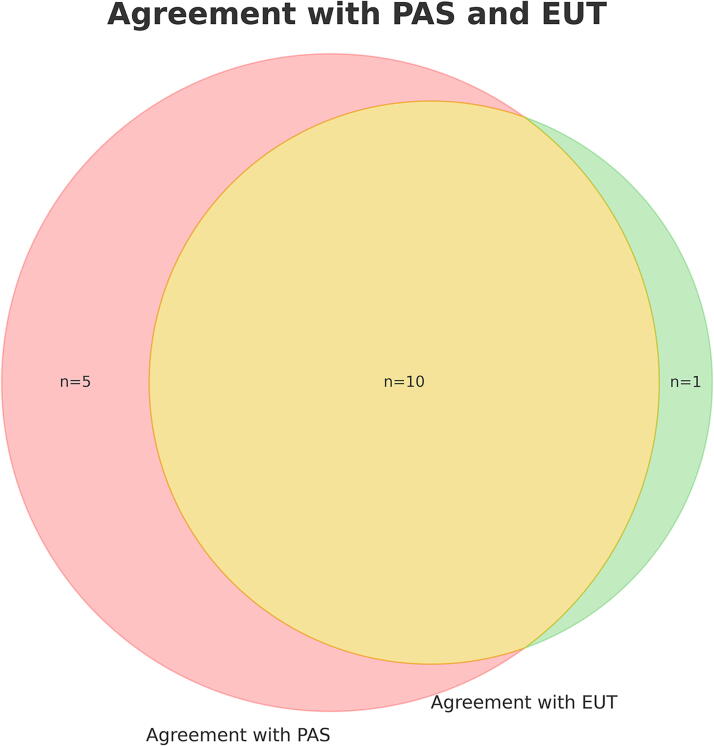
Results: Among the 117 respondents opposition toward assisted dying was observed with 85 (73%) strongly disagreeing and 14 (12%) somewhat disagreeing with legalization of physician-assisted suicide for patients with short life expectancy. There was a clear pattern of less support for assisted dying if indications were wider, with only one respondent partially agreeing that assisted dying should be legalized for patients without severe illness who are tired of life and want to die. The most common reason for opposition was assisted dying representing a breach with professional ethics (88 subjects). The most common reason for support was that legalization could provide a safety for patients and next of kin that suffering could be avoided (14 subjects).
Discussion: A large majority of Norwegian palliative care physicians reject the legalization of assisted dying. Among the small minority who support assisted dying, most believe it should be limited to patients with a short life expectancy.




 求助内容:
求助内容: 应助结果提醒方式:

 京公网安备 11010802042870号


