
Research progress of sandwich-type electrochemical immunosensors for the detection of protein markers of lung cancer in human serum
IF 4.9
2区 化学
Q1 CHEMISTRY, ANALYTICAL
引用次数: 0
Abstract
Lung cancer is the leading cause of cancer-related mortality worldwide, e underscoring the urgent need for effective early detection methods. The potential of sandwich-type electrochemical immunosensors for the detection of lung cancer protein markers in human serum has been established. The protein markers include Carcinoembryonic Antigen, Cytokeratin-19 fragment, Neuron-specific Enolase and Pro-gastrin-releasing peptide. These immunosensors capitalize on the high specificity of antibody-antigen interactions and employ various signal amplification strategies, including non-bioactive materials and enzyme-based labels. The utilization of labeling techniques has the capacity to enhance sensitivity, reduce detection limits, and improve stability. This article reviews the labels of sandwich-type electrochemical immunosensors for lung cancer protein markers, focusing on design principles, signal transduction mechanisms, and analytical performance. Despite the initial promise demonstrated in laboratory settings, challenges persist in the domains of multi-marker detection, interference resistance in complex samples, and clinical validation. Future efforts should aim toward multiplexed detection, improved real-sample accuracy, and translation into More portable diagnostic devices to facilitate early lung cancer diagnosis and staging.
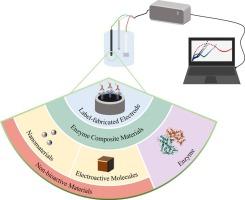
三明治型电化学免疫传感器检测人血清中肺癌蛋白标志物的研究进展
肺癌是全球癌症相关死亡的主要原因,因此迫切需要有效的早期检测方法。建立了三明治型电化学免疫传感器检测人血清中肺癌蛋白标志物的潜力。蛋白标志物包括癌胚抗原、细胞角蛋白-19片段、神经元特异性烯醇化酶和前胃泌素释放肽。这些免疫传感器利用抗体-抗原相互作用的高特异性,并采用各种信号放大策略,包括非生物活性材料和基于酶的标签。利用标记技术可以提高灵敏度,降低检测限,提高稳定性。本文综述了三明治型肺癌蛋白标记电化学免疫传感器的设计原理、信号转导机制和分析性能。尽管在实验室环境中表现出了最初的希望,但在多标记物检测、复杂样品的抗干扰和临床验证等领域仍然存在挑战。未来的努力应着眼于多路检测,提高真实样本的准确性,并转化为更便携式的诊断设备,以促进早期肺癌的诊断和分期。
本文章由计算机程序翻译,如有差异,请以英文原文为准。
求助全文
约1分钟内获得全文
求助全文
来源期刊
Microchemical Journal
化学-分析化学
CiteScore
8.70
自引率
8.30%
发文量
1131
审稿时长
1.9 months
期刊介绍:
The Microchemical Journal is a peer reviewed journal devoted to all aspects and phases of analytical chemistry and chemical analysis. The Microchemical Journal publishes articles which are at the forefront of modern analytical chemistry and cover innovations in the techniques to the finest possible limits. This includes fundamental aspects, instrumentation, new developments, innovative and novel methods and applications including environmental and clinical field.
Traditional classical analytical methods such as spectrophotometry and titrimetry as well as established instrumentation methods such as flame and graphite furnace atomic absorption spectrometry, gas chromatography, and modified glassy or carbon electrode electrochemical methods will be considered, provided they show significant improvements and novelty compared to the established methods.
 求助内容:
求助内容: 应助结果提醒方式:

 京公网安备 11010802042870号

