Clinical Outcomes and Complications of Basal, Bolus, and Combination Insulin Regimens in Type 2 Diabetes Mellitus: Evidence from Published Case Reports.
Ramdhani M Natsir, Eli Halimah, Ajeng Diantini, Jutti Levita
{"title":"Clinical Outcomes and Complications of Basal, Bolus, and Combination Insulin Regimens in Type 2 Diabetes Mellitus: Evidence from Published Case Reports.","authors":"Ramdhani M Natsir, Eli Halimah, Ajeng Diantini, Jutti Levita","doi":"10.2147/DMSO.S545571","DOIUrl":null,"url":null,"abstract":"<p><p>Insulin therapy remains a cornerstone in the management of type 2 diabetes mellitus (T2DM), especially in patients experiencing progressive loss of pancreatic beta-cell function or those with inadequate glycemic control despite oral antidiabetic therapy. This review synthesized clinical outcomes from 44 peer-reviewed case reports published between 2019 and 2024, identified through systematic searches in PubMed and Scopus. The included cases involved 15 males and 29 females, with patient ages ranging from 11 to 91 years (mean 53 ± 20.85 years). Subcutaneous insulin was the most frequently used route of administration, while intravenous insulin was reserved for managing acute complications. The most commonly reported complication was diabetic ketoacidosis (DKA), especially in patients with delayed insulin initiation or in those receiving sodium-glucose cotransporter 2 (SGLT2) inhibitors, a class of oral glucose-lowering agents, one of whose side effects is known to elevate the risk of euglycemic DKA. Other triggers included COVID-19 infection and severe insulin resistance. Most patients received basal insulin regimens, whereas basal-bolus combinations were preferred in more complex or unstable cases. Insulin was frequently combined with oral agents, such as metformin, dipeptidyl peptidase IV (DPP-IV) inhibitors, glucagon-like peptide 1 (GLP-1) receptor agonists, or sodium-glucose cotransporter 2 (SGLT2) inhibitors, reflecting a trend toward individualized treatment strategies. Biomarkers such as glycated hemoglobin (HbA1c) and C-reactive protein (CRP) were routinely used to monitor glycemic control and systemic inflammation. These findings underscore the clinical importance of early insulin initiation, continuous monitoring, and personalized regimens to improve outcomes in advanced or complicated T2DM. Emerging therapies, such as once-weekly basal insulin formulations, show promise for enhancing adherence and glucose stability, although further research is needed to evaluate their long-term effectiveness and cost-efficiency.</p>","PeriodicalId":11116,"journal":{"name":"Diabetes, Metabolic Syndrome and Obesity: Targets and Therapy","volume":"18 ","pages":"3215-3236"},"PeriodicalIF":3.0000,"publicationDate":"2025-09-03","publicationTypes":"Journal Article","fieldsOfStudy":null,"isOpenAccess":false,"openAccessPdf":"https://www.ncbi.nlm.nih.gov/pmc/articles/PMC12415096/pdf/","citationCount":"0","resultStr":null,"platform":"Semanticscholar","paperid":null,"PeriodicalName":"Diabetes, Metabolic Syndrome and Obesity: Targets and Therapy","FirstCategoryId":"3","ListUrlMain":"https://doi.org/10.2147/DMSO.S545571","RegionNum":3,"RegionCategory":"医学","ArticlePicture":[],"TitleCN":null,"AbstractTextCN":null,"PMCID":null,"EPubDate":"2025/1/1 0:00:00","PubModel":"eCollection","JCR":"Q3","JCRName":"ENDOCRINOLOGY & METABOLISM","Score":null,"Total":0}
引用次数: 0
Abstract
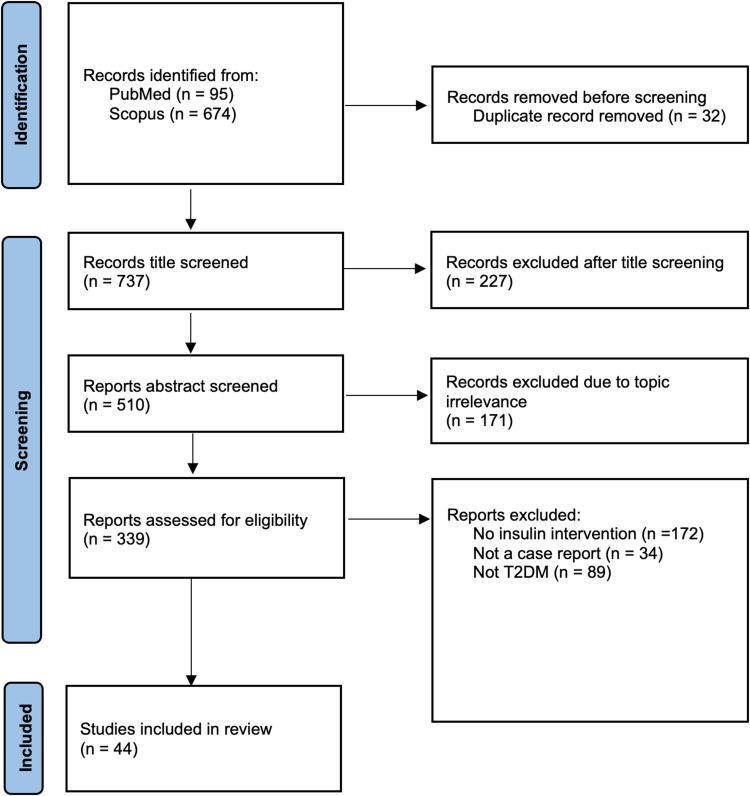
Insulin therapy remains a cornerstone in the management of type 2 diabetes mellitus (T2DM), especially in patients experiencing progressive loss of pancreatic beta-cell function or those with inadequate glycemic control despite oral antidiabetic therapy. This review synthesized clinical outcomes from 44 peer-reviewed case reports published between 2019 and 2024, identified through systematic searches in PubMed and Scopus. The included cases involved 15 males and 29 females, with patient ages ranging from 11 to 91 years (mean 53 ± 20.85 years). Subcutaneous insulin was the most frequently used route of administration, while intravenous insulin was reserved for managing acute complications. The most commonly reported complication was diabetic ketoacidosis (DKA), especially in patients with delayed insulin initiation or in those receiving sodium-glucose cotransporter 2 (SGLT2) inhibitors, a class of oral glucose-lowering agents, one of whose side effects is known to elevate the risk of euglycemic DKA. Other triggers included COVID-19 infection and severe insulin resistance. Most patients received basal insulin regimens, whereas basal-bolus combinations were preferred in more complex or unstable cases. Insulin was frequently combined with oral agents, such as metformin, dipeptidyl peptidase IV (DPP-IV) inhibitors, glucagon-like peptide 1 (GLP-1) receptor agonists, or sodium-glucose cotransporter 2 (SGLT2) inhibitors, reflecting a trend toward individualized treatment strategies. Biomarkers such as glycated hemoglobin (HbA1c) and C-reactive protein (CRP) were routinely used to monitor glycemic control and systemic inflammation. These findings underscore the clinical importance of early insulin initiation, continuous monitoring, and personalized regimens to improve outcomes in advanced or complicated T2DM. Emerging therapies, such as once-weekly basal insulin formulations, show promise for enhancing adherence and glucose stability, although further research is needed to evaluate their long-term effectiveness and cost-efficiency.
期刊介绍:
An international, peer-reviewed, open access, online journal. The journal is committed to the rapid publication of the latest laboratory and clinical findings in the fields of diabetes, metabolic syndrome and obesity research. Original research, review, case reports, hypothesis formation, expert opinion and commentaries are all considered for publication.

 求助内容:
求助内容: 应助结果提醒方式:

 京公网安备 11010802042870号

