Performance of Endobronchial Ultrasound-Guided Cryobiopsy in Diagnosing Thoracic Disorders and Its Role in Next-Generation Sequencing for Non-Small-Cell Lung Cancer.
Chun Ian Soo, Sze Shyang Kho, Wai Ling Leong, Shinye Eng, Diana Bee-Lan Ong, Seow Fan Chiew, Tak Kuan Chow, Hazwan Amzar Khairul Annuar, Chee Kuan Wong, Chong Kin Liam
{"title":"Performance of Endobronchial Ultrasound-Guided Cryobiopsy in Diagnosing Thoracic Disorders and Its Role in Next-Generation Sequencing for Non-Small-Cell Lung Cancer.","authors":"Chun Ian Soo, Sze Shyang Kho, Wai Ling Leong, Shinye Eng, Diana Bee-Lan Ong, Seow Fan Chiew, Tak Kuan Chow, Hazwan Amzar Khairul Annuar, Chee Kuan Wong, Chong Kin Liam","doi":"10.1155/pm/3522554","DOIUrl":null,"url":null,"abstract":"<p><p><b>Background:</b> Endobronchial ultrasound-guided transbronchial needle aspiration (EBUS-TBNA) is an established procedure for diagnosing thoracic diseases and staging of lung cancers. However, some limitations of cytology specimens from EBUS-TBNA include small sample size, low tumour cellularity, necrosis and specimen contamination. Endobronchial ultrasound-guided transbronchial mediastinal cryobiopsy (EBUS-TBMC) is a promising alternative that provides a larger histology specimen which may improve diagnostic accuracy and molecular testing. This study is aimed at evaluating the benefits of EBUS-TBMC over EBUS-TBNA, focusing on improving next-generation sequencing (NGS) success rates, and assessing its efficacy and safety in a real-world setting. <b>Methods:</b> Data from 203 patients (99 underwent EBUS-TBNA and 104 underwent EBUS-TBMC) were retrospectively traced and analysed using descriptive statistics. <b>Results:</b> The overall diagnostic yield was significantly higher for EBUS-TBMC (90.38%) than that for EBUS-TBNA (67.68%; <i>p</i> < 0.001). For heterogeneous lesions, the diagnostic yield was 92.31% for EBUS-TBMC and 69.44% for EBUS-TBNA (<i>p</i> = 0.011). For non-small-cell lung cancer (NSCLC), EBUS-TBMC specimens demonstrated higher overall tumour cellularity (65% vs. 30%; <i>p</i> < 0.001) and better success in detecting driver alterations through NGS (85.36% vs. 61.90%; <i>p</i> = 0.035). The median procedure duration was shorter for EBUS-TBMC (22 vs. 32 min; <i>p</i> < 0.001), and the complication rates were comparable between the two techniques. These findings suggest that EBUS-TBMC offers additional diagnostic advantages over EBUS-TBNA for heterogeneous lesions and significantly facilitates the acquisition of cell-rich specimens for NGS testing. <b>Conclusion:</b> EBUS-TBMC increases the overall diagnostic yield of mediastinal diseases. EBUS-TBMC provides cell-rich histology specimens with high tumour content, facilitating NGS testing in the management of NSCLC.</p>","PeriodicalId":46434,"journal":{"name":"Pulmonary Medicine","volume":"2025 ","pages":"3522554"},"PeriodicalIF":1.9000,"publicationDate":"2025-08-28","publicationTypes":"Journal Article","fieldsOfStudy":null,"isOpenAccess":false,"openAccessPdf":"https://www.ncbi.nlm.nih.gov/pmc/articles/PMC12411052/pdf/","citationCount":"0","resultStr":null,"platform":"Semanticscholar","paperid":null,"PeriodicalName":"Pulmonary Medicine","FirstCategoryId":"1085","ListUrlMain":"https://doi.org/10.1155/pm/3522554","RegionNum":0,"RegionCategory":null,"ArticlePicture":[],"TitleCN":null,"AbstractTextCN":null,"PMCID":null,"EPubDate":"2025/1/1 0:00:00","PubModel":"eCollection","JCR":"Q3","JCRName":"RESPIRATORY SYSTEM","Score":null,"Total":0}
引用次数: 0
Abstract
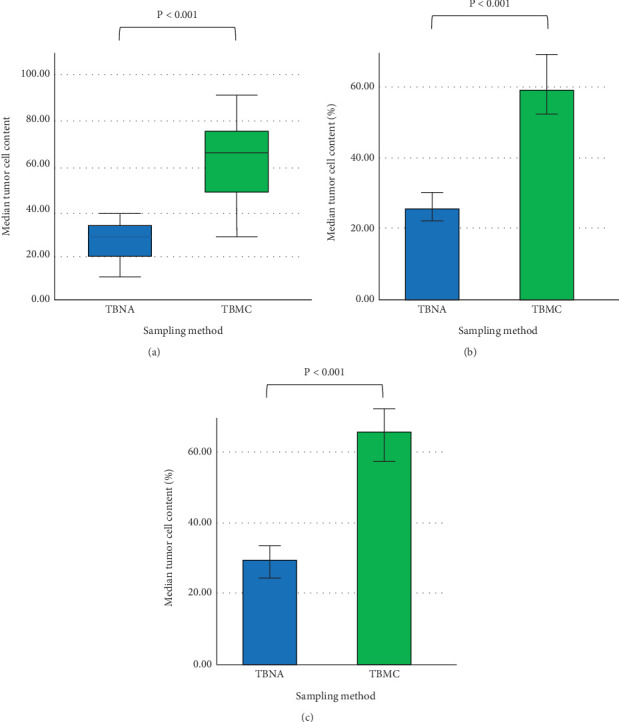
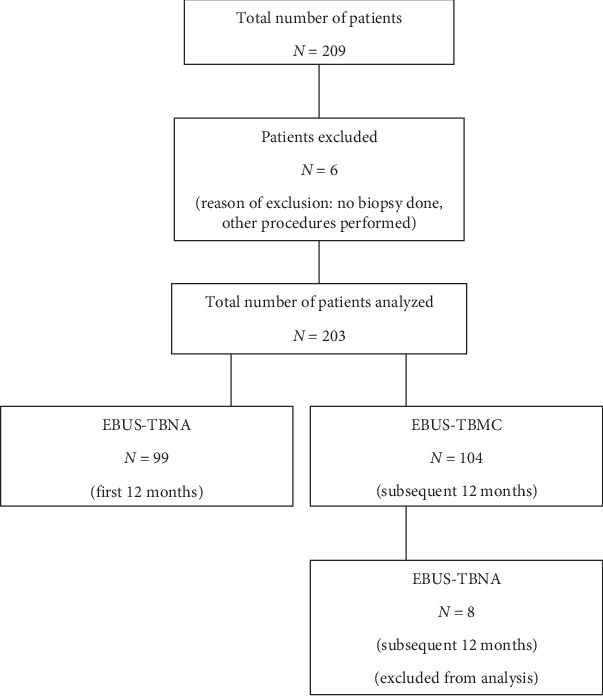
Background: Endobronchial ultrasound-guided transbronchial needle aspiration (EBUS-TBNA) is an established procedure for diagnosing thoracic diseases and staging of lung cancers. However, some limitations of cytology specimens from EBUS-TBNA include small sample size, low tumour cellularity, necrosis and specimen contamination. Endobronchial ultrasound-guided transbronchial mediastinal cryobiopsy (EBUS-TBMC) is a promising alternative that provides a larger histology specimen which may improve diagnostic accuracy and molecular testing. This study is aimed at evaluating the benefits of EBUS-TBMC over EBUS-TBNA, focusing on improving next-generation sequencing (NGS) success rates, and assessing its efficacy and safety in a real-world setting. Methods: Data from 203 patients (99 underwent EBUS-TBNA and 104 underwent EBUS-TBMC) were retrospectively traced and analysed using descriptive statistics. Results: The overall diagnostic yield was significantly higher for EBUS-TBMC (90.38%) than that for EBUS-TBNA (67.68%; p < 0.001). For heterogeneous lesions, the diagnostic yield was 92.31% for EBUS-TBMC and 69.44% for EBUS-TBNA (p = 0.011). For non-small-cell lung cancer (NSCLC), EBUS-TBMC specimens demonstrated higher overall tumour cellularity (65% vs. 30%; p < 0.001) and better success in detecting driver alterations through NGS (85.36% vs. 61.90%; p = 0.035). The median procedure duration was shorter for EBUS-TBMC (22 vs. 32 min; p < 0.001), and the complication rates were comparable between the two techniques. These findings suggest that EBUS-TBMC offers additional diagnostic advantages over EBUS-TBNA for heterogeneous lesions and significantly facilitates the acquisition of cell-rich specimens for NGS testing. Conclusion: EBUS-TBMC increases the overall diagnostic yield of mediastinal diseases. EBUS-TBMC provides cell-rich histology specimens with high tumour content, facilitating NGS testing in the management of NSCLC.


 求助内容:
 应助结果提醒方式:


 京公网安备 11010802042870号


